
How to Choose a Gutter Contractor in New Hampshire
Short answer
Choose a gutter contractor based on verifiable licensing, insurance, and BBB complaint history, then request a site inspection and written estimate with warranty terms locked in before work begins. The gutter industry has an unpursuable complaint rate of 9.5 percent with the Better Business Bureau, nearly three times the 3.4 percent average across all industries, making contractor vetting critical; confirm the contractor has been in business long enough to weather disputes and obtain everything in writing to protect yourself.
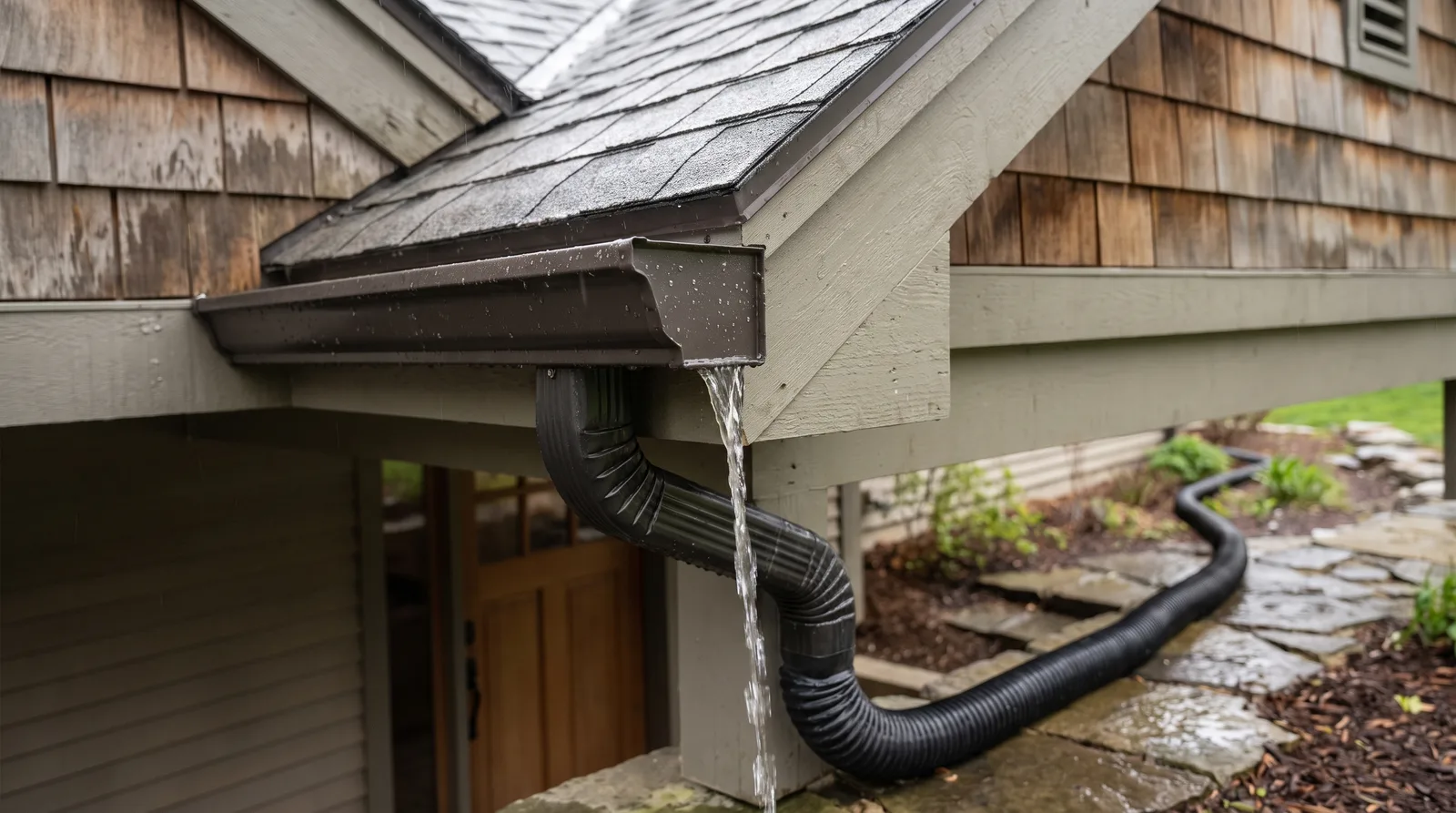
“The Brothers that Just Do Gutters focuses on providing gutter-related services in the construction industry.”
CB Insights
“We custom-fabricate a sturdy .032-gauge aluminum gutter to the exact dimensions of your home and install it with heavy duty hangers on 12-inch centers.”
Absolute Gutters
Why Gutter Contractors Must Integrate Gutters with Your Entire Exterior System#
Your gutters do not work alone. They sit at the edge of your roof, connect to your fascia and soffit, feed into downspouts that direct water away from your siding and foundation, and live or die based on how well they coordinate with every other piece of your home's weather envelope. A contractor who treats gutters as a standalone job will leave gaps that cost you far more than the gutter itself.
How Gutters, Roofing, Siding, Fascia, and Downspouts Work as One Protective Layer#
Think of your exterior as a system with one job: keep water out. Your roof sheds rain and snow. Your gutters catch it and channel it. Your fascia (the board behind the gutter) and soffit (the underside of your roof overhang) protect the framing. Your downspouts carry water away from your foundation and siding. Siding protects your walls. If any one piece fails to hand off to the next, water finds the gap.
A professional contractor should conduct a thorough on-site inspection, assessing roof condition, fascia integrity, downspout slope, and other system components, before providing an estimate, ensuring a gutter system that actually works rather than a gutter job that fails faster than it should.
The Risk of Hiring a Gutter-Only Contractor: Protection Gaps and Coordination Failures#
A gutter-only shop knows gutters. It may not know roofing, and it probably does not care about your siding or fascia. When a gutter-only contractor shows up, they measure, quote, and install gutters. They do not ask whether your fascia is rotting (a common problem in New Hampshire after freeze-thaw cycles). They do not verify that your roof is sound enough to support the gutter weight. They do not coordinate with a roofer or siding contractor if your project touches more than one trade.
The result: your new gutters sit on a rotting fascia and sag within a year. Or they are sized too small for your roof's water load because the contractor never calculated your roof area. Or water pools behind them because no one checked the slope. Or your downspouts dump water against your foundation because no one planned the drainage. You paid for gutters; you got a gutter installation, not a gutter system.
Gutters must be part of a coordinated exterior system, roof, fascia, soffit, downspouts, siding, rather than treated as a standalone product, covered above, to prevent gaps and failures.
How to Evaluate and Vet Gutter Contractors in New Hampshire#
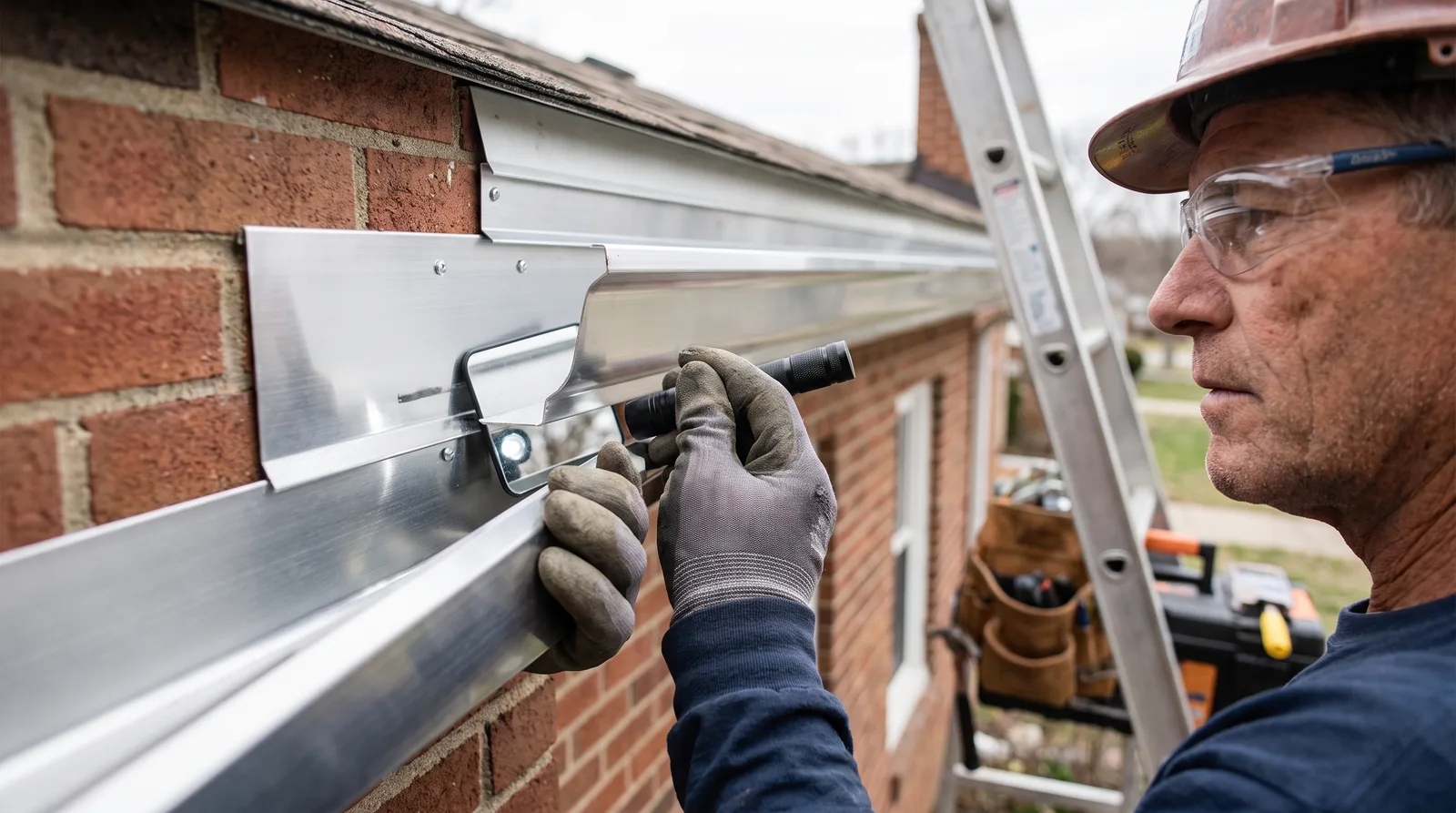
Choosing a contractor is not about finding the cheapest quote. It is about finding someone who knows the work, carries the right credentials, has a track record of finishing jobs cleanly, and will stand behind the result. Here is how to separate the reliable from the risky.
Licensing, Insurance, and BBB Complaint History: What to Verify#
Start with the basics: licensing, insurance, and complaint history. In New Hampshire, general contractors who perform gutter work must hold a valid New Hampshire Home Improvement Contractor license. Ask the contractor for their license number and verify it with the New Hampshire Attorney General's office. If they hesitate or cannot produce it, walk away.
Next, confirm they carry general liability insurance and workers' compensation insurance. Ask for a certificate of insurance naming your address as an additional insured. If they do not carry insurance, you are liable if someone gets hurt on your property or if they damage your home. That is not a cost you can afford.
Finally, check their Better Business Bureau (BBB) history. The gutter and downspout industry files complaints at a notably high rate compared to other trades. More troubling: 9.5 percent of gutter-industry complaints are unpursuable at a significantly higher rate than the average across all industries, often because the company could not be tracked down or went out of business. That gap tells you something important: gutter contractors fail and disappear at a rate than most trades.
Look for a contractor with few complaints, quick resolution times, and years in business. A contractor like Dan Leclerc Home Improvements in Hooksett, which has been in business for 35 years, has survived the churn. That longevity is not a guarantee, but it is a signal.
Red Flags: Warning Signs of Unreliable Contractors#
Watch for these warning signs when you vet a contractor:
- No written estimate. If they quote you over the phone or on a napkin; they are not serious. A professional provides a detailed, itemized written estimate that specifies materials, labor, timeline, and warranty.
- Pressure to sign immediately. "This price is only good today" is a classic high-pressure tactic. A reputable contractor will give you time to think and compare.
- Vague scope of work. If the estimate says "install gutters" with no mention of fascia condition, downspout sizing, or roof inspection; they have not done their homework.
- No insurance or license. Non-negotiable. If they cannot produce proof, do not hire them.
- Unwillingness to provide references. Ask for three recent residential projects in your area. If they refuse or say they cannot remember names, that is a red flag.
- Cash-only payment. Legitimate contractors accept checks, credit cards, or bank transfers. Cash-only jobs often mean no warranty, no recourse, and no accountability.
- No mention of warranty. A contractor confident in their work will offer a written warranty on materials and labor. If they do not, ask why.
Residential vs. Commercial Expertise: Does Your Contractor Have the Right Experience?#
Gutter work on a residential home is different from gutter work on a commercial building. Residential gutters are typically smaller, lighter-duty, and installed on pitched roofs. Commercial gutters are often larger, handle higher water volumes, and sit on flat roofs with different drainage requirements. A contractor experienced in one may not be equipped for the other.
For a residential home in New Hampshire, you want a contractor with solid residential experience. Ask how many residential projects they have completed in recent years. Ask for photos of finished work. Ask whether they have worked on homes similar to yours (age, roof type, size). A contractor who has spent considerable time on commercial flat-roof systems may not be the best fit for your pitched-roof colonial.
Site Inspection and Free Estimate Best Practices#
A professional contractor will always conduct a site inspection before quoting, walking your roof to assess its condition and measure square footage, inspecting fascia and soffit for rot, checking current gutters for slope and sagging, measuring downspout locations, and discussing your roof's water load and any problem areas you have noticed.
The estimate should be free. If a contractor charges for an estimate, that is a red flag. Reputable contractors build the cost of estimates into their overhead and pass it along in their pricing.
Gutter Specifications, Costs, and Contracts: What to Demand#
Once you have narrowed your list to a few solid contractors, it is time to compare specifications, costs, and contract terms. This is where the details matter.
Seamless vs. Sectional Gutters for New Hampshire's Climate#
New Hampshire's climate is brutal on gutters. Winters bring freeze-thaw cycles that expand and contract metal, ice dams that back water up under gutters, and heavy snow loads that stress fasteners. Summers bring thunderstorms with high water volumes. Seamless gutters are the better choice for this climate.
Seamless gutters are formed on-site from a single continuous piece of aluminum or steel. They have no seams except at corners and downspout connections. Sectional gutters (also called sectional or segmented gutters) are made of pre-formed pieces joined together with fasteners and sealant.
Seamless gutters have no seams where water can leak and sealant can fail, especially important in New Hampshire's freeze-thaw climate, so they also look cleaner and are less prone to sagging because they are one continuous piece. The downside is that seamless gutters require specialized equipment and on-site installation, so they cost more upfront.
Sectional gutters are cheaper to install and easier to repair in a pinch (you can replace one section without replacing the whole run). But the seams are a vulnerability in New Hampshire's climate. Over time, sealant cracks, water seeps behind the gutter, and rot sets in. Most contractors in Seamless gutters for residential homes.
Gutter Sizing and Material: 5-Inch vs. 6-Inch and Why It Matters#
Gutter size is determined by your roof's square footage and your region's rainfall intensity. A smaller roof in a moderate climate might do fine with 5-inch gutters. A larger roof or one in a high-rainfall area needs 6-inch gutters to handle the water volume without overflowing.
New Hampshire receives moderate to heavy rainfall, especially during spring snowmelt and summer thunderstorms. Most residential homes in New Hampshire benefit from 6-inch gutters, particularly if your roof is large (over 1,500 square feet) or if you have a steep pitch that accelerates water runoff. A contractor should calculate your roof's square footage and recommend a size based on that, not just install what they have on the truck.
As for material, aluminum is the standard for residential gutters in New Hampshire. It is lightweight, rust-resistant, and affordable. Steel gutters are heavier and more durable but more expensive and prone to rust if the finish is damaged. Copper gutters are beautiful and extremely durable but very expensive. For most homeowners, aluminum seamless gutters in 6-inch are the right balance of performance and cost.
Pricing Breakdown: What Drives Gutter Installation Costs and How to Estimate Your Project#
Gutter installation costs depend on several factors: the length of gutter runs, the number of downspouts, the material, whether the gutters are seamless or sectional, the complexity of your roof (more corners and valleys mean more work), and the condition of your fascia (if it needs repair or replacement, that adds cost).
A typical residential home might have 150 to 200 linear feet of gutters. The cost per linear foot varies widely depending on material and whether you are in a high-cost or low-cost market, but you should expect a wide range depending on scope.
When you get estimates, ask for a breakdown: cost per linear foot for gutters, cost for downspouts, cost for fascia repair (if needed), cost for labor, and cost for any add-ons like gutter guards or soffit vents. A detailed breakdown lets you compare apples to apples across contractors.
For a 1,500-square-foot house, you should expect gutter installation to be a meaningful investment. Do not assume the cheapest quote is the best deal. A contractor who cuts corners on materials or installation will cost you more in repairs and replacement down the road.
Warranty and Guarantee Terms: What to Negotiate and What to Demand#
A reputable contractor will offer a written warranty on both materials and labor. Materials warranties typically come from the manufacturer (usually covering aluminum gutters for an extended period). Labor warranties are the contractor's promise to fix any defects in their installation work over a defined period following completion.
Demand a written warranty that covers:
- Leaks due to defective materials or poor installation.
- Sagging or misalignment due to improper support or slope.
- Rust or corrosion (for steel gutters) due to manufacturing defects.
- Seam failures (for sectional gutters) due to poor workmanship.
Get the warranty in writing before you sign the contract. Do not rely on a verbal promise. A contractor who will not put their warranty in writing is not confident in their work.
Also ask whether the warranty is transferable if you sell your home. Some contractors offer warranties only to the original homeowner. Others transfer it to the new owner, which is a selling point if you ever list your home.
Scope Creep and Change Orders: How to Lock Down Contract Terms#
Scope creep happens when a project expands beyond what was originally agreed. That is a legitimate discovery, but if it is not in the original contract, you end up paying extra.
To prevent scope creep, get a detailed written contract that specifies:
- Exactly what work will be done (e.g., "install 180 linear feet of 6-inch seamless aluminum gutters, 4 downspouts, and repair or replace fascia as needed").
- The total price and what is included in that price.
- What is NOT included (e.g., "gutter guards are extra" or "fascia repair beyond what is visible from the ground is a change order").
- A process for change orders: if the contractor discovers additional work during installation, they must stop, notify you, provide a written estimate for the additional work, and get your approval before proceeding.
- A timeline for completion.
- Payment terms (e.g., deposit, progress payment, and final payment upon completion).
Do not agree to a contract that says "price subject to change based on conditions discovered on-site" or "additional work billed at time and materials." That is an open-ended liability. A professional contractor can estimate the scope accurately enough to give you a firm price, or they can clearly define what triggers a change order and how much it will cost.
Seasonal Timing, Maintenance, and Long-Term Care in New Hampshire#
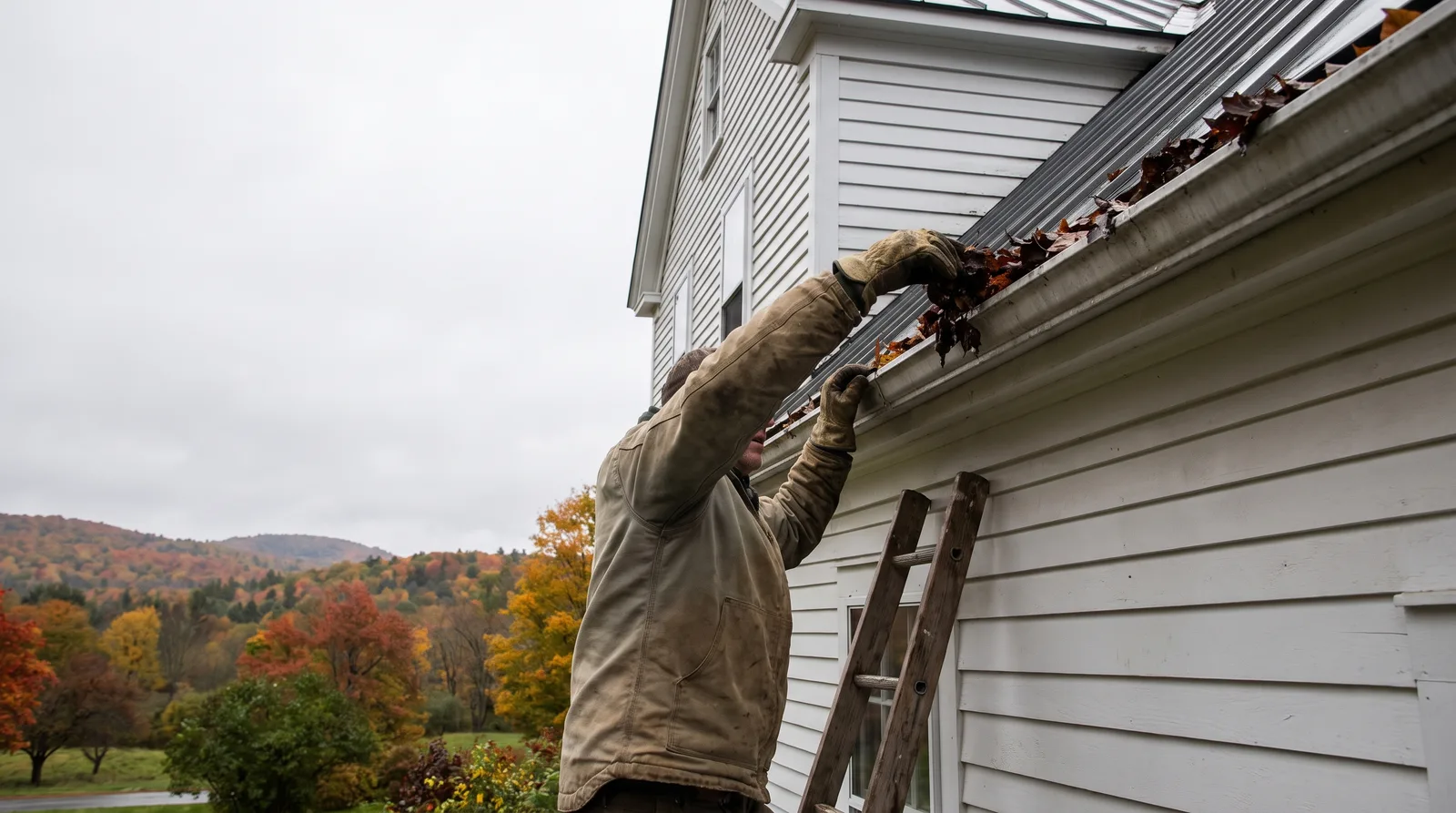
Gutter work in New Hampshire is seasonal. Timing matters for both installation and maintenance.
Weather Windows and Seasonal Timing for Gutter Installation in NH#
The best time to install gutters in New Hampshire is late spring through early fall (May through September). During this window, the weather is mild, the ground is dry, and contractors can work safely without rushing. Avoid winter installation if possible. Snow, ice, and cold make the work slower, more dangerous, and more expensive. Contractors may charge a premium for winter work, and the quality often suffers because they are working in difficult conditions.
Spring is an ideal time because it gives you the whole summer and fall to monitor your new gutters and catch any issues before winter. Fall is also good, but you have less time to observe the system before the cold arrives.
If you must install gutters in winter, make sure your contractor has experience with cold-weather installation and that they use materials and techniques designed for freezing temperatures.
Post-Installation Maintenance Schedules: Cleaning Frequency and Winter Prep#
New gutters are not maintenance-free, especially in New Hampshire. After installation, plan to:
- Clean gutters twice a year: once in late spring (after trees finish shedding pollen and seeds) and once in late fall (after leaves drop). More frequent cleaning is needed if you have trees overhanging your roof.
- Inspect after heavy storms: high winds and heavy rain can dislodge debris and expose problems.
- Clear gutters before winter: a clogged gutter in fall will trap water and ice, leading to ice dams and leaks. Clear them thoroughly before the first freeze.
- Check downspouts: make sure water is flowing freely and draining away from your foundation. If a downspout is clogged, clear it.
- Look for sagging or separation: if gutters are pulling away from the fascia or sagging in the middle, contact your contractor. This is usually a sign of loose fasteners or inadequate support.
Winter brings specific challenges. Ice dams form when snow melts on your roof, the water runs down to the cold gutter, and refreezes. An ice dam can back water up under your shingles and into your attic. The best prevention is good attic ventilation and insulation (so your roof stays cold and snow does not melt prematurely) and clean gutters (so water can flow freely if it does melt).
If you live in an area prone to ice dams, ask your contractor about heated gutter cables or gutter guards designed to prevent ice buildup. These are add-ons but can save you from costly water damage.
Your Next Step: Validate Before You Build#
You now have the framework to choose a gutter contractor in New Hampshire. Before you call anyone, take stock of your own situation:
- Walk your roof (or view it from the ground). Note the age and condition of your shingles, the size of your roof, and any visible damage to fascia or gutters.
- Check your current gutters. Are they sagging, leaking, or pulling away from the house? Do you see water pooling or staining on your siding?
- Identify your downspout locations. Do they drain away from your foundation, or do they dump water against your house?
- List your priorities. Do you want seamless gutters, gutter guards, new fascia, or just a repair? What is your budget range?
- Get three written estimates. Call contractors who are licensed, insured, and have solid BBB histories. Ask each one to inspect your home and provide a detailed, itemized estimate.
- Compare scope, not just price. Does each estimate include fascia inspection? Downspout sizing? Warranty? Do the scopes match, or are you comparing different things?
- Ask about integration. Does the contractor coordinate with roofers or siding contractors if your project touches multiple trades? Or do they work in isolation?
A contractor who walks your roof, inspects your fascia, sizes your gutters for your roof's water load, and coordinates with other trades is the one who will give you a system that actually works, not just a gutter installation that fails in a few years. That is the difference between a cheap job and a smart one.
| Red Flag | Why It Matters |
|---|---|
| No written estimate | Professional contractors provide itemized estimates specifying materials, labor, timeline, and warranty; verbal or informal quotes indicate lack of professionalism |
| High-pressure sales tactics (e.g., 'price good today only') | Reputable contractors allow time for consideration and comparison; urgency often signals opportunistic pricing |
| Vague scope of work | Quality bids address fascia condition, downspout sizing, and roof inspection; omissions mean the contractor skipped due diligence |
| Missing license or insurance credentials | New Hampshire requires valid Home Improvement Contractor licenses; uninsured contractors leave you liable for injuries and property damage |
| Unwillingness to provide references | Refusal or inability to name recent residential projects in your area suggests poor customer relationships or incomplete work history |
| Cash-only payment terms | Legitimate contractors accept multiple payment methods; cash-only arrangements typically indicate no warranty, no documentation, and no recourse |
| No written warranty offered | Contractors confident in their work guarantee materials and labor; absence of warranty is a trust indicator |
| Metric | Gutter & Downspout Industry | All Industries Average |
|---|---|---|
| Unpursuable complaints rate | 9.5% | 3.4% |
| Verification Step | What to Confirm | How to Check |
|---|---|---|
| Licensing | Valid New Hampshire Home Improvement Contractor license | Ask for license number; verify with New Hampshire Attorney General's office |
| Insurance | General liability and workers' compensation coverage; your address named as additional insured | Request certificate of insurance |
| BBB History | Few complaints, quick resolution times, years of operation | Visit www.bbb.org and search contractor by name |
| References | Three recent residential projects in your area | Ask for contact information and call past clients |
| Written Estimate | Detailed breakdown of materials, labor, timeline, and warranty | Request formal written quote before signing anything |
| System Integration | Roof inspection, fascia assessment, downspout sizing for your roof area | Confirm estimate addresses exterior system as a whole, not gutters alone |
New Hampshire Gutter Installation & System Cost Estimator
Estimates total seamless gutter replacement cost based on linear footage, material and sizing (5-inch vs 6-inch aluminum or copper), story height difficulty adjustment, leaf guards, and damaged fascia board repair.
Gutter & Downspout Installation:
Gutter Guard Installation:
Fascia Board Replacement ($20/ft):
Total Estimated Project Cost:
Effective Cost per Linear Foot:
Frequently Asked Questions
How do I verify a contractor's New Hampshire license and insurance before hiring?
Request their Home Improvement Contractor license number and verify it directly with the New Hampshire Attorney General's office. Ask for a certificate of insurance showing general liability and workers' compensation coverage with your address listed as an additional insured. If they cannot produce either credential without hesitation, do not hire them.
Why do gutter contractors fail at higher rates than other trades?
Gutter-industry complaints filed with the Better Business Bureau are unpursuable at 9.5 percent, nearly three times the 3.4 percent average across all industries. These unpursuable complaints arise when companies cannot be tracked down or go out of business, suggesting gutter contractors have lower failure thresholds for accountability and business stability than other construction trades.
What is the difference between hiring a gutter-only contractor versus a full-service exterior contractor?
A gutter-only contractor measures, quotes, and installs gutters without assessing roof condition, fascia integrity, or downspout slopes. A system-focused contractor walks your roof, inspects fascia for rot, sizes downspouts for your roof's water load, and ensures proper slope, delivering coordinated protection rather than an isolated installation that often fails prematurely.
Should I be concerned about my fascia condition before installing new gutters?
Yes. Rotting fascia is common in New Hampshire due to freeze-thaw cycles. Installing gutters on compromised fascia causes premature sagging and failure. A professional contractor inspects fascia integrity as part of the vetting process and addresses rot before gutter installation.
What does a detailed gutter estimate need to include to be professional?
A thorough estimate specifies materials, labor costs, installation timeline, and warranty terms. It should also address roof area (for downspout sizing), fascia condition, and system coordination, not just 'install gutters.' Vague estimates that omit these details signal the contractor did not perform adequate assessment.
What is the NRCA ladder safety standard for gutter installation work?
The National Roofing Contractors Association (NRCA) recommends a heavy-duty type 1A ladder as the minimum weight rating for gutter work. This specification ensures contractor safety during installation on your property.
How do you choose a gutter company?
Verify the contractor holds a valid New Hampshire Home Improvement Contractor license through the Attorney General's office. Confirm they carry general liability and workers' compensation insurance with your address listed as additional insured. Check their Better Business Bureau complaint history, as gutter contractors have higher complaint rates than other trades. Choose someone who evaluates your entire exterior system, roof, fascia, and downspout sizing, rather than just installing gutters in isolation.
Disclaimer
This content is general information about gutters and home-exterior work and is not a substitute for an on-site inspection. Contact Gutter Giant for advice specific to your home.
Sources
- www.bbb.org - bbb.org
- www.bbb.org - bbb.org
- Guard yourself against gutter-guard fraud - consumerreports.org
- How Gutters and Siding Work Together to Protect Your Home - mottoandsonsconstruction.com
- Roofing Company in Sandown, NH | Merrimack Valley Roofing - merrimackvalleyroofing.com
- Seamless Gutter Installation NH - absoluteguttersnh.com
- Getting closer to gutters - National Roofing Contractors Association - nrca.net