
How to Clean Your Gutters Safely (and When to Hire a Pro)
Short answer
How to clean your gutters safely involves working from a stable ladder positioned on level ground, scooping debris by hand into a bucket, and flushing with water, never climbing onto the roof. Professional gutter cleaning typically costs $150-$300 per service, while DIY tools run $25-$75. Hire a pro if you're uncomfortable on a ladder, live in a multi-story home, or notice sagging gutters, damaged fascia, or water damage signs during inspection, these often signal repair needs beyond cleaning alone.

“According to This Old House, 85% of homeowners cite leaves as their primary gutter clogging concern, making foliage the leading cause of residential gutter maintenance issues across the US.”
B.T. Seamless Gutters
“Most homes need gutter cleaning twice a year: once in late spring after pollen and seed pods finish falling, and once in late fall after leaves have dropped.”
Home Genius Exteriors
Gutter Cleaning as the Foundation of Exterior Home Protection#
Your gutters are quietly doing one of the hardest jobs on your home: moving thousands of gallons of water away from your roof, walls, and foundation every year. When they're clogged, that water has nowhere to go, it pools on the roof, seeps behind the fascia and soffit, or cascades down the siding and settles around the foundation. A single season of neglect can cost you tens of thousands in water damage repairs. That's why gutter cleaning isn't just maintenance; it's the first line of defense for your entire exterior system.
The problem is that most homeowners either skip cleaning altogether or rush through it without understanding what they're actually looking for. You're not just removing leaves, you're inspecting the structural integrity of your gutters, spotting early signs of rust, separation, or sagging that signal bigger trouble ahead. That's where the real value lives: cleaning reveals damage before it becomes expensive.
Why Gutters Connect to Your Roof, Foundation, and Repair Costs#
Gutters don't work in isolation. They're part of a chain that includes your roof, fascia, soffit, and the grading around your foundation. When gutters fail, water backs up onto the roof deck, which can rot the plywood underneath and shorten your roof's life by years. Water that escapes the gutters runs down the siding, soaks the fascia boards, and pools at the foundation, where it can crack concrete, flood basements, or destabilize the entire structure over time.
The cost of ignoring this? Water damage repairs, foundation work, and roof replacement can easily run into five figures. A professional cleaning or a few hours of DIY work prevents that cascade. This is why gutter maintenance sits at the center of a complete exterior home care plan: it protects everything downstream.
How Regular Cleaning Prevents the Discovery of Bigger (and Costlier) Problems#
Here's what most people don't realize: the best time to catch gutter problems is while you're cleaning them. A sagging section, rust spots, separated seams, or water stains on the fascia all appear during a thorough inspection. If you wait until water damage shows up inside your home, you've already missed the window to fix it cheaply.
Regular cleaning also extends the life of your gutters themselves. Debris sitting in the gutter traps moisture, which accelerates rust and corrosion. Leaves and twigs create weight that pulls gutters away from the fascia. Standing water freezes in winter, expanding and cracking the gutter or pulling it loose. Gutter cleaning should be done on a regular seasonal schedule, typically twice a year, to prevent these problems and keep your gutter system functioning longer.
How to Clean Your Gutters Safely: DIY Steps and Fall Prevention#
Tools and Setup: What You Need and What to Avoid#
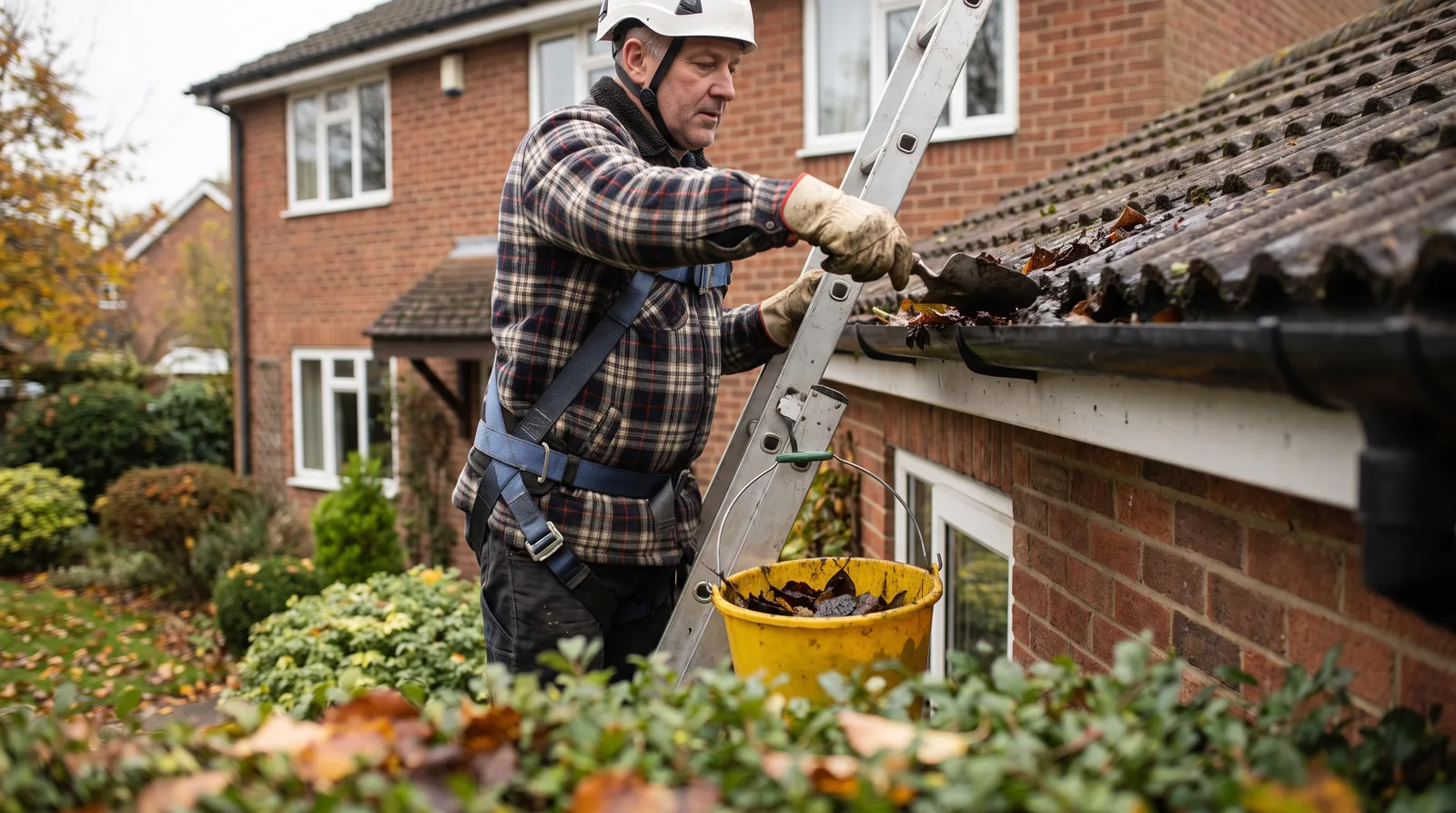
If you're going the DIY route, you'll need the right tools and a realistic sense of your own comfort level on a ladder. The essentials are simple: a sturdy ladder, work gloves, a bucket or bag for debris, a scoop or small shovel, and a garden hose. Gutter cleaning tools cost between $25-$75.
What you should NOT use: pressure washers are tempting but dangerous, they can damage gutter seams, force water behind the fascia, and blast you off the ladder. Leaf blowers are loud and blow debris everywhere except where you want it. Avoid standing on the roof itself; the angle is steeper than you think, and one slip is a serious fall. Never use a ladder that's cracked, bent, or unstable, and never lean a ladder against the gutter itself, it will bend or pull away from the house.
Step-by-Step Cleaning Technique (Without Roof Access)#
The safest way to clean gutters keeps you off the roof entirely. Here's the method:
Position your ladder on level ground. Place it perpendicular to the gutter run, with the base at a distance proportional to the ladder height, typically maintaining a ratio where the base extends outward as you go higher. Make sure the ground is firm and level, never use a ladder on soft soil, gravel, or a slope.
Climb to a comfortable working height. You should be able to reach the gutter with your arm extended, not stretched or leaning. If you can't reach comfortably, move the ladder rather than overreaching.
Scoop debris by hand into a bucket. Wear gloves and work methodically along the gutter, removing leaves, twigs, and sediment. Don't rush, this is where you'll spot damage.
Flush the gutter with water. Once the debris is out, use a garden hose to flush the gutter from one end toward the downspout. Watch how the water flows, it should move smoothly toward the downspout without pooling or backing up.
Check the downspout. Direct the hose into the downspout opening and make sure water flows freely. If it's blocked, you may need to disconnect it and clear the clog from the bottom, or use a plumbing snake to break it up.
Inspect as you go. This is the critical step most people skip. Look for rust, separation at seams, sagging sections, cracks, or water stains on the fascia. Note anything that looks wrong, you'll need to decide whether it's a cleaning-only job or a repair job.
Ladder Safety and Fall Prevention: The Critical Facts#
Falls from ladders are serious. According to peer-reviewed research, 3% of leisure-time ladder falls occur while cleaning gutters. Most gutter-cleaning falls happen because people overreach, lean the ladder at the wrong angle, or work on unstable ground.
Here's what actually prevents falls: keep your hips inside the ladder rails at all times. Never lean sideways more than a few inches. If you need to reach farther, climb down and move the ladder. Wear shoes with good grip, not sandals or socks. Don't work in rain or high wind. If you're uncomfortable on a ladder at any point, stop and hire a professional, there's no shame in that, and it's far cheaper than a hospital bill.
When to Clean and What to Look For: Timing, Inspection, and Signs of Damage#
Seasonal Timing: How Often Your Gutters Need Cleaning#
Most homes need gutter cleaning at least twice a year: once in late fall after leaves drop, and once in early spring to clear winter debris and check for damage. If you live in a heavily wooded area, you may need to clean multiple times a year. If you have few trees nearby, once a year in late fall might be enough.
The best time to clean is after a dry spell, when debris is dry and easier to handle. Avoid cleaning right after a heavy rain, gutters are slippery, and you won't be able to see damage clearly. Mark your calendar and stick to it; seasonal cleaning is far easier than emergency repairs after water damage.
Post-Cleaning Inspection: Signs of Damage, Wear, and Common Gutter Failure Points#
Once the gutter is clean, take five minutes to inspect it carefully. Here's what to look for:
- Sagging or dips. Gutters should slope gently toward the downspout. If you see a sag or a low spot where water pools, the gutter is pulling away from the fascia or the support brackets are failing.
- Rust spots or holes. Small surface rust can be painted over, but holes or deep rust mean the gutter is corroding through and will fail soon.
- Separated seams. Gutters are joined at seams. If you see gaps or water leaking from a seam, the joint is failing and will only get worse.
- Cracks or splits. Any crack in the gutter body will grow and leak.
- Water stains on the fascia or soffit. Discoloration or soft spots mean water is already escaping and damaging the wood behind the gutter.
- Loose or missing brackets. Gutters are held up by brackets bolted to the fascia. If brackets are loose or missing, the gutter will sag and eventually pull away.
Sagging or dips, rust spots or holes, separated seams, cracks or splits, water stains on the fascia or soffit, and loose or missing brackets are the common gutter failure points that cleaning reveals. A clean gutter with no damage can last many more years. A clean gutter with damage is a signal that repair or replacement is coming soon.
When Repair or Guards Are Next Steps#
If your inspection turns up rust, holes, or separated seams, you have a choice: repair the damaged section or replace the entire gutter run. Seamless gutters, which are fabricated on-site as one continuous piece, are less prone to seam failure than sectional gutters, but they can still develop holes or sag over time.
If sagging is the issue, it's often a bracket problem, tightening or replacing brackets can fix it. If rust or holes are the problem, patching might work for small damage, but large areas usually need replacement.
Gutter guards are a preventative step worth considering if you're tired of cleaning. Gutter guard systems cost between $1,000-$2,000, and gutter guard cleaning costs an additional $50 to $100 if guards do need maintenance. Guards reduce debris accumulation significantly, though no guard is 100% effective, some still require occasional cleaning, especially in heavily wooded areas. The trade-off is upfront cost versus long-term convenience.
DIY vs. Professional: Cost, Risk, and Your Decision Framework#
What Professional Gutter Cleaning Includes and Costs#
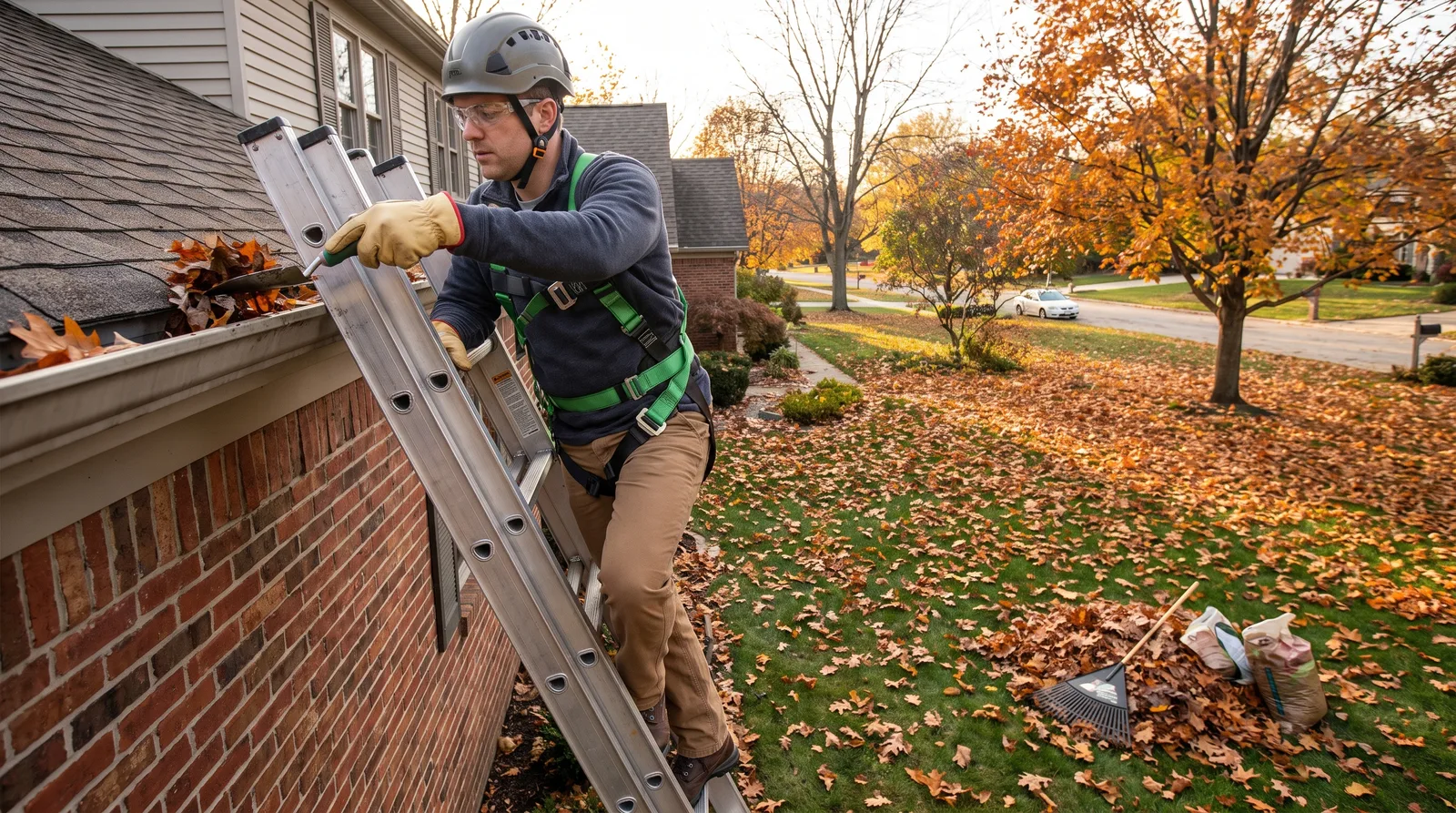
A professional gutter cleaning service does what you do, but faster and safer. They bring their own ladder, equipment, and insurance. They scoop debris, flush the gutters, check the downspout, and inspect for damage. Many professionals also photograph the gutters and send you a report so you know exactly what they found.
Professional gutter cleaning typically costs $150-$300 per service. For a two-story home with moderate debris, costs typically fall within this range.
Is DIY Worth the Risk? Your Decision Framework#
The decision between DIY and professional comes down to three factors: your comfort on a ladder, the complexity of your roof, and your time.
Go DIY if: you're comfortable on a ladder; your home is one story; you have good upper-body strength, and you have a few hours to spare. You'll save the service fee and learn your gutters well. The tools are affordable and represent a one-time investment.
Hire a pro if: you're uncomfortable on a ladder; your home is two or more stories; you have mobility issues, or you're short on time. The professional service cost is worth the safety and peace of mind. You also get a professional inspection, which catches problems you might miss.
Hire a pro immediately if: you notice sagging gutters, water damage on the fascia or soffit, or signs of foundation problems. These are red flags that your gutters need professional attention and possibly repair, not just cleaning.
James, as Owner & Founder of Gutter Giant, has found that homeowners often underestimate how much damage they can spot during a thorough cleaning, and how quickly they can miss it. A professional inspection paired with cleaning gives you a clear picture of your gutter's health and what comes next.
From Cleaning to Guards and Repair: Your Next Steps#
After your cleaning and inspection, you'll know whether your gutters need nothing more than regular maintenance, or whether repair, replacement, or guards make sense. Here's how to move forward:
Document what you found. Take photos of any damage, sagging, rust, or water stains. This becomes your baseline for tracking changes over time.
Get a professional assessment if you found damage. If you spotted rust, holes, separation, or sagging during your inspection, contact a gutter professional for a free estimate. Many offer no-obligation quotes so you can understand the scope and cost of repair or replacement.
Plan your next cleaning. Mark your calendar for the next seasonal cleaning at an appropriate interval. Consistent cleaning is the cheapest insurance against water damage.
Consider guards if cleaning feels like a burden. If you dread gutter cleaning or can't safely do it yourself, gutter guards reduce the frequency and intensity of maintenance. The upfront cost is real, but so is the long-term convenience.
The honest truth: gutter cleaning is not glamorous, but it's one of the highest-ROI maintenance tasks you can do. A few hours of work or a professional service call prevents tens of thousands in water damage. And the inspection that comes with cleaning is where you catch problems early, when they're cheap to fix.
If you're ready to get your gutters inspected and cleaned by someone who knows what to look for, that's the move. Overflowing, sagging, or just old gutters? Get a free gutter estimate and find out exactly what your home needs.
| Option | Initial/Per-Service Cost | What's Included |
|---|---|---|
| DIY Cleaning Tools | $25 to $75 | Scoop, gloves, bucket, garden hose (ladder may be additional) |
| Professional Gutter Cleaning | $150 to $300 per service | Full debris removal, inspection, downspout check, damage assessment |
| Gutter Guard Installation | $1,000 to $2,000 | System installation to reduce debris accumulation |
| Gutter Guard Cleaning | +$50 to $100 | Additional charge when guards require cleaning during service |
| Step | What You Do | Safety Focus |
|---|---|---|
| 1. Ladder Setup | Position ladder on level ground perpendicular to gutter; maintain proper base-to-height ratio | Never use cracked ladder; avoid soft soil, gravel, or slopes; never lean against gutter |
| 2. Working Height | Reach gutter with arm extended comfortably; move ladder rather than overreaching | Keep hips inside ladder rails; avoid sideways leaning beyond a few inches |
| 3. Debris Removal | Scoop leaves, twigs, and sediment by hand into bucket; work methodically and inspect as you go | Wear gloves; inspect for rust, separation, sagging, or water stains |
| 4. Water Flush | Use garden hose to flush gutter toward downspout; observe water flow | Watch for pooling or backup that signals improper pitch or blockage |
| 5. Downspout Check | Direct hose into downspout; verify free water flow; clear blockages if needed | If clogged, disconnect or use plumbing snake to break up obstruction |
| 6. Inspection & Decision | Document any damage observed; decide if repair is needed or if cleaning alone suffices | This step prevents costly water damage by catching issues early |
| Tool/Method | Why It's Unsafe or Ineffective | Better Alternative |
|---|---|---|
| Pressure washers | Damages seams, forces water behind fascia, can knock you off ladder | Garden hose with hand-scooping |
| Leaf blowers | Blows debris everywhere but where needed; loud and ineffective | Manual scoop into bucket |
| Working from roof | Steep angle creates serious fall risk; better view not worth injury risk | Ladder positioned perpendicular to gutter run |
| Cracked, bent, or unstable ladder | Ladder failure causes falls; risk not worth the minor cost savings | Invest in sturdy, level-ground-tested ladder |
| Leaning ladder against gutter | Gutter will bend or pull away from house; creates ladder instability | Position ladder perpendicular with base on firm ground |
Gutter Cleaning Cost & Maintenance Estimator
Estimates professional gutter cleaning costs based on home size (linear feet), number of stories, tree cover debris level, base rate per foot, and annual cleaning frequency, helping homeowners compare ongoing maintenance costs against gutter guard installations or DIY.
Estimated Cost Per Cleaning:
Estimated Annual Cleaning Cost:
5-Year Projected Maintenance Cost:
Frequently Asked Questions
How can I safely clean my gutters without going on my roof?
Position your ladder perpendicular to the gutter on level ground, maintaining proper base-to-height ratio. Reach the gutter with your arm extended, don't stretch or lean sideways. Scoop debris by hand into a bucket, flush with a garden hose, and check the downspout. Keep your hips inside the ladder rails at all times and move the ladder if you need to reach farther rather than overreaching.
What should you not use to clean gutters?
Avoid pressure washers, they damage seams and force water behind the fascia, and leaf blowers, which scatter debris everywhere. Never work from the roof itself, use a cracked or unstable ladder, lean the ladder against the gutter, or position it on soft soil or slopes. These methods either risk falls or damage your gutter system.
What is the average cost to hire a professional gutter cleaner versus doing it yourself?
Professional gutter cleaning costs $150-$300 per service. DIY cleaning tools cost $25-$75, though you may need to add the cost of a good ladder if you don't already own one. Professional service is worthwhile if you're uncomfortable on ladders or have complex roof configurations; the safety benefit often justifies the cost.
What are gutter guard systems and how much do they cost?
Gutter guard systems are protective barriers installed over gutters to reduce debris accumulation. They typically cost $1,000-$2,000 to install. Even with guards, occasional cleaning is needed, which adds $50 to $100 to the service cost. Guards reduce frequency of cleaning but don't eliminate the need for maintenance entirely.
How common are gutter-cleaning falls, and what's the real risk?
Gutter cleaning accounts for 3% of leisure-time ladder falls, according to peer-reviewed research. Most falls occur from overreaching, leaning at the wrong angle, or working on unstable ground. Following basic ladder safety, keeping hips inside rails, moving the ladder instead of leaning, and working in dry conditions, eliminates most of this risk.
Why does the downspout check matter during gutter cleaning?
A blocked downspout defeats the entire purpose of clean gutters, water backs up and pools on the roof or spills over the sides. Flushing the downspout with a hose reveals blockages immediately. If clogged, disconnect it or use a plumbing snake to clear the obstruction and restore proper water flow to the ground.
Disclaimer
This content is general information about gutters and home-exterior work and is not a substitute for an on-site inspection. Contact Gutter Giant for advice specific to your home.
Sources
- www.sciencedirect.com - sciencedirect.com
- Mr. Gutter Cleaner Portfolio Investments, Mr. Gutter Cleaner Funds, Mr. Gutter Cleaner Exits - cbinsights.com
- How To Clean Your Gutters Safely - thisoldhouse.com
- DIY vs Professional Gutter Cleaning: Safety & Cost Guide - windowhero.com (2025-09-12)
- How Much Does Gutter Cleaning Cost? | My Home Pros - myhomepros.com
- How Often to Clean Gutters - homegeniusexteriors.com (2026-07-20)