
What Causes Gutter Leaks and How to Fix Them Permanently
Short answer
Gutter leaks stem from six causes: clogged debris, cracks, sagging gutters, leaking joints, downspout failure, and freeze-thaw damage. Permanent fixes include seamless gutters, which eliminate seams where leaks start, and gutter guards to reduce debris. Proper slope of 1 inch per 20 feet is essential. Maintenance reduces basement flooding by 40%, making early repair far cheaper than foundation damage.
Why Gutter Leaks Aren't Just Gutter Problems: The Interconnected Exterior System#
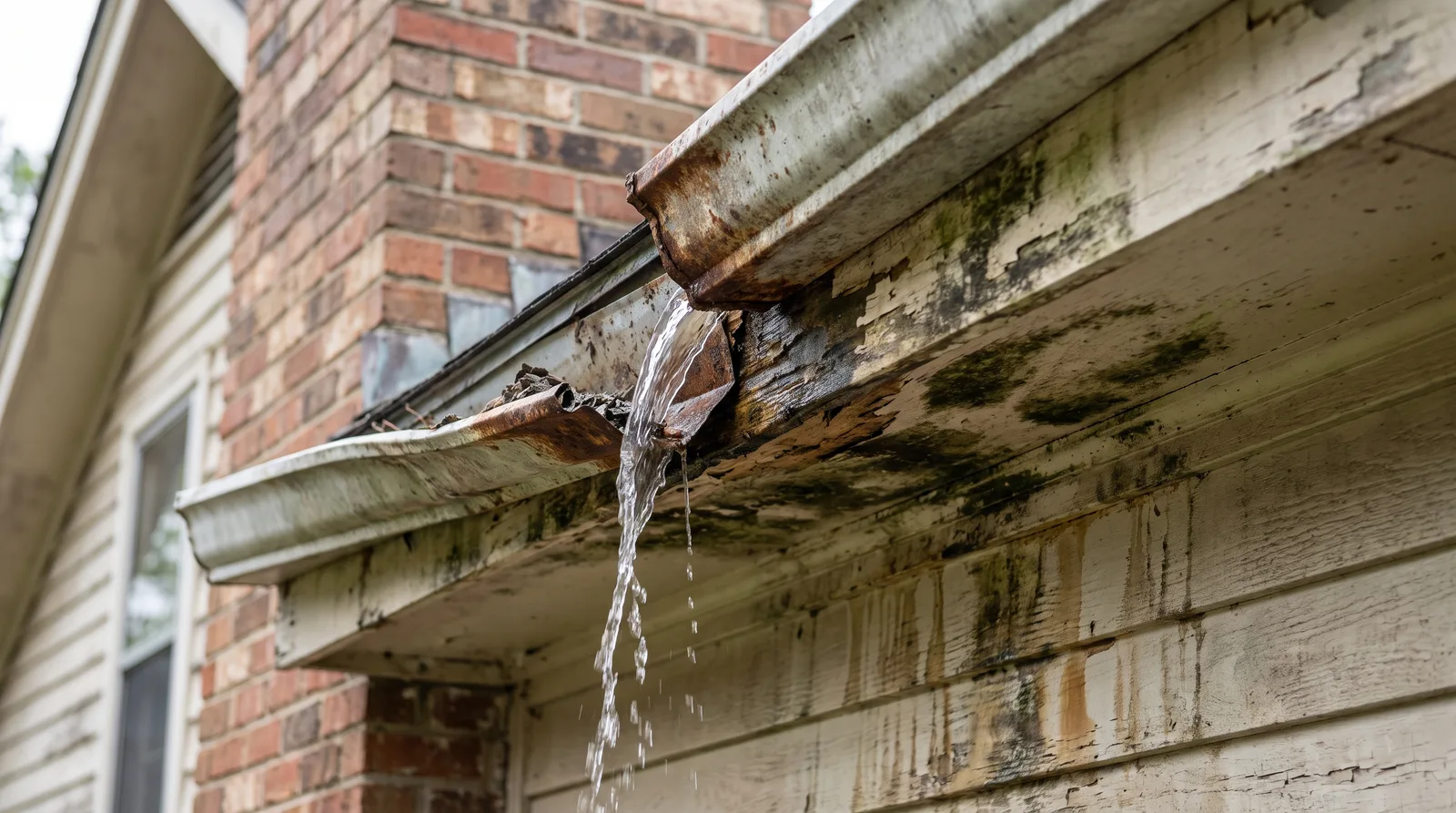
Your gutters are not a standalone system. They are the first line of defense for your entire home's exterior, and when they fail, the damage spreads fast. Water from gutter failures cascades inward through multiple layers of the home's exterior (fascia, soffit, siding, foundation) causing progressive structural damage, instead of flowing harmlessly into your downspout, water pools behind your gutter, seeps under your fascia (the board that holds the gutter), and soaks into your soffit (the underside of your roof overhang), then moves into your siding, rots the wood framing behind it, and eventually finds its way into your foundation and basement.
A small leak today becomes a five-figure repair tomorrow because the moment water breaches one layer of your exterior, it does not stop at that layer, it keeps moving inward, rotting wood, feeding mold, and destabilizing the structure itself.
How Gutter Failures Cascade to Soffit, Fascia, Siding, and Foundation#
When a gutter leaks or overflows, water runs down the outside of your fascia instead of through the downspout. That fascia is typically made of wood or aluminum, and wood absorbs water like a sponge. Within weeks, the wood begins to soften and rot. The soffit, which sits directly above the fascia, gets wet from the same overflow. Mold colonizes both surfaces.
From there, water works its way behind your siding. Siding is designed to shed water, not stop it completely, it assumes the gutter will catch the runoff. When the gutter fails, water gets behind the siding and sits against the sheathing (the plywood layer under your siding). Wood sheathing rots in months. Your home's structural integrity is now compromised.
Finally, water that drains down the outside of your foundation or pools at the base of your home will eventually find cracks in the foundation or seep through the rim joist (the band of wood that sits on top of your foundation). Once water is inside your basement, you are dealing with mold, damaged flooring, ruined possessions, and potential structural settling.
Basement Flooding Prevention: Why Early Detection Saves Thousands#
Proper gutter maintenance reduces basement flooding by 40%. This means that many basement floods that homeowners experience are preventable with a functioning gutter system. The cost of a basement flood, water removal, mold remediation, structural repair, and replacement of damaged contents, runs into tens of thousands of dollars. A gutter repair or replacement costs between $120 and $280.
After several years of gutter neglect, 85% of people report increased water damage. That is not a coincidence. Neglect compounds. A clogged gutter this year becomes a sagging gutter next year, which becomes a cracked gutter the year after, which becomes a flooded basement the year after that.
Early detection is not optional. It is the difference between a routine cleaning and a major foundation repair.
The 6 Root Causes of Gutter Leaks and How to Detect Them#
Clogged Gutters and Debris Buildup#
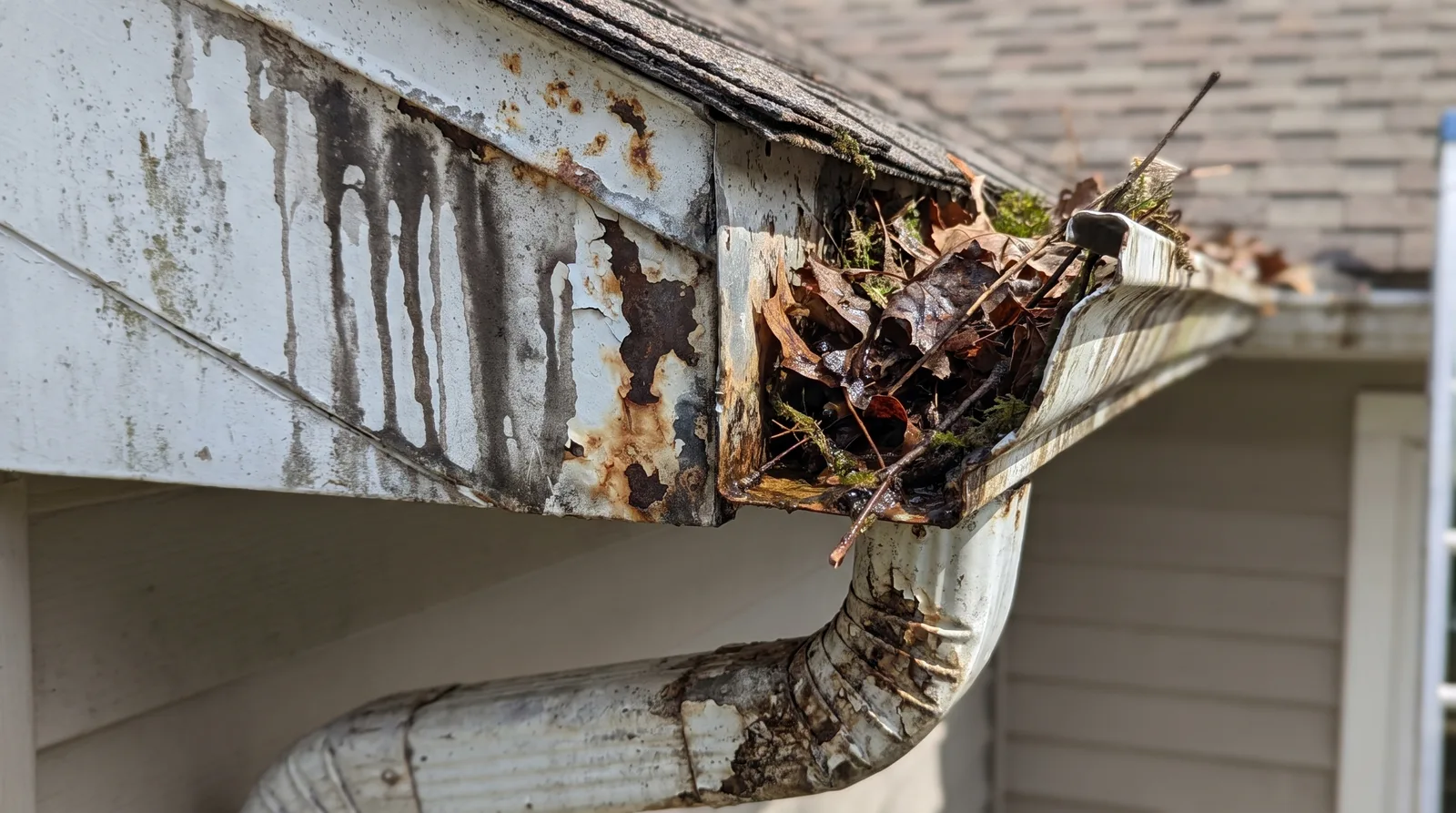
Clogged gutters are the most common cause of leaks, and they are also the most preventable. Leaves, twigs, shingle granules, and dirt accumulate in your gutter over time. In fall and spring, this happens fast. Clogged gutters cause water to pool and overflow rather than flow toward the downspout, resulting in water running down the fascia and siding; the pooled water also sits in the gutter, adding weight and stress to the hangers that hold the gutter to your home.
How to detect it: Look at your gutter after a rain. Water should be flowing toward the downspout. If you see water pooling in the middle of a run, or overflowing over the edge, your gutter is clogged. In fall, you may see leaves visibly packed in the gutter. In spring, you may see a sludge of decomposed leaves and dirt.
The professional cost for gutter cleaning varies, depending on the size and accessibility of your home. Many homeowners clean their own gutters, but this requires ladder work and carries a fall risk, one reason professional cleaning is worth the cost for many people.
Gutter Cracks, Holes, and Material Degradation Timelines#
Gutters are made of aluminum, steel, copper, or vinyl. Each material has a lifespan. Aluminum gutters, the most common type, typically last several decades before they begin to crack and corrode. Steel gutters rust faster, often within a shorter timeframe. Copper gutters last much longer, but they are expensive. Vinyl gutters are affordable but brittle in cold climates and can crack relatively quickly.
As a gutter ages, the material becomes brittle. Small cracks appear, often at seams or where the gutter was punctured by a falling branch. These cracks start small, you might not notice them, but they grow. Water seeps through, and the crack widens as the material expands and contracts with temperature changes.
How to detect it: Inspect your gutters closely during daylight. Look for visible cracks, holes, or rust stains. If your gutters are aging and you see any of these signs, replacement is likely in your near future. Patching a small hole can buy you time, but it is a temporary fix. Once cracks appear, the material is degrading, and more cracks will follow.
Sagging Gutters and Improper Slope (The 1-in-20 Rule)#
A gutter must slope slightly toward the downspout so water flows downhill, not pooling in the middle. The standard slope is 1 inch per 20 feet of run. That is a gentle slope, barely noticeable to the eye, but it is essential for drainage.
Gutters sag when the hangers (the metal brackets that hold the gutter to your fascia) become loose or corroded, or when the gutter itself becomes too heavy with debris or ice. A sagging gutter loses its slope. Water pools instead of flowing. The pooled water adds more weight, which causes more sagging. The cycle accelerates.
In northern climates, ice dams make this worse. When snow melts and refreezes at the edge of your roof, it can dam up water in your gutter, adding significant weight. A gutter that was barely holding on now fails completely.
How to detect it: Stand back and look at your gutter from the side. It should be a straight line sloping gently toward the downspout. If you see a sag or dip in the middle, the gutter is not draining properly. After a rain, water pooling in that sag confirms the problem.
Leaking Gutter Joints and Seams#
Sectional gutters (the kind made of separate pieces joined together) have seams where two sections meet. These seams are sealed with caulk or sealant, but that sealant degrades over time. UV light, temperature swings, and water pressure all work to break down the seal. Once the seal fails, water leaks through the joint.
Seamless gutters eliminate most of these joints. They are formed on-site as one continuous piece, with only one or two seams (typically at corners or where the gutter meets a downspout). This is one reason seamless gutters are more durable and leak-resistant than sectional gutters.
If you see water dripping from a seam, or if the caulk around a seam is cracked or missing, that seam is leaking. Caulk can be re-sealed, but if the leak persists after re-sealing, the joint itself may be damaged and the gutter section may need replacement.
Downspout Dysfunction and Drainage Failure#
A downspout that is clogged, disconnected, or too short creates a drainage failure. If your downspout is clogged with debris, water backs up into the gutter and causes overflow. If your downspout is disconnected or ends too close to your foundation, water pools at the base of your home instead of being diverted away.
Industry guidance for downspout distance from the foundation wall in Northern Virginia is at least 4 to 6 feet away from the foundation wall, and ideally 10 feet. This gives water a chance to disperse into the soil and away from your foundation. A downspout that ends very close to your foundation is almost as bad as no downspout at all.
How to detect it: After a rain, follow the water from your downspout. Does it flow freely, or does it back up into the gutter? Does the downspout reach far enough from your foundation? If water is pooling at the base of your home or running down your foundation wall, your downspout is not doing its job.
Seasonal and Climate-Specific Leak Patterns (Northern Climates, Freeze-Thaw Cycles)#
In northern climates, freeze-thaw cycles create unique gutter problems. Water that pools in a gutter freezes overnight. Ice expands, putting pressure on the gutter and the seams. When it thaws, cracks appear. This cycle repeats all winter, and by spring; your gutter is compromised.
Ice dams are another northern problem. When snow on your roof melts and refreezes at the edge, it blocks the gutter. Water backs up under your shingles and into your attic. This is not a gutter leak in the traditional sense, but it is a gutter failure, the gutter cannot do its job because ice is blocking it.
In warmer climates, UV damage and thermal expansion are the main culprits. Gutters expand and contract with temperature swings, and over time, this movement loosens seams and cracks the material.
How to detect it: In northern climates, inspect your gutters after the first thaw. Look for cracks, especially at seams. If you see ice dams forming, that is a sign your gutter is not draining properly or your attic is losing heat (a separate issue, but one that compounds gutter problems). In warmer climates, look for cracks and rust as the primary signs of age and UV damage.
Permanent Fixes: Repair vs. Replace, Seamless vs. Sectional, and Guard Integration#
When to Repair and When to Replace: A Decision Framework#
The decision to repair or replace depends on three factors: the age of your gutter, the extent of the damage, and the cost-benefit math.
If your gutter is relatively new and has a single crack or a small hole, repair makes sense. A patch or re-sealed seam can extend the life of the gutter by several years. The cost is low, and the problem is localized.
If your gutter is aging and you see multiple cracks, sagging, or widespread rust, replacement is the better move. Repairing an old gutter is like applying quick fixes to a system that is fundamentally degrading, you might get a few more months out of it, but you are delaying the inevitable. The cost of multiple repairs will eventually exceed the cost of replacement.
If your gutter is causing active water damage (water in your basement, rot in your fascia or siding), replacement is urgent. The cost of the gutter replacement is trivial compared to the cost of repairing the damage the failing gutter has caused.
Seamless Gutters vs. Sectional Gutters for Leak Prevention#
Seamless gutters are formed on-site as one continuous piece. They have no seams except at corners and downspout connections. Sectional gutters are made of separate pieces that are joined together with caulk or sealant.
Seamless gutters are more expensive upfront, but they are more durable and leak-resistant. Because they have fewer seams, there are fewer places for water to escape. The seams that do exist are typically at corners, where the gutter is less likely to pool water.
Sectional gutters are cheaper upfront and easier to install, but the seams are a weak point. Over time, the sealant degrades, and leaks develop at the joints. If you are replacing your gutters and plan to stay in your home for the long term, seamless gutters are the better investment. If you are renting or planning to move soon, sectional gutters may be acceptable.
Seamless gutters exist precisely to close the gap between what a gutter is supposed to do and what sectional gutters actually deliver over time, that is why seamless gutters have become the standard for permanent, low-maintenance installations.
Gutter Guards: Integration Strategy, Material Comparison, and Northern Climate Performance#
Gutter guards are mesh or screen covers that sit on top of your gutter and allow water through while blocking leaves and debris. They reduce the frequency of gutter cleaning and can extend the life of your gutter by reducing the weight of debris.
However, gutter guards are not a complete solution. No guard blocks all debris. Smaller particles, shingle granules, pollen, dirt, can still accumulate in your gutter. Guards can also become clogged themselves, especially in fall when leaves are heavy. A clogged guard is as bad as a clogged gutter.
In northern climates, gutter guards can make freeze-thaw problems worse. Debris trapped under the guard can hold moisture, which freezes and expands, putting pressure on the gutter. Guards can also trap ice, making ice dams more likely.
The downside to gutter guards: They require maintenance. You still need to inspect and clean your gutters periodically, and you may need to clean the guard itself. They add cost upfront. And they do not solve the underlying problem of a poorly sloped or aging gutter.
The best gutter guard for northern climates: Solid covers (not mesh) that shed debris to the side are better than mesh guards in freeze-thaw climates because they do not trap moisture. However, even solid covers require periodic inspection. No guard eliminates the need for maintenance.
If you install gutter guards, pair them with seamless gutters. The combination of fewer seams and reduced debris load gives you the best chance of a leak-free system. But guards are an add-on, not a replacement for a well-maintained gutter.
Gutter Installation and Replacement Costs: What to Budget and How to Estimate#
The cost to replace gutters varies widely depending on the size of your home, the material you choose (aluminum, steel, copper, or vinyl), and whether you go seamless or sectional. A rough estimate for a typical single-family home ranges from several thousand dollars upward for a complete replacement.
To estimate the cost for your own home, measure the linear feet of gutter you need. Most homes require a moderate linear footage of gutter. Multiply that by the per-foot cost of your chosen material and installation. Seamless aluminum gutters typically cost more per foot than sectional aluminum, but the total cost difference is often smaller than you might expect because seamless gutters require fewer seams and less labor.
Get multiple quotes from local contractors. In Concord, NH, Gutter Giant has served the area since 2021 and maintains a 5-star average review rating. We serve Manchester, Nashua, Concord, Bedford, Merrimack, Derry, Londonderry, and Salem. When comparing quotes, make sure you are comparing the same material, the same type of gutter (seamless vs. sectional), and the same scope of work (gutters only, or gutters plus downspouts plus guards).
Do not choose based on price alone. A cheap gutter installation by an inexperienced contractor will fail faster than a more expensive installation by someone who knows what they are doing. Proper slope, proper hanger spacing, and proper sealing are what make a gutter last. You cannot see these details in a finished gutter, so you have to trust the contractor's reputation and experience.
Your Next Move: Assess Your Own Gutters#
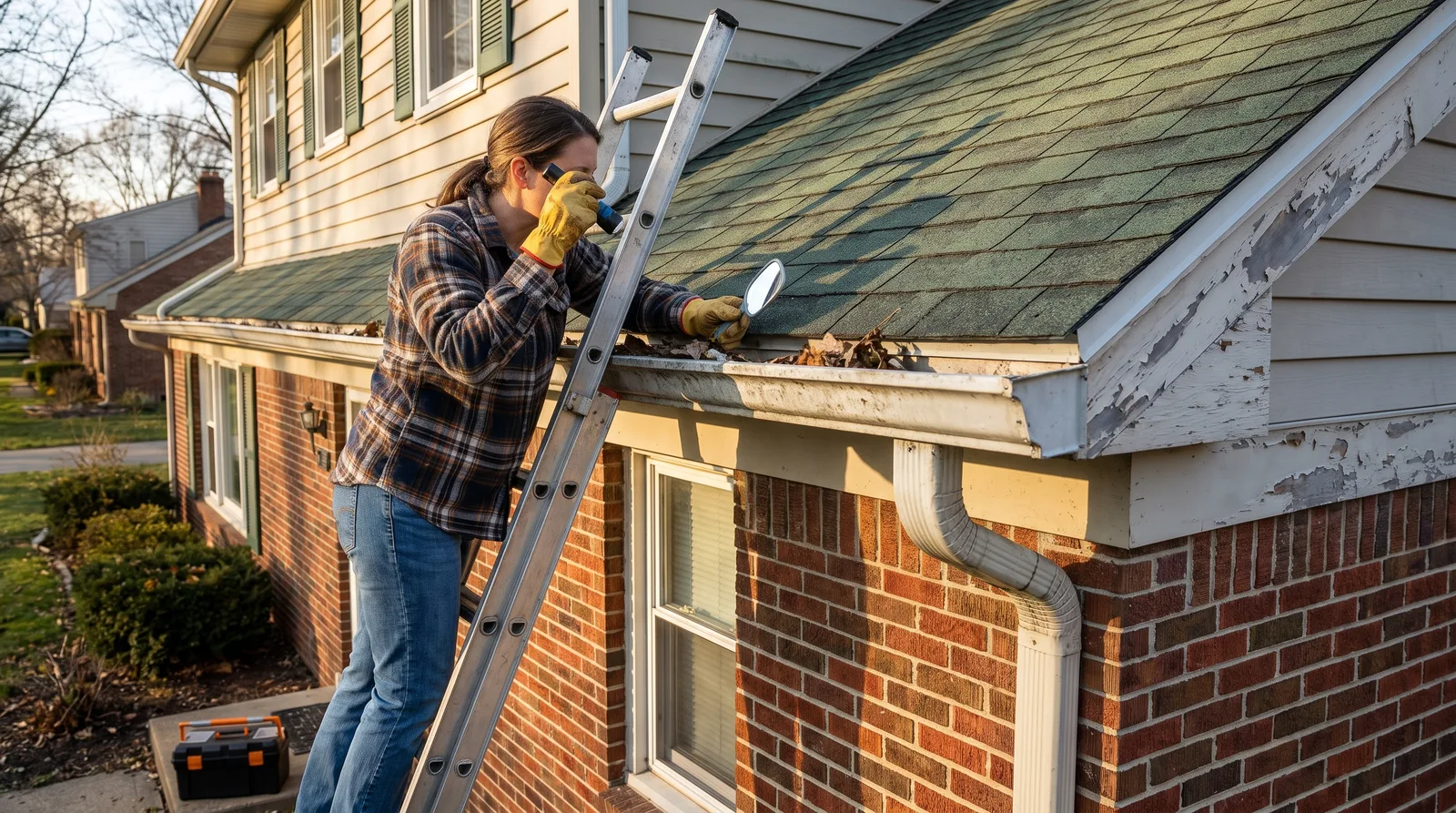
You now know the six causes of gutter leaks and how to spot each one. The question is: what does your gutter look like right now?
Here is what to do this week:
Inspect your gutters after the next rain. Look for pooling water, overflow, visible cracks, sagging, or rust. If you see any of these, you have a problem that needs attention.
Check the age of your gutter. If you know when it was installed, you know how much life it has left. If you do not know, look at the material and condition. Aging aluminum gutters that are visibly corroded or cracked warrant professional assessment.
Measure the distance from your downspout to your foundation. It should be a moderate distance away to allow water dispersion. If it is very close, water is pooling at your foundation.
Get a professional inspection if you see damage or if your gutters are aging. A professional can tell you whether repair or replacement makes sense for your specific situation and can give you an accurate cost estimate.
The cost of a gutter inspection and estimate is zero. The cost of waiting until water is in your basement is tens of thousands of dollars. The math is clear.
| Cause | Primary Indicator | Detection Method |
|---|---|---|
| Clogged Gutters and Debris Buildup | Water pooling or overflowing at edges | Observe water flow direction after rain; look for visible leaves or sludge |
| Gutter Cracks, Holes, and Material Degradation | Visible cracks, holes, or rust stains | Close inspection during daylight; material age assessment |
| Sagging Gutters and Improper Slope | Water pooling in the middle of the run | Check that gutter drops 1 inch per 20 feet toward downspout |
| Loose or Corroded Hangers | Gutter pulling away from fascia | Look for gaps between gutter and fascia board |
| Damaged or Missing Downspouts | Water cascading down fascia instead of through spout | Trace water path during rainfall or use water test |
| Fascia and Soffit Water Damage | Soft, rotting wood; visible mold growth | Press fascia with finger; inspect soffit for discoloration |
| Timeline | System Status | Preventive Action Required |
|---|---|---|
| After Neglect Period | Clogged → Sagging → Cracked → Flooded | Early detection critical to prevent cascading foundation damage |
| Preventive Maintenance Active | Basement flooding reduced significantly | Routine cleaning and slope verification protects entire exterior system |
| Service Type | Cost Range | Source |
|---|---|---|
| Professional Gutter Cleaning | $120 to $280 | michaeliscorp.com |
| Downspout Installation/Relocation | At least 4 to 6 feet from foundation; ideally 10 feet | dryhome.com (Northern Virginia guidance) |
Seamless Gutter Replacement Cost Estimator
Estimates the full cost to replace leaking gutters with custom seamless gutters, including material grade, downspout extensions, optional gutter guards, and damaged fascia board replacement.
Seamless Gutters:
Downspouts & Drops:
Gutter Protection / Guards:
Fascia Board Repair / Replacement:
Total Estimated Project Cost:
Frequently Asked Questions
What is the correct gutter slope, and how do I measure it?
Gutters must slope 1 inch lower per 20 feet of horizontal run toward the downspout. This gentle slope is barely visible to the eye but essential for gravity-fed drainage. Measure from the high end of a run to the downspout; if the drop is less than this ratio, water will pool instead of flow, leading to overflow and leaks.
How far should downspouts extend from my home's foundation?
Downspouts should be positioned at least 4 to 6 feet away from the foundation wall, with 10 feet being the ideal distance. This separation prevents water from pooling at the foundation base, which can create cracks and allow seepage into the basement, one of the costliest gutter-related failures.
What percentage of water damage is preventable through proper gutter maintenance?
Proper gutter maintenance reduces basement flooding by 40 percent. Conversely, after three or more years of gutter neglect, 85 percent of homeowners report increased water damage to their homes, demonstrating how critical consistent maintenance is to avoiding cascading structural damage.
Why is early gutter leak detection worth the investment?
A small leak today becomes a five-figure repair tomorrow because water does not stop at the gutter, it seeps behind fascia, rots wood framing, feeds mold, and eventually reaches your foundation and basement. Early detection saves thousands by preventing this cascade, whereas neglect compounds yearly into sagging, cracking, and catastrophic basement flooding.
How does a clogged gutter cause leaks even without a hole?
A clogged gutter cannot drain water toward the downspout, so water pools and overflows over the edge instead. This pooled water adds weight to the hangers, stresses the gutter, and directs runoff down your fascia and siding, causing the same water damage as a crack, even though no hole exists in the gutter material itself.
What is the relationship between gutter material type and lifespan before leaks occur?
Aluminum gutters, the most common type, typically last several decades before cracking and corroding. Steel gutters rust faster than aluminum, vinyl gutters crack relatively quickly in cold climates, and copper gutters last the longest but are expensive. Material degradation accelerates with age, so inspecting older gutters frequently for cracks is essential.
What is the average cost of gutter cleaning in my area?
Professional gutter cleaning typically costs between $120 and $280.
Disclaimer
This content is general information about gutters and home-exterior work and is not a substitute for an on-site inspection. Contact Gutter Giant for advice specific to your home.
Sources
- How To Repair a Leaky Gutter - This Old House - thisoldhouse.com (2014-03-06)
- zipdo.co - zipdo.co (2026-02-12)
- Solving water damage from clogged gutters efficiently - michaeliscorp.com
- How Do I Know If My Gutters Are Causing Damage to ... - dryhome.com