
How Often Should Gutters Be Inspected? A Seasonal Maintenance Schedule?
Short answer
Inspect gutters at least 2 times per year, spring and fall, for most homes, but increase to 3-4 times annually if heavy deciduous trees or pine coverage surrounds your property. The baseline recommendation covers standard residential properties; however, homes with significant tree canopy require additional mid-summer and late-fall checks to manage debris buildup before it causes drainage failure or foundation damage.

“Most homes need gutter cleaning twice a year: once in late spring after pollen and seed pods finish falling, and once in late fall after leaves have dropped.”
Home Genius Exteriors
“A routine cleaning each spring keeps water flowing where it should.”
Heights Aluminum
Your gutters are quietly failing right now, and you won't know it until water starts pooling in your basement or your fascia boards begin to rot. That's because gutters don't work in isolation, they're the first line of defense in your home's entire water management system, and when they clog or fail, the damage cascades into siding, soffit, foundation, and landscaping before you ever see a problem. The good news is that a simple seasonal inspection schedule catches these failures early, when they're cheap to fix. Here's what you actually need to do.
How Often Should Gutters Be Inspected? The Baseline Schedule#
The baseline recommended gutter inspection frequency for most homes is at least twice per year, typically in spring and fall. This isn't arbitrary, spring catches debris from winter and early leaf drop, while fall clears out the heaviest leaf load before winter rain and snow arrive. Most homeowners, though, fall short of this standard. According to industry data, 41% of homeowners clean or inspect gutters only once or twice a year, and 27% act on gutters only when a problem arises. That reactive approach is expensive: by the time you notice pooling water or staining on your siding, the water has already begun working its way into your fascia and foundation.
The 2x Annual Standard and Why Most Homes Need It#
Spring and fall inspections work because they align with the two seasons that load gutters most heavily. In spring, winter debris, pine needles, small branches, granules from roof wear, has accumulated, and new growth is starting. In fall, deciduous trees drop millions of leaves over a few weeks. Between these two windows, a well-maintained gutter system can handle the moderate debris load of summer and the lighter winter months (in most climates). The twice-yearly rhythm is proven because it prevents the backlog that leads to overflow and water damage.
Increased Frequency for Tree-Heavy Properties#
If your property has significant tree coverage, the baseline doubles or triples. Homes with pine or needle-bearing trees nearby should have gutters cleaned multiple times per year. Heavy deciduous tree coverage requires gutter cleaning throughout spring, midsummer, and fall. This isn't overcleaning, it's matching inspection frequency to the actual debris load your gutters face. A property surrounded by pines or oaks will clog far faster than an open lot, and skipping a seasonal inspection on a tree-heavy property is the fastest way to guarantee overflow damage.
Industrial and Commercial Inspection Protocols#
Commercial and industrial rainwater gutter systems follow a stricter schedule. Industrial rainwater gutter systems should be inspected multiple times in the first year of operation to establish a maintenance regime. After that baseline is set, inspections should occur at regular intervals throughout the year, at minimum annually, though quarterly checks are common. This higher frequency reflects the larger water volumes and the cost of failure in commercial settings, where a single overflow can damage inventory, equipment, or operations.
Gutters Don't Work Alone: The Full-Exterior Inspection Roadmap#
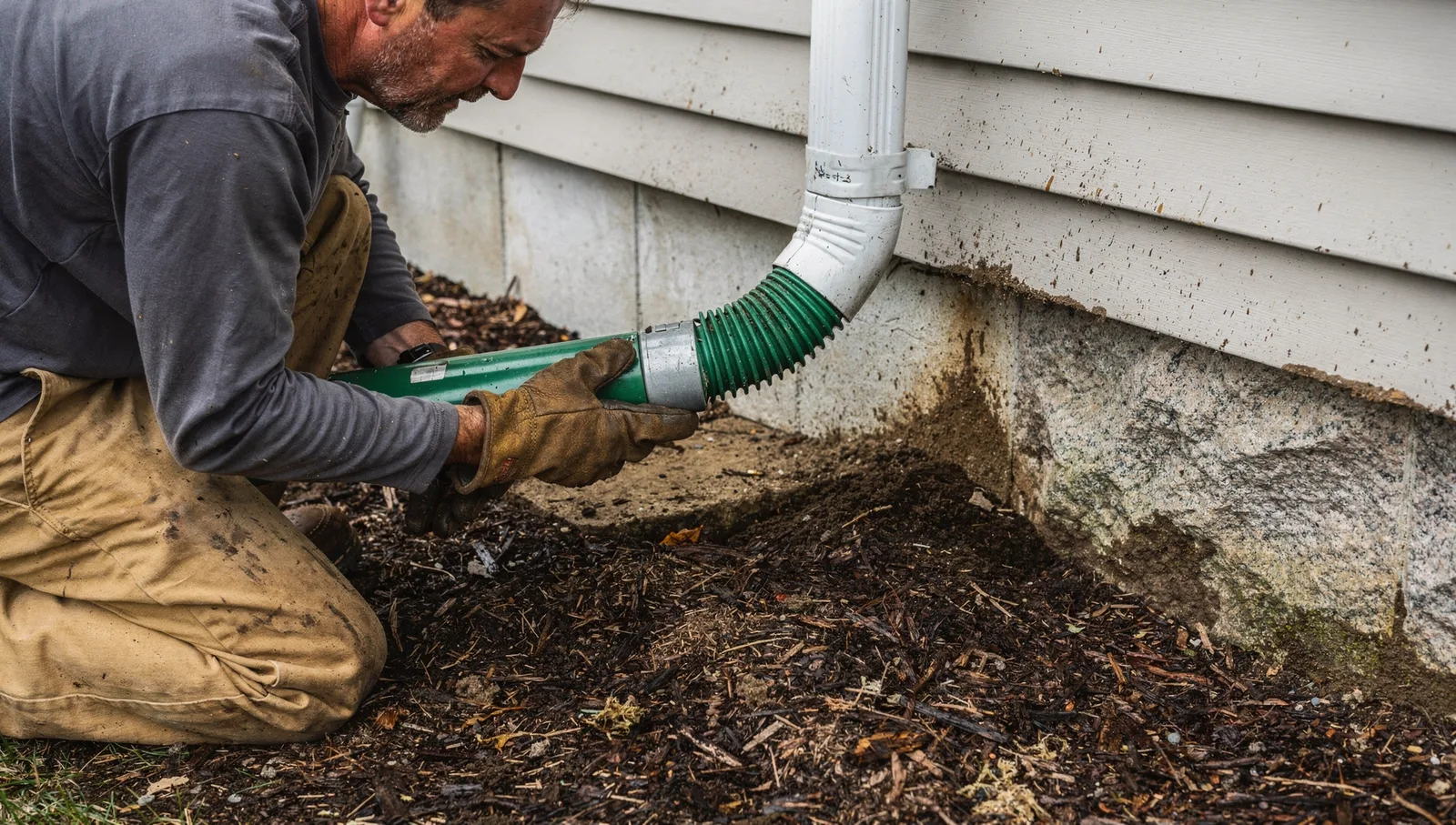
Here's where most homeowners miss the real value of gutter inspections: they treat gutters as a standalone system. They're not. Your gutters are part of a larger water management system that includes your roof, downspouts, grading, siding, fascia, soffit, and foundation. When one component fails, the damage spreads to all the others. A clogged gutter doesn't just overflow, it sends water down the wrong path, and that water finds its way into places it was never meant to go.
How Clogged Gutters Cascade Into Siding, Fascia, and Foundation Damage#
Water that overflows from a clogged gutter doesn't fall straight down. It runs down the outside of your fascia boards, soaks into the wood, and begins rotting from the inside out. That same overflow water pools against your foundation, seeping into the soil around your basement walls and creating hydrostatic pressure that forces water through cracks and mortar joints. Over time, it reaches your siding, where it wicks behind the boards and promotes mold growth and wood decay. By the time you see staining on the outside of your siding or notice a musty smell in the basement, the damage is already months or years old. Seamless gutters discipline exists precisely to close this gap, to catch the overflow before it starts the cascade. A seasonal inspection that checks not just the gutter itself but the condition of the fascia, soffit, and foundation perimeter is the only way to interrupt that chain before it becomes expensive.
The Downspout and Grading Connection: Inspection Priority During Seasonal Checks#
Downspouts are where most inspections fail. A gutter can be clean and flowing perfectly, but if the downspout is clogged, kinked, or discharging water too close to the foundation, you've solved nothing. During each seasonal inspection, check that downspouts are clear, that they extend a sufficient distance away from the foundation, and that the ground slopes away from the house so water runs off rather than pooling. If a downspout empties onto a flat or inward-sloping grade, water collects right where your foundation is most vulnerable. Grading is often overlooked in gutter inspections, but it's the final step in the water management chain, without it, even perfect gutters and downspouts fail.
Gutter Guards, Roof Ventilation, and System Interdependencies#
Gutter guards reduce the frequency of debris accumulation, but they don't eliminate the need for inspections. Guards can clog with fine debris, ice, or algae, and they can trap water against the fascia if they're not installed correctly. Roof ventilation also matters: if your attic isn't venting properly, moisture builds up, and that moisture can condense on the underside of your roof decking and drip into the gutters, creating a secondary water source that keeps gutters damp even after they've been cleaned. A full-system inspection checks all three: gutter condition, guard performance, and roof ventilation. Skipping any one of them leaves a gap.
Cost-Benefit Analysis: Inspection Frequency vs. Repair Prevention#
The math is stark: a professional gutter inspection costs far less than repairing rotted fascia, replacing siding, or addressing foundation water damage. Fascia replacement on a typical home runs into the thousands, foundation repair into the tens of thousands. The return on that investment is measured across decades of protection. Homes that follow a consistent inspection schedule avoid the cascade damage entirely. Homes that skip inspections or wait until problems appear end up paying multiples of what a preventive program would have cost. This is the preventive maintenance ladder: catch problems early, fix them cheaply, and avoid the exponential cost of neglect.
Seasonal Inspection Checklist and Post-Storm Protocols#
A seasonal inspection doesn't require climbing onto your roof or hiring a professional every time. You can do a meaningful check from the ground with binoculars and a walk around your foundation. Here's what to look for and when to act.
What to Check During Spring and Fall Inspections#
During spring and fall inspections, walk the perimeter of your home and look for these specific signs:
Gutter debris and flow: Look for leaves, pine needles, granules, or sediment in the gutters. Pour water from a hose into a section and watch it flow toward the downspout. If it pools or overflows, the gutter is clogged.
Fascia and soffit condition: Check for water staining, soft spots, or visible rot on the boards behind the gutters. Water staining indicates overflow or seepage. Soft wood means water has been penetrating for months.
Downspout discharge: Follow each downspout to where it empties. Confirm it extends an adequate distance from the foundation and that water is flowing away, not pooling.
Ground grading: Walk along the foundation perimeter and check that the ground slopes away from the house. If you see low spots where water would collect, that's a grading problem that needs fixing.
Siding and caulking: Look for water staining, mold, or cracks in caulk around windows and doors. These are signs that water is running down the exterior rather than being managed by gutters.
Basement or crawlspace: After heavy rain, check for moisture, efflorescence (white mineral deposits), or active leaks. These are late-stage signs that water is reaching your foundation.
Signs That Gutters Need Immediate Attention#
Some problems can't wait for the next seasonal inspection. If you see any of these, address them within days:
Sagging or pulling away from the house: Gutters that sag are holding water and will eventually fail. This is a structural problem that needs immediate repair.
Visible separation at seams: If seamless gutters are separating or if sectional gutters are pulling apart at joints, water is leaking behind the gutter and into the fascia.
Water pooling in the gutter: Standing water in a gutter after rain means the gutter is clogged or the pitch is wrong. This will accelerate rot and mold growth.
Mold or algae growth: Black or green growth in the gutter indicates persistent moisture and is a sign that water is not draining properly.
Cracks or holes: Any visible damage to the gutter itself will leak. Small cracks can be sealed, but large damage usually requires section replacement.
Overflow during normal rain: If gutters overflow during a moderate rain (not a downpour), they're undersized or clogged. This is the most common sign that damage is starting.
Post-Storm Inspection: When and How to Act#
After heavy rain, wind, or a storm, inspect your gutters and exterior within a short timeframe. Walk the perimeter and check for:
- New debris in gutters or on the roof
- Gutters that have shifted or pulled loose
- Downspouts that are kinked, dented, or disconnected
- Water pooling against the foundation or in the yard
- New water staining on siding or fascia
If you find debris, remove it. If you find structural damage (sagging, separation, or loose hangers), call a professional. If you find water pooling against the foundation, check your grading and downspout discharge immediately, this is a sign that water is not being managed properly and foundation damage could begin quickly.
Professional vs. DIY Inspection: Trade-Offs and When to Call an Expert#

You can do a meaningful inspection yourself from the ground. You cannot safely inspect gutters from a ladder if you're uncomfortable at height, and you cannot see into gutters or under fascia boards without getting close. Here's the trade-off:
DIY inspection (from the ground with binoculars):
- Free or nearly free
- Can catch obvious problems (debris, overflow, sagging)
- Cannot see inside gutters or under fascia
- Cannot safely access second-story gutters
- May miss early-stage rot or hidden damage
Professional inspection:
- Costs an amount per visit
- Includes close-up examination of gutters, fascia, downspouts, and grading
- Can identify rot, separation, and hidden water damage before it spreads
- Includes pressure washing and minor cleaning
- Provides documentation for insurance or resale
A reasonable approach is to do a ground-level DIY check twice per year and hire a professional at regular intervals or after a major storm. If you're over 60, uncomfortable on ladders, or have a complex roof, hire a professional for every seasonal inspection, the safety risk and the cost of a fall far outweigh the inspection fee.
Gutter Guard Maintenance and Inspection Impact#
If you have gutter guards, they still need inspection. Ice can form on guards and dam water behind them. Inspect guards during seasonal checks for:
- Debris buildup on the surface
- Separation from the gutter edge
- Ice dams or water pooling on top
- Algae or mold growth
If guards are clogged, they need cleaning just like gutters. The benefit of guards is that you clean them less often, not that you never clean them. A guard that hasn't been checked in a year is as likely to fail as an unguarded gutter.
Gutter Lifespan and Inspection Timing Over Time#
Gutter lifespan varies by material and maintenance. Aluminum gutters typically last several decades with proper maintenance. Steel gutters last a shorter span than aluminum. Copper gutters can last many decades. The single biggest factor in lifespan is inspection frequency and early repair. A gutter that's inspected twice per year and cleaned promptly will last at the high end of its range. A gutter that's neglected will fail at the low end or sooner.
As gutters age, inspection frequency should increase slightly. An aging gutter should be inspected at least twice per year plus after storms. An older gutter should be inspected quarterly or more often if tree coverage is heavy. This isn't because old gutters fail suddenly, it's because they fail gradually, and catching the early signs of failure (small leaks, separation, soft spots in fascia) is the only way to avoid sudden, catastrophic failure.
Your Next Step: Audit Your Own System#
You now know the baseline: twice per year for most homes, multiple times annually for tree-heavy properties. You know what to look for and when to call a professional. The next step is to audit your own system and establish a schedule.
Identify your property type: Do you have heavy tree coverage? If yes, plan for multiple inspections per year. If no, the twice-yearly baseline applies.
Schedule your inspections: Mark your calendar for spring (late April or early May) and fall (late September or early October). If you have trees, add a midsummer check (July) and a late-fall check (November).
Do a ground-level walk-through: Before your first professional inspection, walk the perimeter with binoculars. Note any obvious problems, sagging, debris, water staining, or pooling.
Decide: DIY or professional: If you're comfortable on a ladder and your gutters are single-story, a DIY inspection is fine. If you're uncomfortable at height or have a complex roof, hire a professional for at least one annual inspection.
Document what you find: Take photos of any problems and keep a simple log of what you cleaned, when, and what you found. This log is invaluable if you ever need to file an insurance claim or sell your home.
A gutter inspection is one of the cheapest forms of home maintenance you can do. It's also one of the most effective at preventing expensive damage. The homes that avoid foundation problems, rotted fascia, and water-damaged basements are the ones whose owners inspect twice per year and act on what they find. Start this month. Your foundation will thank you.
| Property Type / Condition | Inspection Frequency | Recommended Timing |
|---|---|---|
| Standard residential (minimal tree coverage) | At least 2 times per year | Spring and fall |
| Heavy deciduous tree coverage | 3 times per year | Spring, midsummer, and fall |
| Pine or needle-bearing trees nearby | 3 to 4 times per year | Multiple seasonal intervals |
| Industrial rainwater systems (first year) | 4 times per year | Quarterly throughout first year |
| System Component | What to Inspect | Why It Matters for Water Management |
|---|---|---|
| Gutter channel | Clear of debris, no standing water, intact fasteners | Allows water flow; prevents overflow cascade to fascia and foundation |
| Downspouts | Clear flow, no kinks or clogs, proper extension away from foundation | Directs water away from foundation; prevents pooling against basement walls |
| Fascia and soffit | No rot, water damage, or separation from gutter | First barrier to water penetration; rotting fascia accelerates system failure |
| Foundation grading | Slope away from house, no low spots where water pools | Prevents hydrostatic pressure on basement walls and foundation cracks |
| Gutter guards (if installed) | No clogging, proper installation, no water trapping against fascia | Reduces debris but still requires inspection; improper installation can trap water |
Gutter Inspection Frequency & Maintenance Cost Calculator
Calculates the recommended seasonal inspection & maintenance frequency, estimated annual service cost, and projected 5-year damage risk prevention based on home height, tree exposure, gutter length, and guard status.
Recommended Inspections & Cleanings / Year:
Estimated Annual Inspection & Maintenance Cost:
Clog & Overflow Risk Factor (Scale 0.5 - 5.0):
Estimated 5-Year Prevented Damage (Fascia/Soffit/Foundation):
Frequently Asked Questions
Do gutters have to be cleaned every year?
Most residential properties need gutter cleaning at least twice yearly (spring and fall) rather than just once. However, properties with heavy tree coverage, particularly pine or deciduous trees, require 3-4 annual cleanings to prevent overflow damage. The baseline twice-yearly schedule aligns with the two seasons that load gutters most heavily with debris.
What time of year is best to get gutters cleaned?
Spring and fall are the two priority windows for standard residential properties. Spring clears winter debris and early growth; fall removes the heaviest leaf load before winter arrives. For tree-heavy properties, midsummer cleaning becomes essential to prevent mid-season overflow. This seasonal rhythm prevents the backlog that causes water damage.
Do gutters need to be inspected?
Inspections are critical because gutter failure cascades into siding, fascia, foundation, and basement damage before visible signs appear. While 41% of homeowners clean or inspect gutters only once or twice a year and 27% of homeowners act on gutters only when a problem arises, regular seasonal inspections catch failures early, when repairs are affordable. Waiting for visible damage means water has already begun penetrating your home's structure.
What should homeowners check during each seasonal inspection?
Check the gutter channel for debris and standing water; verify downspouts are clear and extend away from the foundation, inspect fascia and soffit for rot or water damage, confirm ground slopes away from the house, and examine gutter guards for clogging or improper installation. This full-system check identifies problems before they cascade into expensive foundation or basement damage.
How does downspout performance affect overall gutter inspection timing?
A clean gutter fails if its downspout is clogged, kinked, or discharges water too close to the foundation. During seasonal inspections, verify downspout flow and proper grading to ensure water routes away from the foundation rather than pooling against basement walls. Without correct downspout function and grading, even perfect gutters cannot prevent water damage.
Can gutter guards reduce inspection frequency?
Gutter guards reduce debris accumulation but do not eliminate the need for inspections. Guards can clog with fine debris, ice, or algae, and improper installation can trap water against the fascia. Seasonal inspections remain necessary to verify guard condition and prevent the system failures guards were intended to prevent.
What exterior damage patterns signal gutter problems before they escalate?
Water staining on siding, visible rot on fascia or soffit boards, musty smells in the basement, and foundation perimeter pooling all indicate gutter overflow has begun its cascade into structural damage. These signs mean water has already worked into fascia, siding, and foundation, catching problems during seasonal inspections before these visual cues appear is the only way to prevent costly repairs.
Disclaimer
This content is general information about gutters and home-exterior work and is not a substitute for an on-site inspection. Contact Gutter Giant for advice specific to your home.
Sources
- www.msn.com - msn.com
- How Often to Clean Gutters - Home Genius Exteriors - homegeniusexteriors.com (2026-07-20)
- Gutter Cleaning Frequency Guidelines: How Often Is Enough | Gutter Cleaning Authority - guttercleaningauthority.com
- Seasonal Home Exterior Maintenance Tips for Florida Owners - heightsaluminum.com (2026-06-30)