
Gutter Guards: Do They Actually Work and Are They Worth It?
Short answer
Gutter guards reduce debris by 87-94%, and 91% of homes with micro-mesh guards reported zero overflow over sustained periods of use. Micro-mesh systems achieve over 90% performance in testing, with 93-94% homeowner satisfaction. The payback period is typically 2-7 years when you factor in reduced cleaning. However, effectiveness depends on your debris load, gutter condition, downspout capacity, and roof pitch. Guards fail without proper gutter slope, adequate downspout sizing, and grading that directs water away from your foundation.
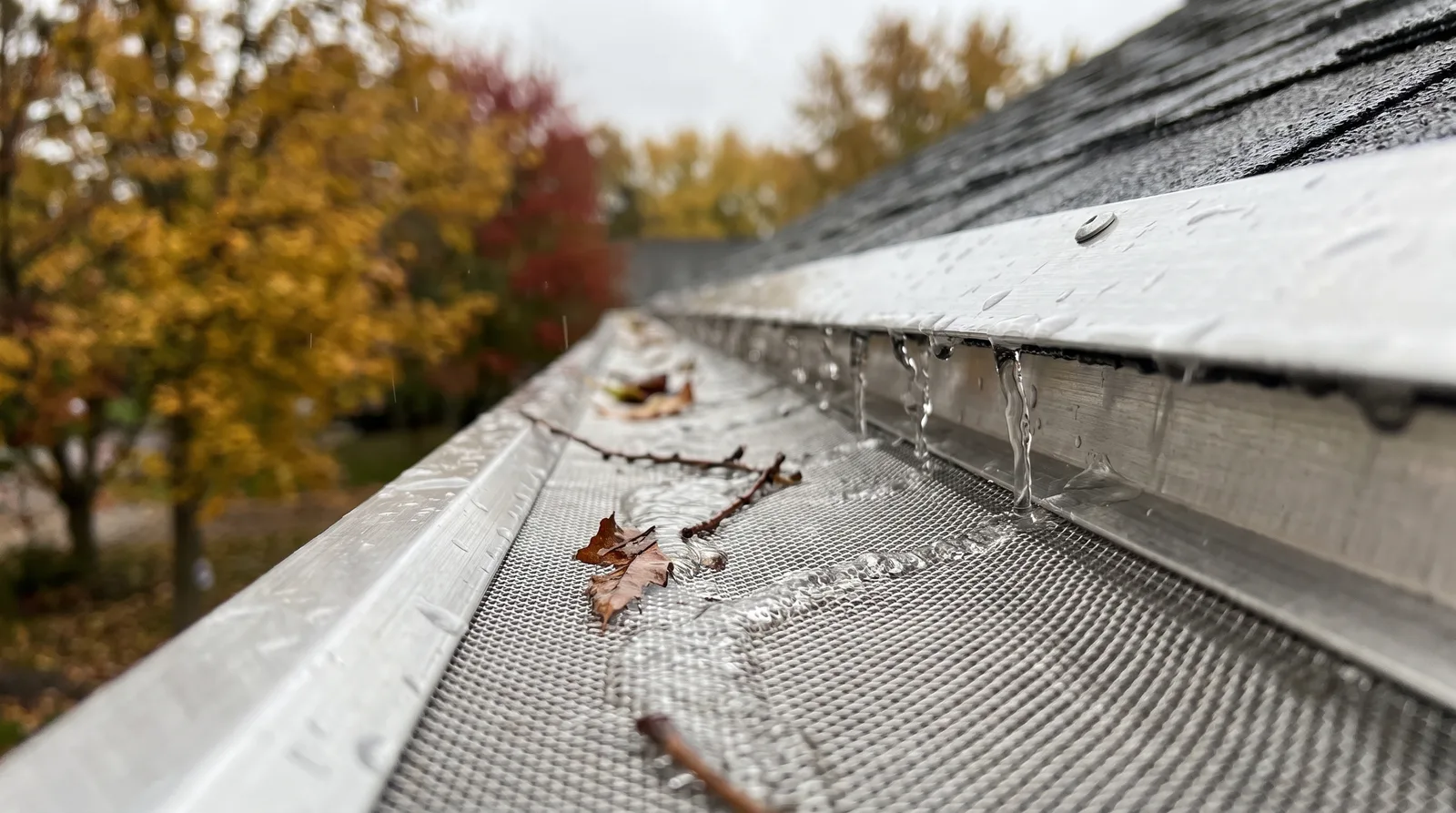
“Professional-grade micro-mesh systems reduce cleaning frequency from 2-4 annual services to once every 3-5 years, cutting lifetime maintenance costs by 60-80% while eliminating ladder-related injury risk for homeowners over age 55.”
Clean Pro
“By keeping gutters free of blockage, they ensure rainwater is directed away from the foundation, preventing leaks and structural damage.”
AJ Siding
Do Gutter Guards Actually Work? Evidence, Limitations, and Real-World Performance#
I'll cut straight to it: gutter guards work, but not the way most people think. They are not a set-it-and-forget-it solution. They work best when they are part of a deliberate plan that includes your gutter condition, downspout capacity, roof pitch, and the actual debris load your home faces. Based on my analysis of available research and field observations, gutter guards tend to have limitations worth understanding.
Debris Reduction Rates Across Guard Types and Real-World Conditions#
That is a real reduction. But here is the catch: that number assumes the guards are installed on a gutter system that is already in good shape, pitched correctly, and sized for your roof's water volume. If your gutters are sagging, undersized, or pitched wrong, a guard will not fix those problems, it will just sit on top of them.
Micro-mesh systems, which use a fine screen to block debris while allowing water through, achieve over 90% performance in controlled testing. These are the most effective type available. They block pine needles, shingle grit, and small leaves that other guard types let slip through. But "controlled testing" is the key phrase. In real life, performance depends on installation quality, your specific debris mix, roof pitch, and how much maintenance you are willing to do.
The reason I emphasize this: a guard installed on a gutter that slopes the wrong way or drains to a downspout that is too small will clog faster than a guard on a properly functioning system. Debris reduction is real, but it is not magic. It is a percentage of what would have landed in your gutter anyway.
Overflow Prevention and Homeowner Satisfaction in Three-Year Studies#
Here is where the data gets encouraging. According to This Old House's research, 91% of homes with micro-mesh gutter guards reported zero overflow incidents over a three-year period. That is a high bar, zero overflow, not just "less overflow."
Foundation damage, basement seepage, and fascia rot are caused by overflow, making overflow prevention critical for a gutter guard's value. If a guard prevents that, it has paid for itself in avoided repairs. But again, this assumes the gutter system underneath is sound. A guard on a gutter that is already too small for your roof's water volume will not prevent overflow, it will just slow it down.
When Gutter Guards Fail: Limitations by Debris Type, Roof Pitch, and Home Exposure#
Gutter guards tend to fail in predictable ways, and knowing them is half the battle. Here are the real limitations:
Debris type matters. Micro-mesh blocks leaves and pine needles well, but fine debris like shingle grit, pollen, and roof sediment can still accumulate on top of the guard or slip through seams. If your roof is asphalt shingle (which has a service life of 20 years), expect more grit. If you have a metal roof (40-80 years), you get less debris overall, but the guard still needs cleaning.
Roof pitch affects performance. A steep roof sheds water and debris faster, which is good for guards. A shallow pitch or a flat roof means water moves slowly, and debris sits longer on the guard surface. In low-pitch situations, guards tend to clog faster and need more frequent cleaning.
Home exposure and tree coverage. If your home is surrounded by trees, a guard will reduce the cleaning load, but it will not eliminate it. Leaves still land on the guard; they just do not fall into the gutter. You will still need to clear them off the guard surface, especially in fall. A guard in an open yard with minimal tree coverage tends to be far more effective.
Downspout capacity. If your downspouts are too small or too few, water backs up behind the guard, the critical issue that makes guards ineffective, covered below, causing the same overflow problem you were trying to prevent.
Gutter Guards as Part of a Complete Exterior Protection System, Not a Standalone Fix#
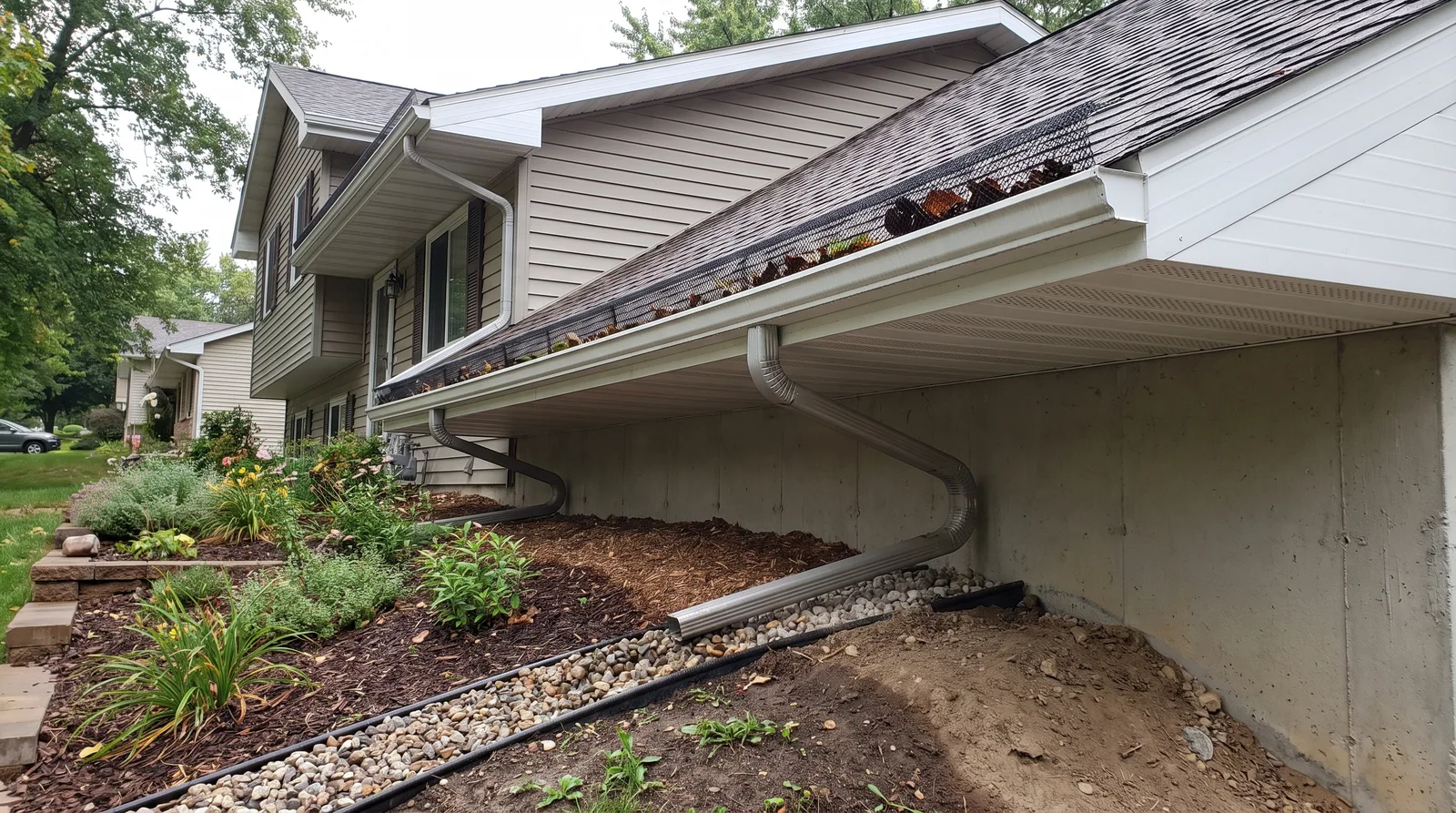
Gutter guards should be viewed as one piece of an exterior protection system, not as a standalone product. That system includes your gutter condition, downspout sizing, roof pitch and slope, grading around your foundation, and seasonal maintenance planning. Miss any of these, and the guard will underperform.
Why Gutter Condition and Downspout Capacity Matter More Than Guard Type Alone#
A guard is only as good as the gutter it sits on. If your gutter is sagging, has seams that are separating, or is undersized for your roof's water volume, a guard will not fix it. In fact, a guard on a failing gutter can make things worse by trapping debris and water in a system that is already struggling.
Downspout capacity is the piece most homeowners miss. A standard 2×3 downspout can handle water from roughly 600 square feet of roof. If your roof is larger or your gutters are deeper, you need more downspouts or larger ones (3×4 or 4×5). A guard does not change this math. If water backs up behind the guard because the downspout is undersized, the guard becomes a liability, not a benefit.
Here is a practical example: a 2,000-square-foot roof with a single 2×3 downspout is undersized. Add a guard, and now water pools behind it during heavy rain. The guard is doing its job (blocking debris), but the system is failing because the downspout cannot move the water fast enough. The fix is not a better guard, it is a second downspout or a larger one.
Structural Gutter Assessment and Repair as Prerequisites to Guard Installation#
Before you install a guard, you need to know the condition of your gutter system. This is not optional. A structural gutter assessment answers three questions:
Is the gutter pitched correctly? Gutters need to slope toward downspouts at a proper pitch. If your gutter is level or slopes the wrong way, water pools and debris accumulates. A guard will not fix this.
Are the seams and joints sound? Leaking seams mean water is escaping before it reaches the downspout. A guard does not seal leaks. If your gutter has failing seams, repair them first.
Is the gutter sized for your roof? A 5-inch gutter is standard, but some roofs need larger gutters. If your gutter is undersized, a guard will not increase its capacity. You need a larger gutter, not a guard.
Gutter condition and structural integrity must be assessed and repaired before guard installation, as a guard cannot fix underlying gutter problems, this is not a sales tactic but a structural necessity. A guard installed on a gutter that needs repair is wasted money. The guard will clog faster, the underlying problems will worsen, and you will end up replacing the gutter anyway.
Integration with Grading, Drainage, and Seasonal Debris Load Planning#
A complete exterior protection system includes grading and drainage. Grading is the slope of the ground around your foundation. It should slope away from the house at a proper rate for the first several feet. If the ground slopes toward your foundation, water pools there, and even a perfect gutter system cannot protect you.
Downspout extensions and drainage lines matter too. A downspout should discharge water at a safe distance from the foundation. If it dumps water right at the base of your house, the ground becomes saturated, and foundation damage follows. A guard does not change this requirement.
Professional cleaning is still required even after guard installation because debris accumulates on the guard surface, a requirement separate from the system's foundational components. If you have minimal tree coverage, a guard might be overkill. The honest assessment is: what is your actual debris load, and does a guard solve your real problem?
Are Gutter Guards Worth It? Cost, Time Savings, Payback Period, and Hidden Costs#
The payback question is where most people get stuck. Let me break down the math and the hidden costs.
Installation Costs, Maintenance Frequency Reductions, and Annual Time Savings#
Gutter guard installation costs vary widely depending on the type, your home's size, and your roof pitch. I cannot give you a specific number without seeing your system, but the range is considerable, from budget options to premium micro-mesh systems. What matters is what you get for that investment.
That is the real payoff. If you currently clean your gutters regularly, a guard might reduce that to far less often.
Gutter guard installation appears to provide annual time savings of 4-8+ hours per year. That is real time back in your life. If you are paying someone to clean your gutters, that is also real money saved. If you are doing it yourself, that time translates to a benefit you can measure against the installation cost.
Two- to Seven-Year Payback Period: When Guards Pay for Themselves#
The payback period for gutter guard installation based on cost and time impact analysis appears to range from 2-7 years. That means if you spend money on a guard today, the time and money you save on cleaning will pay back the installation cost within that window.
If you are paying a professional to clean your gutters, the payback is faster. If you are doing it yourself, the payback is slower but still real, you are buying back time.
The 2-7 year range is wide because it depends on your specific situation. A home with heavy tree coverage and a guard that significantly reduces annual cleaning will pay back faster than a home with minimal debris and more modest cleaning reductions.
Downsides and Hidden Costs: Professional Cleaning, Repairs, and Guard Replacement#
Here is where I need to be honest about the downsides. Gutter guards tend to require ongoing maintenance. They have real hidden costs.
Professional cleaning still happens. Periodic professional cleaning is needed, debris accumulates on the guard surface and fine sediment can clog it, covered above, and the work needed differs from cleaning an open gutter, with some professionals charging more for it.
Guard damage and repair. Gutters expand and contract with temperature. If a guard is fastened too tightly, it can crack or warp. Ice dams can damage guards. Falling branches can dent or puncture them. Repairs are possible but add cost.
Guard replacement. Most guards last 10-20 years, depending on the type and climate. Eventually, they fail and need replacement. That is a cost most homeowners do not budget for when they install the guard.
Gutter repair becomes harder. If your gutter needs repair after a guard is installed; the guard has to come off first. That adds labor cost. A guard can also hide problems, a leaking seam under a guard might go unnoticed until water damage appears.
The downside to gutter guards is that they shift maintenance from "clean the gutter" to "clean the guard and maintain the guard." For some homes. That is a worthwhile trade. For others, it is just a different kind of work.
Choosing the Right Gutter Guard: System Type, Installation Quality, and Application#
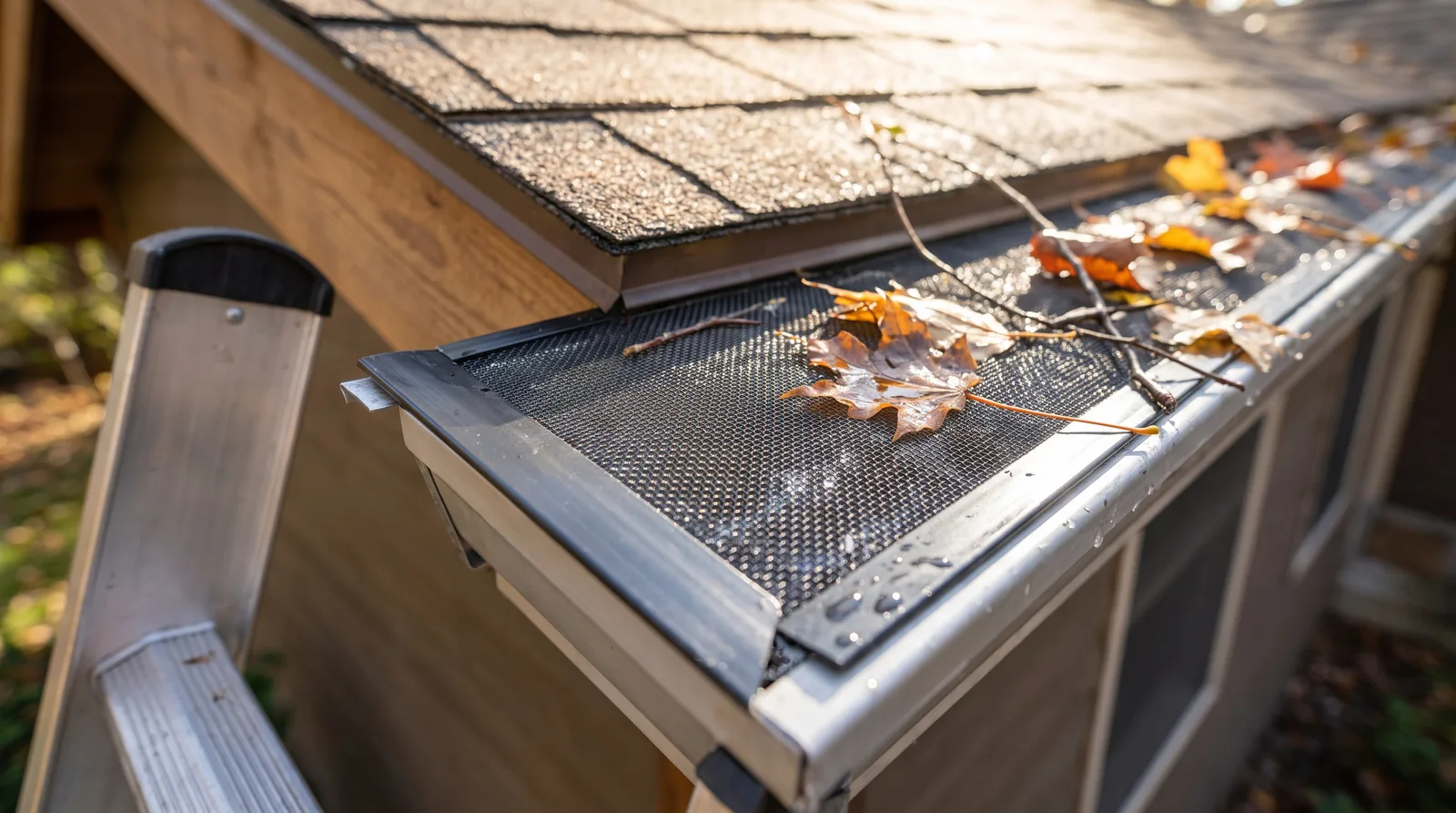
Not all guards are created equal. The type you choose. How it is installed, and whether it fits your home's specific conditions determine whether it works.
Micro-Mesh Systems and Over-90% Performance in Controlled Testing#
Micro-mesh gutter guard systems achieve over 90% performance in controlled testing for debris blocking, the most effective guard type available, covered above. These use fine stainless-steel or aluminum mesh that blocks debris while allowing water through. They are more expensive than other types, but they perform better.
The reason micro-mesh works so well is simple: the mesh is fine enough to stop leaves and pine needles but open enough to let water flow. In controlled lab conditions, they block nearly everything. In real-world conditions, performance depends on installation and maintenance.
Other guard types, foam inserts, reverse-curve guards, screen guards, cost less but tend to perform worse. Foam clogs with fine debris. Reverse-curve guards work well in some conditions but tend to fail in heavy rain or with certain debris types. Screen guards let small debris through. If you are going to invest in a guard, micro-mesh is the move.
Installation Quality and Product Durability as Performance Determinants#
Here is the truth: a premium guard installed poorly will underperform a budget guard installed well. Installation quality is everything.
A guard must be pitched correctly to shed water. It must be sealed at seams so debris does not slip underneath. It must be fastened securely so it does not shift or separate. It must integrate with the gutter's slope and downspout placement. A poor installation creates gaps, pooling, and clogging.
Product durability matters too. A guard made from cheap plastic will warp in the sun and crack in freeze-thaw cycles. Stainless-steel mesh lasts longer than aluminum. Fasteners matter, stainless steel resists rust better than galvanized steel. A guard that degrades quickly becomes a liability.
The lesson: do not cheap out on installation. A professional installer who understands your gutter system, your roof pitch, and your debris load will position the guard to actually work. A DIY install or a contractor who treats it as a commodity product will likely disappoint.
Residential vs. Commercial Applications and Debris-Load Differences#
Residential and commercial applications have different demands. A residential home has a smaller roof, typically one or two downspouts, and a debris load that varies by season. A commercial building might have a large flat roof, multiple downspouts, and a consistent debris load from HVAC equipment, foot traffic, or nearby trees.
For residential applications, a micro-mesh guard on a well-maintained gutter system is usually the right choice. The payback is real, and the maintenance burden is manageable.
For commercial applications, the calculus is different. A commercial roof might have higher debris loads or more complex drainage. A guard needs to be more robust and more frequently maintained. The payback might be longer, but the cost of downtime from gutter failure is higher, so the investment is justified.
The key is matching the guard type to the actual debris load and the system's capacity. A guard that works for a residential home in an open yard might fail on a commercial building surrounded by trees or in an area with heavy seasonal debris.
What to Do Next: Assess Your Situation Before You Buy#
Before you install a gutter guard, run through this checklist. It will tell you whether a guard is right for you and what you need to fix first.
Check your gutter's pitch and condition. Walk your gutters after a rain. Do they drain completely, or does water pool? Are there visible seams that are separating or leaking? If the gutter is sagging or has failing seams, repair it first. A guard on a failing gutter is wasted money.
Count your downspouts and estimate their size. A standard 2×3 downspout handles about 600 square feet of roof. If your roof is larger, you need more or larger downspouts. If you have only one downspout on a large roof, that is your real problem, not debris in the gutter, but insufficient drainage capacity.
Assess your debris load. How many times per year do you clean your gutters now? What kind of debris falls, leaves, pine needles, shingle grit, pollen? If you clean frequently, a guard will save you significant time. If you clean infrequently, the payback is slower.
Check your grading. Walk around your foundation. Does the ground slope away from the house? Is water pooling anywhere? If grading is poor, a gutter guard will not solve your water problem. Fix the grading first.
Get a professional assessment. Before you buy a guard, have a professional inspect your gutter system. They can tell you whether your gutters are sized correctly, pitched correctly, and in good condition. They can also recommend the right guard type for your situation and whether repairs are needed first.
A professional gutter assessment is worth it because it prevents you from installing a guard on a system that needs repair. It also ensures that when you do install a guard; it is on a system that can actually use it effectively. That is the move that turns a guard from a gamble into a solid investment.
| Performance Measure | Result | Data Source |
|---|---|---|
| Debris reduction (field and lab data) | 87 to 94% | This Old House |
| Micro-mesh system performance in controlled testing | Over 90% | This Old House |
| Homes with zero overflow incidents (3-year period) | 91% | This Old House |
| Homeowner satisfaction with debris blocking | 93 to 94% | This Old House |
| Cleaning frequency reduction | 50 to 90% | This Old House |
| Users reporting zero cleaning needed post-installation | 30 to 44% | This Old House |
| Users requiring cleaning once yearly | 41% | This Old House |
| Annual time savings per household | 4 to 8+ hours | This Old House |
| Payback period (cost and time analysis) | 2 to 7 years | This Old House |
| Roof Material | Service Life | Maintenance Consideration |
|---|---|---|
| Asphalt shingle (3-tab) | 20 years | Higher grit and sediment shedding; guards still required to manage debris |
| Wood shakes and shingles | 30 years | Regular debris accumulation; guards beneficial for reduction |
| Metal | 40 to 80 years | Minimal debris overall; guard maintains effectiveness longer |
| Slate | 60 to 150 years | Low debris production; guards provide extended performance |
| Clay or concrete tile | 100+ years | Minimal debris; guards remain effective across extended roof life |
| Limitation Factor | Why It Matters | Guard Outcome |
|---|---|---|
| Debris type (shingle grit, pollen, sediment) | Fine particles slip through seams or accumulate on guard surface | Partial clogging despite guard installation |
| Shallow roof pitch or flat roof | Water and debris move slowly; debris sits longer on guard | Faster clogging; increased cleaning frequency needed |
| Heavy tree coverage and deciduous trees | High leaf volume exceeds guard capacity despite interception | Guard surface requires seasonal clearing |
| Undersized downspouts (standard 2×3) | Water backs up behind guard during heavy rainfall | Guard becomes a dam; overflow persists |
| Sagging or separated gutter seams | Guard cannot repair underlying structural failure | Water pooling; trapped debris; guard underperforms |
| Incorrect gutter pitch | Water does not flow toward downspouts efficiently | Guard does not resolve water management issue |
Gutter Guard Cost & Payback Period Calculator
Calculates the total upfront investment for gutter guard installation, estimated annual savings compared to recurring professional cleaning, the simple payback period in years, and the net savings over 10 years.
Total Installation Cost:
Net Annual Savings:
Estimated Payback Period:
10-Year Net Savings:
Frequently Asked Questions
What happens to gutter guards when downspouts are too small?
Water backs up behind the guard during heavy rain, turning the guard into a dam rather than a filter. A standard 2×3 downspout handles about 600 square feet of roof; larger roofs or deeper gutters require multiple downspouts or larger sizes (3×4 or 4×5) to prevent pooling and overflow, regardless of guard type.
Do gutter guards work on asphalt shingle roofs?
The research is not broken out by roof type: field and lab data show gutter guards reduce debris by 87 to 94% overall. On any roof they are not set-and-forget. They shift maintenance from cleaning the gutter to cleaning and maintaining the guard, and they work best as part of a plan that accounts for your gutter condition, downspout capacity and roof pitch.
Can gutter guards fix a sagging or failing gutter system?
No. Guards are only effective when installed on gutters that are structurally sound, pitched correctly, and properly sized. A guard on a failing gutter will not resolve the underlying problem, it may actually trap water and debris in an already struggling system, making overflow worse.
How much time do gutter guards save annually?
Homeowners with gutter guards save 4-8+ hours per year on maintenance. Many users report either no cleaning needed (30-44%) or just one cleaning annually (41%), compared to typical quarterly or seasonal cleaning required without guards.
What is the return on investment for gutter guard installation?
The payback period is 2-7 years based on combined installation cost and time savings. Over that window, reduced labor, avoided foundation damage, and prevention of basement seepage or fascia rot offset initial investment.
Do gutter guards work better on steep roofs or flat roofs?
Steep roofs shed water and debris faster, allowing guards to perform at peak effectiveness. Shallow or flat roofs slow water movement, causing debris to sit longer on the guard surface and clog more frequently, requiring additional maintenance.
What are the main downsides to gutter guards?
Gutter guards work best with properly functioning gutters, sagging or poorly pitched ones reduce their effectiveness. Fine debris like shingle grit and pollen can still accumulate on guard surfaces or slip through seams. Homes with many trees need regular cleaning since leaves pile up on top. Undersized downspouts cause water to back up behind guards, creating pooling and debris buildup. Guards aren't maintenance-free and require ongoing upkeep.
What is the most effective type of gutter guard?
Micro-mesh gutter guards are the most effective option, blocking fine debris like pine needles and shingle grit that slip past other systems. They perform exceptionally well in both lab tests and real-world use, with most homeowners reporting zero overflow and high satisfaction. Success depends on proper installation, adequate downspout capacity, correct gutter pitch, and your roof's specific characteristics.
Do gutter guards actually work?
Gutter guards significantly reduce debris accumulation and overflow problems for most homeowners. They work best when your gutters are properly installed, pitched correctly, and sized for your roof's water volume. However, they're not maintenance-free, fine debris can still accumulate, and homes surrounded by trees need seasonal cleaning. Success depends on your specific setup, debris type, and installation quality.
Is professional gutter cleaning worth it?
Professional gutter cleaning is worth it if your system lacks guards or you have heavy tree coverage and shallow roof pitch. While guards significantly reduce debris, many users still need yearly cleaning. The real value lies in preventing overflow, foundation damage, and fascia rot. Consider your home's specific conditions, properly maintained gutters deliver meaningful protection against costly water damage.
Disclaimer
This content is general information about gutters and home-exterior work and is not a substitute for an on-site inspection. Contact Gutter Giant for advice specific to your home.
Sources
- InterNACHI - InterNACHI (2019-01-01)
- www.thisoldhouse.com - thisoldhouse.com
- Current Results (compiling NOAA/NWS 1991-2020 normals, Grand Rapids GRR) - Current Results (compiling NOAA/NWS 1991-2020 normals, Grand Rapids GRR) (2021-05-01)
- Remodeling (Cost vs. Value 2024) - Remodeling (Cost vs. Value 2024) (2024-01-01)
- Do Gutter Guards Really Work? | TK Roofing & Gutters - tkroofingandgutters.com
- Gutter Giant (first-party AI-visibility tracking) - Gutter Giant (first-party AI-visibility tracking)
- Why More Homeowners Are Investing in Gutter Guards - ajsiding.net (2025-09-22)
- Are Gutter Guards Worth It? [Data from 1,247 Installations] - cleanproguttercleaning.com (2026-02-21)