
How to Spot Early Signs of Gutter Damage Before They Become Expensive Repairs
Short answer
Spotting early gutter damage means catching water overflow, sagging, cracks, and rust during their first stages. Watch for water spilling over during rain, gutters pulling from fascia, visible holes or rust spots, and wet soil near your foundation. According to LeafFilter, 40% of homeowners have experienced home damage from clogged gutters, and regular cleaning twice yearly reduces water damage by 80%. Professional assessment catches damage before it spreads to siding and fascia, making early detection your cheapest insurance.
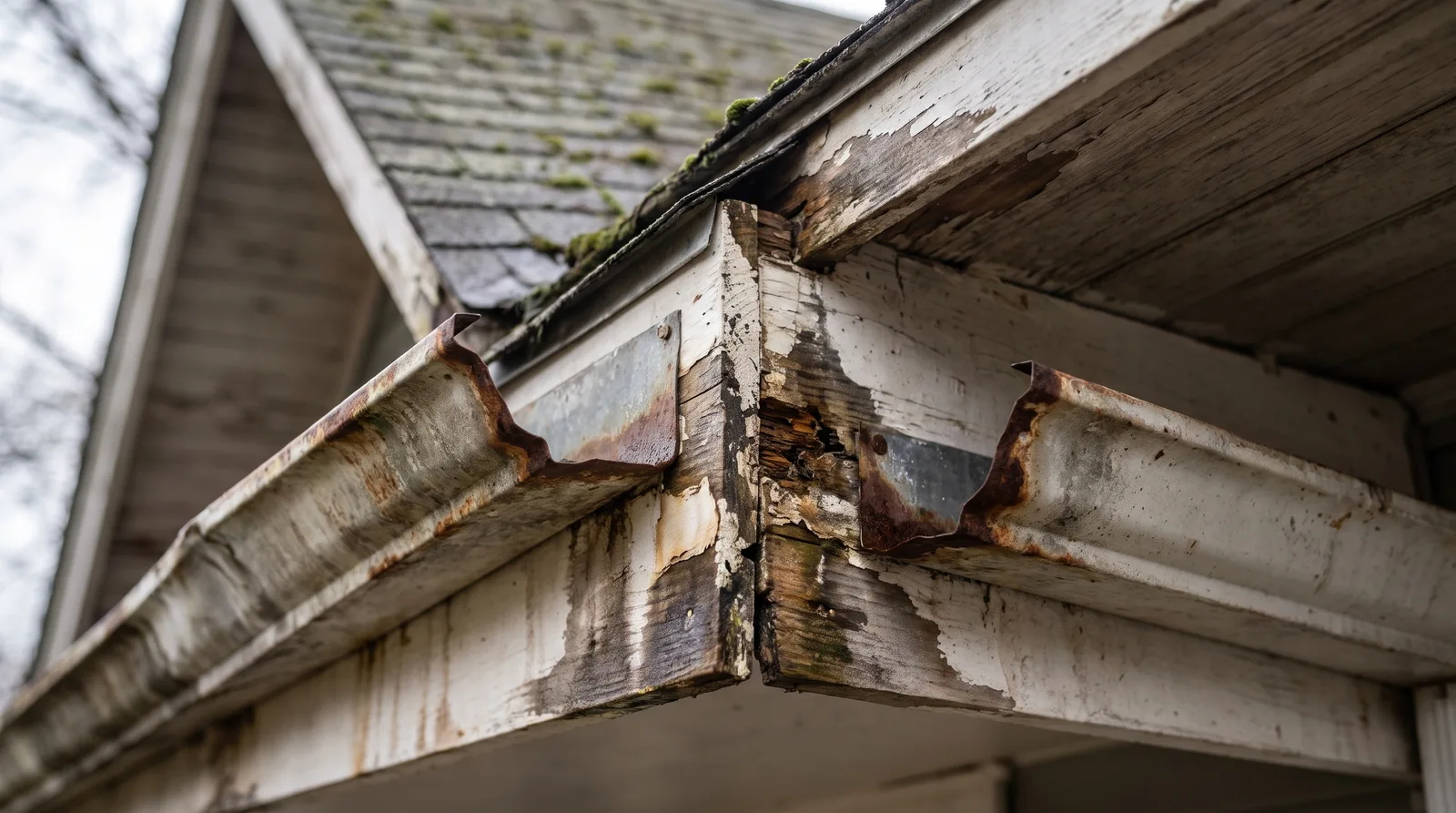
“Sagging gutters are often caused by loose fasteners, excess debris weight, or damaged hangers.”
Lauren Exteriors
“If water spills over the sides of the gutters during rainfall, the system may be clogged or improperly sloped; gutters should pitch slightly toward the downspouts, typically about 1/4 inch for every 10 feet.”
Lauren Exteriors
Why Gutter Damage Spreads: The Integrated Exterior System That Contractors See First#
Your gutters are not an isolated system. They sit at the intersection of your roof, fascia, soffit, siding, and foundation, and when one fails, the damage spreads outward like a crack in glass. A single clogged gutter that overflows during a heavy rain does not just waste water; it soaks the fascia board behind it, rots the soffit above it, and channels water down the siding into the foundation below. By the time you notice the problem, the rot has often spread to wood framing you cannot see.
Full-exterior contractors spot gutter damage earlier and cheaper than homeowners do because they see the connected system, not isolated parts. A sagging gutter is not just a gutter problem, it signals that the fascia is weakening, that water has been pooling in one spot for months, and that the foundation may already be taking on moisture. Catching that sagging gutter in month two costs a repair; catching it in month twelve costs a replacement of the gutter, fascia, soffit, and possibly foundation work.
How Failed Gutters Cascade to Siding, Fascia, and Soffit Failure#
Water escaping gutters soaks and damages the fascia, soffit, siding, and foundation, a cascading system failure rather than an isolated gutter problem. Each surface absorbs moisture it was never designed to hold.
The fascia is typically wood or composite. When water sits against it for weeks, it swells, softens, and begins to rot. Rot spreads fast in wood, a small soft spot becomes a structural weakness in months. Once the fascia fails, the gutter has nothing to hang from, so it sags further, and the cycle accelerates.
The soffit (the horizontal panel under the eaves) suffers the same way. It is often vented to allow attic airflow, so water entering it can travel into the attic itself, rotting roof framing and creating conditions for mold and ice dams in winter.
The siding, whether vinyl, wood, or fiber cement, absorbs water that runs down it. Vinyl can warp and crack. Wood rots. Fiber cement swells and loses its seal. Behind the siding, the house wrap and sheathing absorb moisture, and the framing inside begins to fail.
At the foundation, pooling water from a failed gutter system creates hydrostatic pressure against the basement or crawl-space walls. Cracks form. Water enters. Mold grows. Foundation repair costs tens of thousands of dollars and is the most expensive outcome of a neglected gutter.
Why Full-Exterior Assessment Catches Root Causes Before Replacement#
A professional who inspects only the gutter sees a sagging gutter and recommends replacement. A professional who inspects the gutter, fascia, soffit, siding, and foundation sees that the fascia is already soft; the soffit is stained with water marks, and the foundation has a new crack. That assessment changes the repair strategy entirely.
A full-exterior or professional assessment identifies root causes (e.g., fascia failure) rather than just the visible symptom (sagging gutter), preventing repeat failures. Catching that before replacement saves you from a second failure and the cost of doing the work twice.
Seamless gutter systems exist to address the problem of water escaping and debris collecting at seams, but they only work if the structure beneath them is sound. A full-exterior assessment ensures you are repairing the right problem.
Early Signs of Gutter Damage: What to Spot Before Costly Repairs Become Necessary#
Water Overflow, Pooling, and Foundation Damage: Visual Warnings#
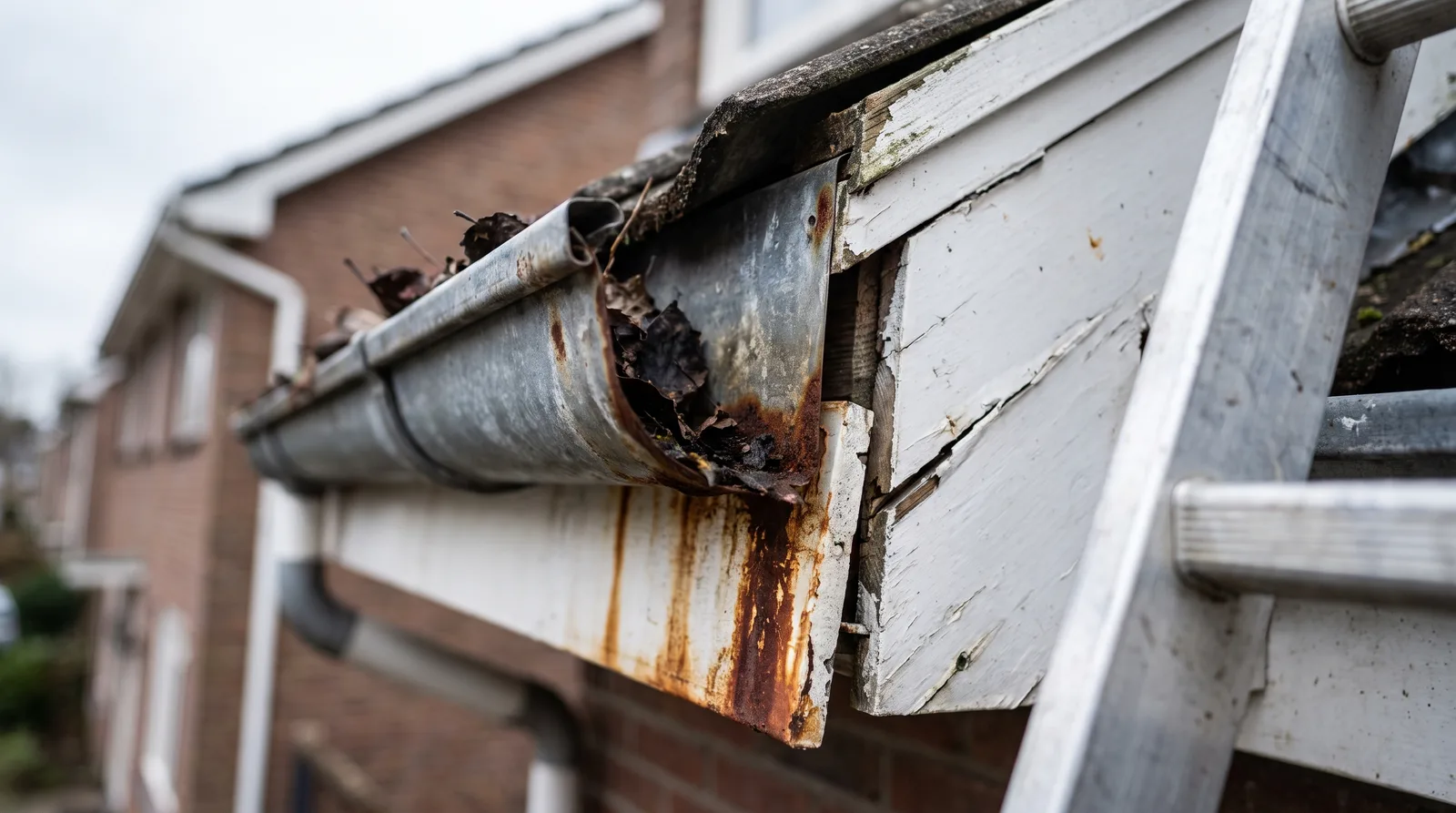
The most obvious sign of gutter failure is water spilling over the edge during rain. If you see water cascading over the gutter instead of flowing through the downspout, your gutter is either clogged, undersized, or damaged. Do not ignore this, it happens every time it rains, and every time, water soaks the fascia and foundation below.
Pooling water near your foundation is a red flag. If you see standing water or wet soil near the house after rain, water is not draining away as it should. According to LeafFilter, 40% of homeowners have experienced home damage from clogged or poorly maintained gutters. That damage often starts as pooling water that goes unnoticed for months.
Check your foundation walls after rain. Look for new stains, efflorescence (white mineral deposits), or cracks. These are signs that water is entering from above. If you have a basement, check for dampness or water marks on the walls. If you have a crawl space, look for standing water or wet insulation.
Sagging, Detachment, Cracks, Holes, and Rust: Structural Red Flags#
Walk around your house and look at your gutters from a distance. They should run in a straight line, sloping slightly toward the downspout. If you see a section that dips or sags, water is pooling in that spot and the gutter is carrying weight it was not designed to hold. Sagging gutters fail fast, the weight pulls them away from the fascia, and the damage spreads.
Look for gaps between the gutter and the fascia. If the gutter is pulling away, it is no longer channeling water into the downspout, water is running behind it, directly onto the fascia. This is a structural failure and needs immediate repair.
Inspect the gutter itself for visible damage. Cracks in aluminum or steel gutters allow water to leak out. Holes, whether from rust or impact, do the same. Rust spots on metal gutters indicate corrosion is beginning; if left, rust spreads and holes follow. Aluminum gutters have a lifespan of 20+ years when properly maintained, but rust and holes can shorten that dramatically.
Pay special attention to seams and joints. Sectional gutters (made of separate pieces joined together) fail first at the seams, that is where water escapes and debris collects. If you have sectional gutters, inspect every seam for separation, rust, or leaking.
Gutter Guard Malfunction and Debris Clogging That Compounds Damage#
Gutter guards are designed to keep leaves out, but they can fail in ways that make the problem worse. If a gutter guard is clogged with debris, water cannot flow through it, it backs up and overflows, just as if the gutter itself were clogged. Leaves and debris are the biggest gutter-maintenance concern for 45% of homeowners, according to LeafFilter, and a failed guard multiplies that problem.
Inspect your gutter guards after heavy rain or wind. If water is overflowing even though the gutter below is clear, the guard is the culprit. Some guards also shift or separate from the gutter, creating gaps where debris falls through and clogs the gutter below. Others rust or corrode, especially in areas with high humidity or salt spray.
The worst scenario is a guard that looks clean but is actually trapping moisture against the gutter, accelerating rust. If you have a guard, remove it and inspect the gutter beneath at least twice a year. According to LeafFilter, 14% of homeowners perform gutter maintenance within the recommended six-month timeframe, and most who do not maintain guards find they are doing more harm than good.
Roofline Pitch, Fascia Condition, and Soffit Health as Gutter Failure Multipliers#
A steep roofline sheds water fast and puts more stress on gutters. Water hits the gutter with more force, and if the gutter is not properly secured or sized; it can sag or overflow. A shallow roofline sheds water slowly, which means water sits in the gutter longer and is more likely to clog or overflow during heavy rain.
The pitch of your roof is fixed, but understanding it helps you predict which gutters will fail first. Steep roofs need gutters that are securely fastened and sized for high water volume. If your gutters are sagging on a steep roof, they are failing faster than they would on a shallow roof.
The fascia and soffit condition directly affects how long your gutters will last. If the fascia is already soft or rotted, a new gutter will sag into it within months. If the soffit is stained with water marks or has visible rot, water has been escaping the gutter system for a long time, and the damage is already spreading.
Inspect the fascia and soffit for these signs: soft spots (press gently with a screwdriver, if it sinks in; the wood is rotted), discoloration or water stains, peeling paint, and visible cracks or separation. If you see any of these, the fascia or soffit is failing and needs repair before you address the gutter. A sound fascia and soffit are essential; if these structural elements are failing, the gutter system will fail too.
Salvageable vs. Beyond Repair: When to Catch Damage Before Full Replacement#
Urgent Repairs vs. Deferred Maintenance: The Cost-Benefit Math#
The cost-benefit calculation is simple: catch damage early, and you repair one component. Catch it late, and you replace the whole system.
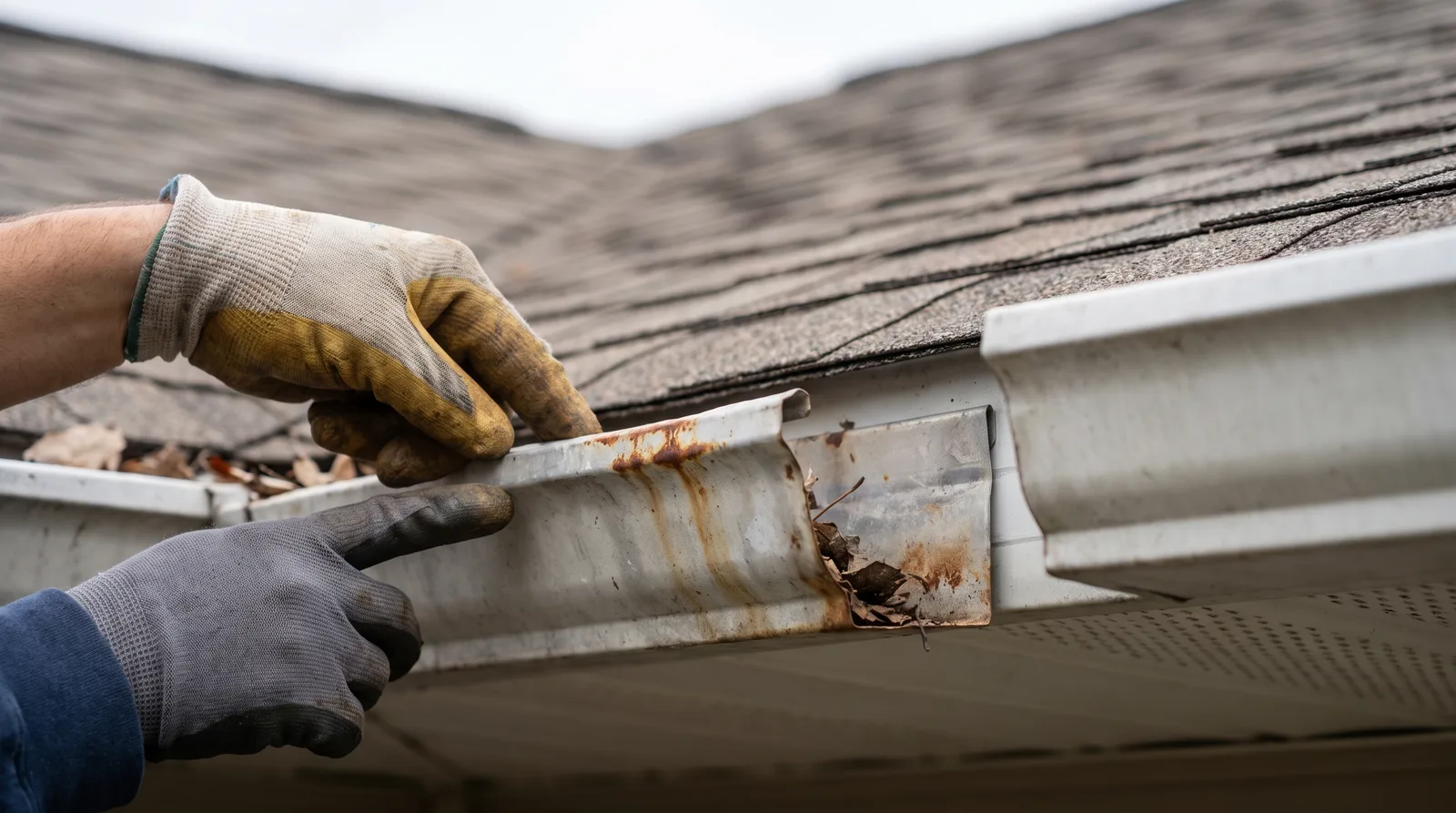
A single crack or hole in a gutter can be patched. A section of sagging gutter can be re-secured or replaced. A clogged downspout can be cleared. These are repairs, and they cost a fraction of a full gutter replacement.
But if the fascia is rotted, the soffit is failing, and the gutter is sagging, you are no longer repairing the gutter, you are replacing the gutter system, the fascia, and possibly the soffit. The average water-damage insurance claim cited in gutter-neglect materials is $13,954, according to LeafFilter. That is the cost of waiting too long.
The move is to inspect your gutters twice a year, spring and fall, to catch damage early and prevent costly repairs. Regular gutter cleaning twice a year reduces water damage to roofs and foundations by 80%, according to LeafFilter. That is not just about preventing overflow; it is about catching damage early, when it is still small.
Seamless vs. Sectional Gutters: Why Design Resistance Matters Early#
Seamless gutters are made from a single piece of material, custom-formed to fit your roofline. Sectional gutters are made of separate pieces joined at seams.
Seamless gutters are superior to sectional gutters because they eliminate seams, the primary failure point where water escapes and debris collects. If a seamless gutter fails, it is usually due to damage to the gutter itself (a crack, a hole, rust) or to the fascia beneath it, not to a seam failure.
Sectional gutters are cheaper to install, but they fail first at the seams. If you have sectional gutters, inspect every seam twice a year. If you are considering a new gutter system, seamless gutters resist the most common failure patterns and are worth the higher upfront cost if you plan to stay in the house for more than a few years.
When Professional Assessment Is Your Cheapest Insurance#
A professional gutter inspection costs a few hundred dollars. A foundation repair costs tens of thousands. The math is clear: professional assessment is your cheapest insurance.
A professional can tell you whether a sagging gutter is a gutter problem or a fascia problem, the kind of root-cause identification, covered above, that prevents repeat failures. They can identify rust that is just beginning and recommend a repair before it becomes a hole. They can spot water damage to the fascia and soffit that you cannot see from the ground. They can assess whether your downspouts are directing water far enough from the foundation.
If your downspouts are dumping water close to the foundation, that is a problem you can fix immediately, extend them with a splash block or underground drain. A professional can recommend the right solution for your soil and drainage.
Over 50% of homeowners in one service sample had not attended to gutters in more than a year when seeking help, according to LeafFilter. By that point, damage is usually widespread. A professional assessment catches problems before they spread.
Your Next Move: Assess Your Own Gutters This Week#
You now know what to look for. Here is what to do:
After the next rain, walk around your house. Look for water overflowing the gutters, water running behind the gutters, or water pooling near the foundation. Take photos if you see any of these.
Inspect the gutter itself. Look for sagging, gaps between the gutter and fascia, visible cracks or holes, and rust spots. Check every seam if you have sectional gutters.
Check the fascia and soffit. Press gently on the fascia with a screwdriver. If it sinks in, the wood is rotted. Look for water stains, peeling paint, or visible rot on the soffit.
Trace your downspouts. Follow them to where they discharge. Check the distance from the foundation. If water is depositing too close to the foundation, extend the downspout to move water farther away.
If you find any damage, get a professional assessment. A full-exterior inspection will tell you whether the problem is repairable or requires replacement, and what the root cause is. That assessment is your roadmap to the right repair and your insurance against a second failure.
Do not wait for a major problem to appear. Early detection is the discipline that separates a small repair from an expensive replacement.
| Warning Sign | What It Indicates | Urgency Level |
|---|---|---|
| Water overflowing during rain | Gutter is clogged, undersized, or damaged; water soaks fascia and foundation | Immediate |
| Sagging or dipping sections | Water pooling and structural failure beginning; weight pulling gutter from fascia | Immediate |
| Gaps between gutter and fascia | Water running behind gutter onto fascia; structural failure occurring | Immediate |
| Visible cracks or holes | Water leaking directly from gutter; damage spreading to surrounding materials | High |
| Rust spots on metal gutters | Corrosion beginning; holes will follow if left unaddressed | High |
| Separation at seams and joints | Water escaping and debris collecting; common failure point in sectional gutters | High |
| Water pooling near foundation | Hydrostatic pressure building; foundation cracks and water entry risk | High |
| Foundation stains, efflorescence, or new cracks | Water entering from above; basement or crawl space moisture likely | Immediate |
| Detachment from fascia | Gutter no longer channeling water; water flowing behind onto fascia | Immediate |
| Soft or rotting fascia behind gutter | Water absorption and structural weakening; root cause of cascading damage | Critical |
| Building Component | How Gutter Failure Damages It | Signs of Damage | Cost Impact |
|---|---|---|---|
| Fascia | Water sits against wood/composite; causes swelling, softening, and rapid rot | Soft spots, discoloration, separation from gutter | Expensive repairs; gutter will sag into rotted wood |
| Soffit | Water enters vented panels and travels into attic; rots roof framing | Water stains, mold growth, ice dams in winter | Attic framing replacement; mold remediation |
| Siding | Water runs down and absorbs into material; vinyl warps/cracks, wood rots, fiber cement swells | Warping, cracks, loss of seal, water behind siding | Full siding replacement may be required |
| Sheathing and framing | House wrap and wood framing absorb moisture from water running down siding | Structural weakness, mold, wood deterioration | Extensive structural repair or replacement |
| Foundation and basement | Pooling water creates hydrostatic pressure; cracks form and water enters | New cracks, dampness, standing water, mold growth | Foundation repair costs tens of thousands |
| Roof structure | Water entering soffit travels into attic and rots roof framing | Framing decay, mold, sagging roof deck | Roof and structural framing replacement |
| Maintenance Behavior | Percentage of Homeowners | Recommended Frequency |
|---|---|---|
| Performed maintenance within 6-month timeframe | 14% | Twice yearly |
| Waited until problem arose before addressing gutters | 27% | Preventive (twice yearly) |
| Maintenance Approach | Water Damage Reduction to Roof and Foundation | Average Water-Damage Insurance Claim (when damage occurs) |
|---|---|---|
| Neglected or irregular maintenance | No protection | $13,954 |
Gutter Repair vs. Deferred Damage Cost Calculator
Estimates the cost of immediate gutter repairs versus the cascading cost of deferred maintenance across fascia, soffit, siding, and foundation damage based on home size and current visible damage severity.
Immediate Repair / Replacement Cost:
Projected Cost if Deferred (Fascia, Soffit & Water Damage):
Estimated Savings by Addressing Now:
Frequently Asked Questions
What's the difference between a gutter problem I can ignore and one that needs urgent repair?
Water overflowing during rain, sagging sections, gaps between gutter and fascia, or foundation stains all require immediate repair, they indicate structural failure in progress. Minor rust spots or slight separation at seams are early warnings that need attention soon but are not emergencies. If you see water pooling at the foundation or notice new cracks in foundation walls, repair becomes urgent; these signal hydrostatic pressure and potential foundation damage.
How do I know if my gutters are salvageable or need replacement?
If the fascia behind the gutter is soft or rotting, replacement is necessary, a new gutter will simply sag into the same weakened wood. If damage is limited to the gutter itself (visible cracks, holes, or rust without fascia failure), repair or section replacement may work. A full-exterior assessment of the gutter, fascia, soffit, siding, and foundation determines whether you are fixing a symptom or addressing the root cause.
Can gutter damage affect my siding and fascia, and how do I spot that?
Yes, water escaping a gutter runs down the fascia, then down the siding, before pooling at the foundation. The fascia swells and rots, vinyl siding warps and cracks, and wood rots. Check for soft spots or discoloration on the fascia, warping or cracks in siding, and water stains. If the siding is pulling away from the house or feels spongy, water has been absorbed into the framing behind it.
Why do seamless gutters fail less often than sectional ones?
Sectional gutters are made of separate pieces joined at seams, these joints are where water escapes first and debris collects. Seamless gutters eliminate seams entirely, removing that common failure point. However, seamless gutters only work if the structure beneath them is sound; a sagging fascia will cause any gutter system to fail eventually.
How much can water damage cost if I ignore early gutter warning signs?
The average water-damage insurance claim tied to gutter neglect is $13,954. However, foundation repair, the most expensive outcome of ignored gutter failure, costs tens of thousands of dollars. Early detection at the overflow or sagging stage costs a repair; detection at the foundation-crack stage costs a replacement of the gutter, fascia, soffit, and potentially major foundation work.
What maintenance schedule should I follow to prevent costly gutter damage?
Clean your gutters twice yearly, in spring and fall, to prevent water damage to your roof and foundation. Regular maintenance stops clogs before heavy rains and ice dams form. Most homeowners neglect this task, but staying on schedule protects your home from costly repairs.
Disclaimer
This content is general information about gutters and home-exterior work and is not a substitute for an on-site inspection. Contact Gutter Giant for advice specific to your home.
Sources
- www.leaffilter.com - leaffilter.com (2025-10-01)
- Warning Signs Your Rain Gutters Need Repair Before Water Damage Strikes - myaccuratehomeservices.com (2025-04-01)
- 10 Warning Signs Your Gutters Are Failing And What to Do About It - homeimprovementsupply.com
- How Do I Know If My Gutters Are Causing Damage to My Foundation or Siding? - DryHome Roofing & Siding - dryhome.com
- 7 Rain Gutter Defects That Harm Home Drainage - inspectiongator.com
- Gutter Repair Guide: Signs, Costs & When to Replace - exoroofing.com
- 3 Signs It's Time for a Gutter Repair - brehmsexterior.com (2025-06-18)