
Fascia and Soffit Repair: Signs, Causes, and What to Expect
Short answer
Spot repairs make financial sense when rot affects less than 20% of fascia boards, saving thousands over full replacement; for widespread damage, expect $525 to $2,338 nationally ($15 to $30 per linear foot), or $600 to $6,000 for complete soffit and fascia projects. Signs include peeling paint, soft wood, and gutter sagging; causes are water infiltration and age. Timely repair prevents cascade damage to gutters, roofing, and siding.
“This Canadian industry comprises establishments primarily engaged in installing and repairing siding and cladding of aluminum steel asbestos vinyl and hardboard”
Statistics Canada
“The fascia board is the connection that attaches the eavestrough to the roof edge and is outward-facing.”
Integrity Roofers
Fascia and Soffit as Your Exterior Envelope's Critical Checkpoint#
Your fascia is the horizontal trim board that runs along the edge of your roof, where your gutters attach. Your soffit is the ventilated panel that closes off the space between the roof overhang and the wall. Together, they form the exterior envelope's critical checkpoint, the barrier that either protects or compromises your entire gutter, roofing, and siding system.
When fascia and soffit fail, water doesn't just damage those boards. It seeps behind them into the attic, rots the roof structure, and migrates down the wall cavity into your siding and framing. A small fascia leak becomes a major roof replacement. This is why catching fascia and soffit damage early isn't a cosmetic choice, it's the difference between a minor repair and cascade failure requiring substantial investment.
How Fascia and Soffit Failures Cascade Into Roofing, Siding, and Gutter System Breakdown#
Fascia and soffit failures follow a predictable cascade. Water enters through a crack or rotted section. It pools behind the gutter, then flows into the attic ventilation space. From there, it wicks into the roof decking, the rafters, and the wall framing. By the time you notice interior staining or soft spots in the attic, the structural damage is already months old.
The gutter system amplifies this risk. A sagging or improperly pitched gutter holds standing water against the fascia. That standing water accelerates rot. Conversely, a fascia that's already rotting can't hold gutter fasteners securely, so the gutter sags further, trapping more water. The two systems fail together.
Siding is the next domino. Water that runs down the wall cavity behind rotted soffit vents enters the wall sheathing and insulation. Mold colonizes the cavity. The siding loses its backing and begins to buckle or separate. By the time you see exterior damage, the wall cavity is often compromised beyond cosmetic repair.
Why Isolated Repair Misses the Integrated Exterior Solution#
Many homeowners and contractors treat fascia repair as a standalone job: replace the board, paint it, move on. But fascia and soffit failures are always symptoms of a larger exterior system failure, usually a gutter that isn't draining properly, a roof that's shedding water into the wrong place, or soffit vents that are clogged or undersized.
Repairing fascia without fixing the gutter or the roof drainage pattern means the same water will rot the new board within a few years. This is where the real cost hides: not in the fascia repair itself, but in the repeated repairs and the cascade damage that follows.
The smarter move is to inspect fascia and soffit damage as a signal to audit your entire exterior envelope. Is the gutter system adequate? Are the soffit vents clear and properly sized? Is the roof flashing intact? Does the roof pitch direct water away from the fascia? A professional inspection that answers these questions costs a few hundred dollars and saves tens of thousands in prevented cascade damage.
Identifying Damage: Warning Signs and Repair vs. Replace Decisions#
Visual and Functional Warning Signs of Fascia and Soffit Deterioration#
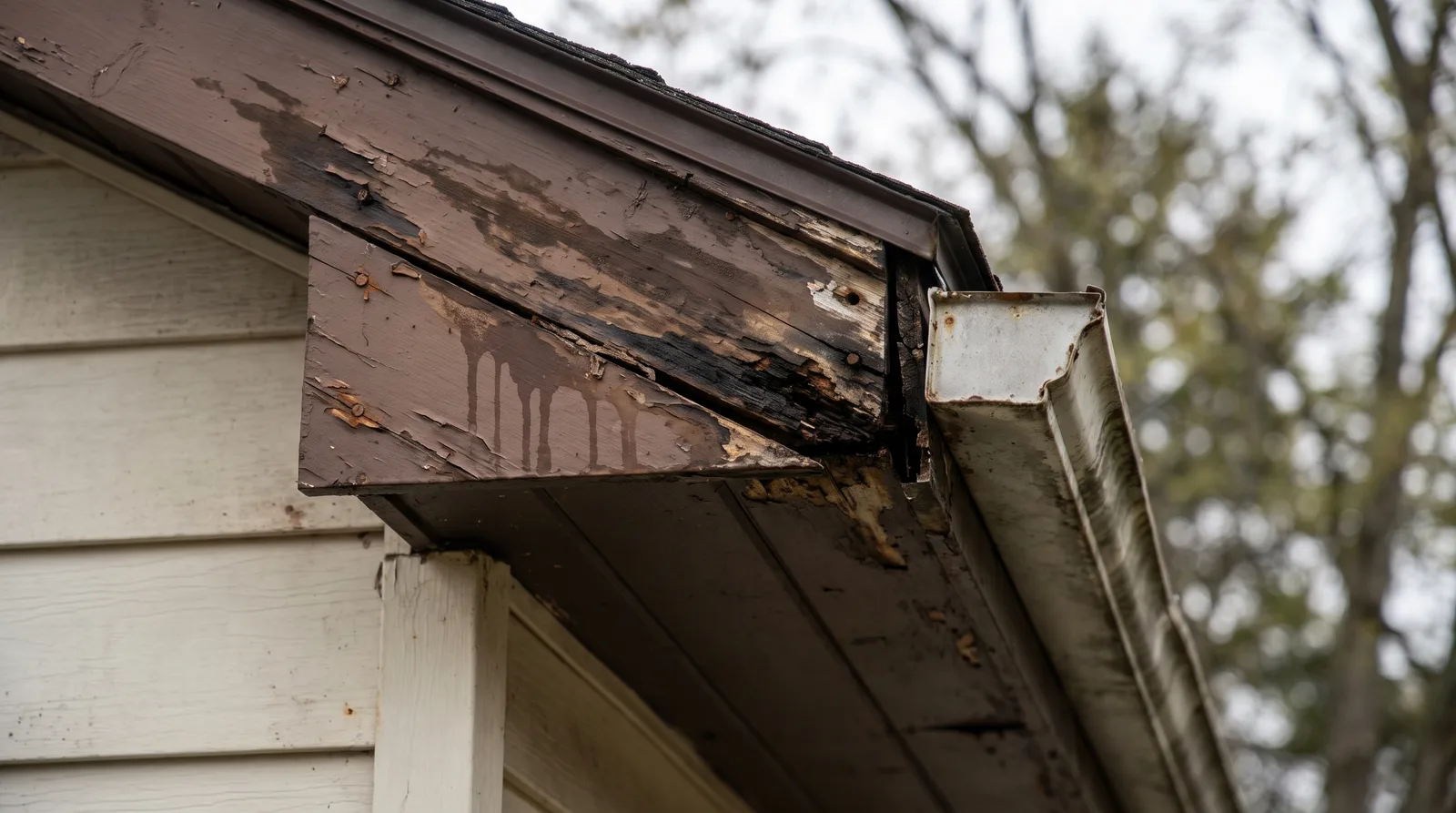
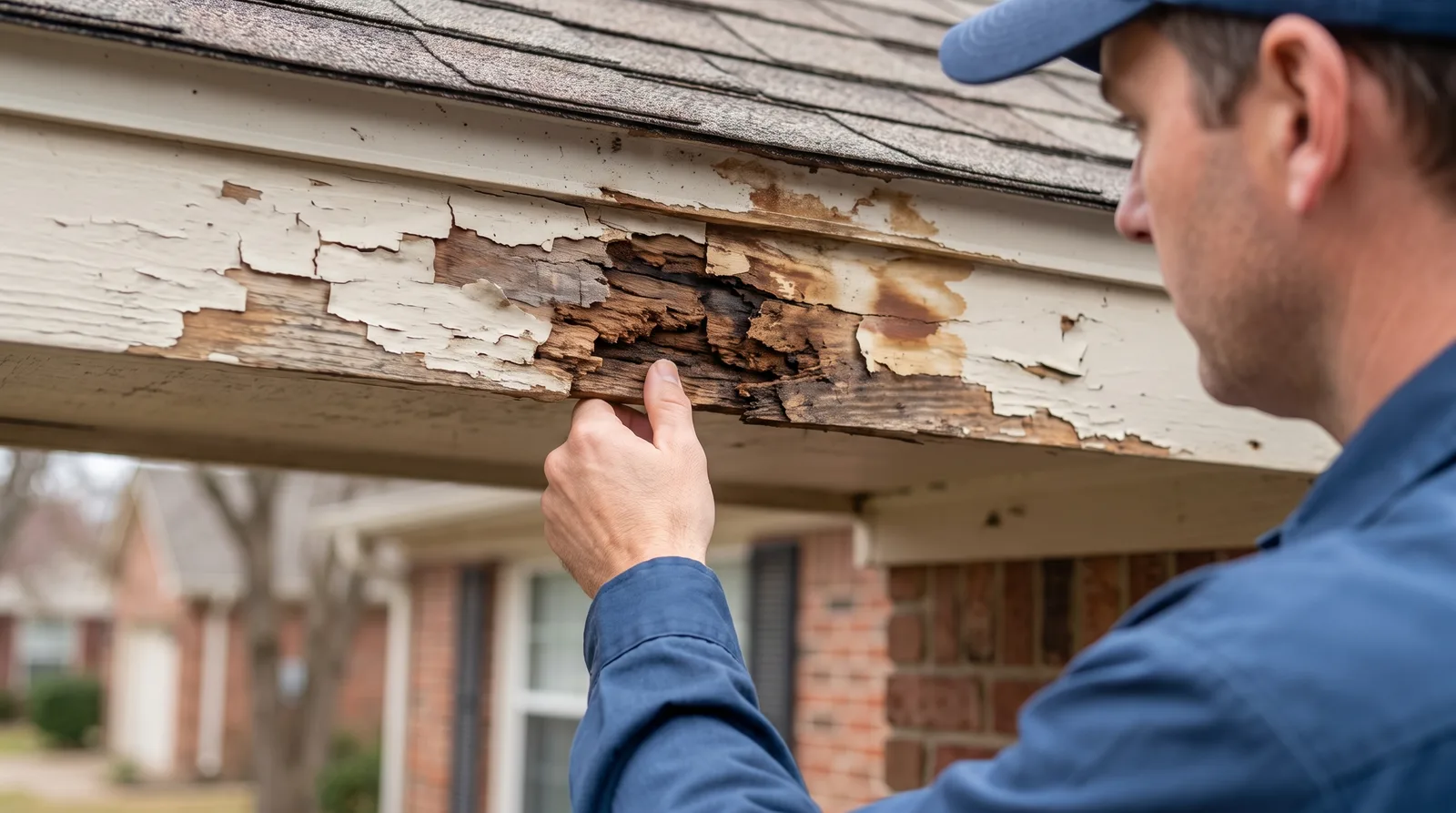
Start with what you can see from the ground. Fascia rot typically shows as soft spots, discoloration, or paint that's peeling in long strips. Wood fascia that's been wet for months turns dark gray or black. Vinyl fascia that's rotted underneath will buckle or separate from the roof line. Soffit damage is often harder to spot because it's under the overhang, but look for sagging, cracks, or sections that are visibly darker than the rest.
Functional warning signs are just as important. If your gutters are sagging or pulling away from the fascia, the fascia is likely too soft to hold fasteners. If you see water stains on the underside of the soffit or on the interior wall just below the roofline, water is already flowing through the soffit vents or past the fascia edge. Listen for soft spots: tap the fascia with a hammer, solid wood rings; rotted wood sounds dull and the hammer may leave a dent.
Pest activity is another red flag. Carpenter ants and wood-boring beetles target soft, wet wood. If you see sawdust below the fascia or soffit, or if you hear rustling sounds in the attic during warm months, pests have likely colonized the damaged wood. This accelerates deterioration and requires pest treatment alongside fascia repair.
How Water Damage, Pest Infestation, and Gutter Performance Signal Underlying Fascia/Soffit Failure#
Water damage and pest infestation are not separate problems, they are symptoms of the same root cause: fascia or soffit that has lost its moisture barrier. Wet wood attracts insects. Insects create galleries that hold more water. The cycle accelerates.
Gutter performance is the most reliable early warning system. A gutter that overflows during heavy rain is usually clogged, but if it's clean and still overflowing, the fascia behind it may be sagging, which pitches the gutter backward and prevents proper drainage. A gutter that's pulling away from the fascia in one section suggests the fascia is soft in that spot. A gutter that's rusting prematurely on the underside indicates standing water is pooling against it, a sign the fascia is rotted and the gutter is sagging.
Seamless gutters discipline exists precisely to close this gap: a properly sized, pitched, and fastened gutter system prevents water from pooling against the fascia in the first place. But if the fascia is already compromised, even a new gutter won't solve the problem unless the fascia is repaired or replaced first.
Repair vs. Replace: Cost Thresholds and Long-Term Durability Expectations#
The decision to repair or replace fascia and soffit hinges on the extent of rot and the material. When surface rot affects less than 20% of fascia boards, spot repairs make financial sense, saving thousands over complete replacement. If rot is deeper, affecting the structural integrity of the board or spanning more than 20% of the run, replacement is the only durable choice.
Material matters. Wood fascia can be spot-repaired by cutting out the rotted section and splicing in new wood, then sealing it. But wood requires ongoing maintenance: painting at regular intervals, and inspection after heavy rain or freeze-thaw cycles. Vinyl fascia cannot be repaired, if it's rotted underneath, the entire board must be replaced. Aluminum fascia is durable but can be dented and is harder to paint if you want to change color. Fiber cement fascia is rot-proof and paint-stable but is heavier and more expensive to install.
Long-term durability depends on the root cause of the failure. If you repair the fascia but leave the gutter sagging or the soffit vents clogged, the new fascia will fail again within a few years. If you replace the fascia, upgrade the gutter system, and clear the soffit vents, you can expect solid performance from wood or vinyl fascia, and extended performance from fiber cement or aluminum.
Fascia and Soffit Repair and Replacement Costs#
National Cost Ranges and Per-Linear-Foot Pricing for Repair and Full Replacement#
The national average cost range to repair or replace fascia boards is $525 to $2,338. The cost range per linear foot for fascia repair or replacement is $15 to $30.
A spot repair, cutting out a rotted section and splicing in new wood, typically costs a per-linear-foot rate scaled to the work involved. A full fascia replacement runs at a higher per-linear-foot rate. Soffit repair or replacement is usually bundled with fascia work, and the cost range for full soffit and fascia projects is $600 to $6,000 depending on the size of the house and the material you choose.
Straightforward access and no hidden damage are assumed in these ranges. If the soffit vents are clogged or undersized, or if the gutter needs to be removed and reinstalled, costs climb. If the roof decking or rafters are rotted, you're looking at structural repair costs on top of the fascia and soffit work.
Why Timely Repair Saves Money: Cascade Damage Prevention and Hidden Costs of Delay#
A minor fascia repair today prevents a major roof replacement within years. This is not hyperbole, it is the most reliable cost-benefit ratio in home maintenance. Water that enters the attic through a failed fascia or soffit will rot the roof decking within a few years. Once the decking is soft, the entire roof system is compromised, and replacement is the only option.
The hidden cost of delay is compounding. A rotted fascia allows water into the wall cavity. Mold grows in the insulation. Interior drywall absorbs moisture and swells. By the time the damage is visible inside the house, you're looking at wall cavity remediation, insulation replacement, drywall replacement, and exterior siding repair, easily a substantial additional investment on top of the roof and fascia work.
Pest damage compounds the cost further. Carpenter ants and wood-boring beetles can tunnel through framing members, weakening them structurally. Treating the pest infestation requires fumigation or localized treatment, and then the damaged wood must be reinforced or replaced.
Climate, Maintenance Timing, and Integrated Exterior Solutions#
Regional Climate Factors Affecting Fascia/Soffit Deterioration and Material Selection#
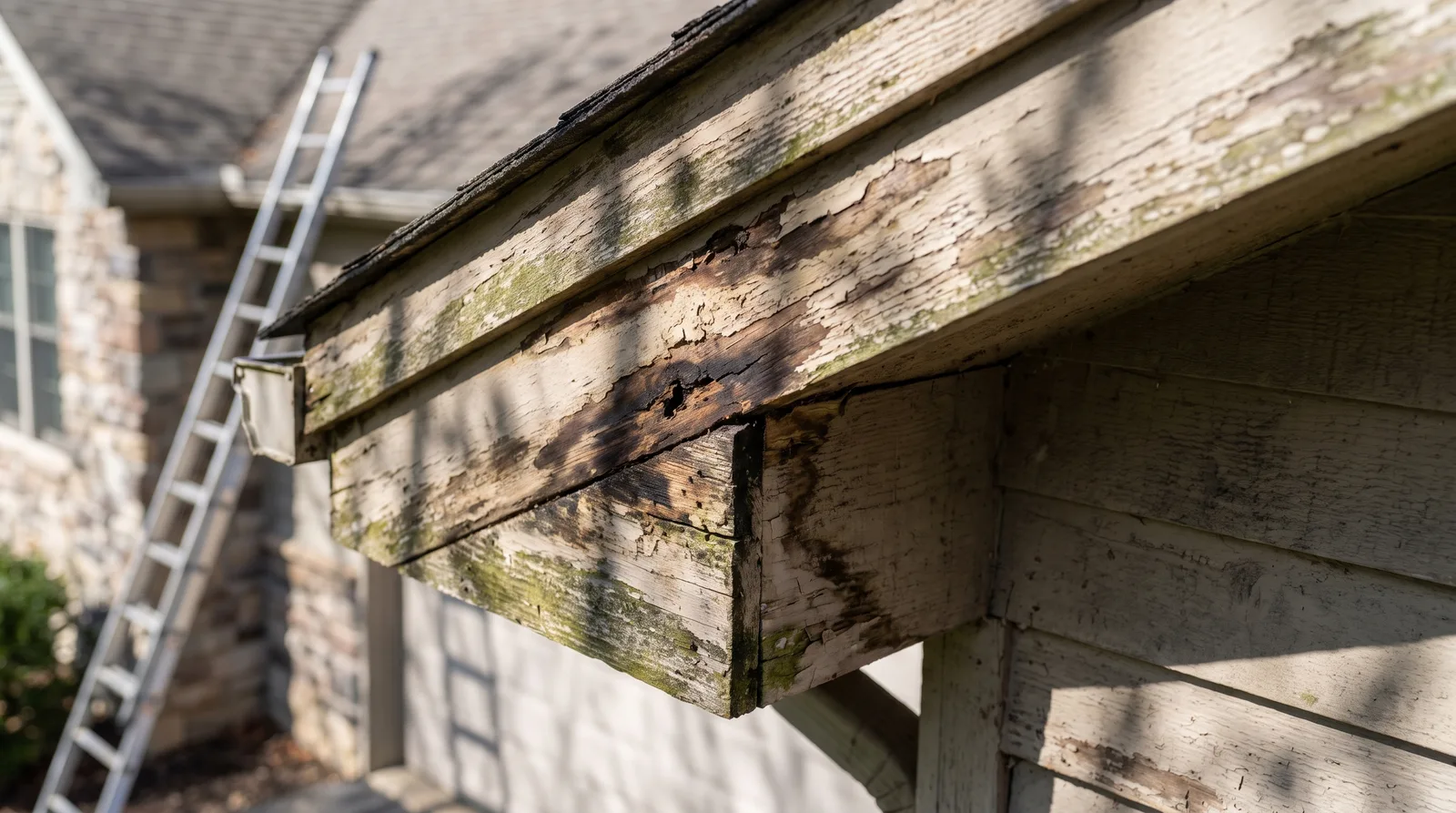
Climate is the primary driver of fascia and soffit deterioration. In wet climates, the Pacific Northwest, the Northeast, and the Southeast, wood fascia and soffit rot within a decade or so without regular maintenance. In arid climates, wood can last considerably longer. In freeze-thaw climates, the Upper Midwest and Northeast, water that enters cracks in fascia or soffit freezes and expands, accelerating deterioration. A single freeze-thaw cycle can turn a hairline crack into a structural failure.
Material selection should reflect your climate. In wet climates, vinyl or fiber cement fascia is more durable than wood. In freeze-thaw climates, aluminum or fiber cement resists ice damage better than wood or vinyl. In arid climates, wood is acceptable if you're willing to paint it regularly, but fiber cement or aluminum requires less maintenance.
Soffit vents are also climate-dependent. In humid climates, soffit vents must be large enough and numerous enough to allow moisture to escape from the attic. Undersized or clogged vents trap moisture, which accelerates fascia rot and promotes mold growth in the attic. In cold climates, soffit vents must be screened to prevent ice damming and must be positioned to allow air to flow across the attic without creating cold spots that promote condensation.
Seasonal Inspection Windows and Proactive Maintenance for Residential and Commercial Properties#
Inspect fascia and soffit in spring and fall, after winter thaw and before winter freeze. Spring inspection reveals damage from freeze-thaw cycles and winter moisture. Fall inspection reveals damage from summer storms and allows time to schedule repairs before winter weather arrives.
For residential properties, a visual inspection from the ground takes a few minutes. Look for soft spots, discoloration, peeling paint, and separation from the roof line. If you see any of these, hire a professional to inspect more closely, a ladder inspection or drone inspection can reveal damage that's not visible from the ground.
For commercial properties, fascia and soffit inspection should be part of the annual roof and exterior maintenance plan. Commercial buildings often have larger roof overhangs and more complex gutter systems, so damage can be more costly to repair. A professional inspection twice a year, spring and fall, is a reasonable investment to catch damage early.
Proactive maintenance includes keeping gutters clean and properly pitched, ensuring soffit vents are clear, and sealing any cracks in fascia or soffit with exterior caulk. These tasks cost a few hundred dollars a year and prevent thousands in repair costs.
Integrating Soffit/Fascia Repair With Gutter System Upgrades and Guards#
When you repair or replace fascia and soffit, it's the ideal time to upgrade your gutter system. A new fascia board is the perfect anchor for a new gutter, the fasteners will hold securely in fresh wood, and you can ensure the gutter is properly pitched and sized for your roof area.
Installing leaf guard systems during fascia repair may save 20 years of gutter cleaning costs. A gutter guard prevents leaves and debris from clogging the gutter, which reduces the risk of standing water against the fascia. This is a one-time investment that pays for itself in reduced maintenance and extended fascia life.
Gutter sizing is critical. An undersized gutter will overflow during heavy rain, directing water against the fascia and soffit. A properly sized gutter, based on your roof area and local rainfall intensity, will drain water away from the fascia and into the downspout. If your current gutter is undersized, upgrading to a larger gutter during fascia repair is the smart move.
Soffit ventilation should also be reviewed during fascia repair. If soffit vents are clogged or undersized, moisture will accumulate in the attic, accelerating fascia rot. Clearing vents and, if necessary, adding additional vents ensures proper airflow and extends the life of the repair.
What to Expect: Post-Repair Performance and Long-Term Durability#
A properly executed fascia and soffit repair or replacement should last well over a decade for wood or vinyl, and even longer for fiber cement or aluminum, assuming the underlying gutter and roof systems are functioning correctly. If the gutter is sagging, the soffit vents are clogged, or the roof is shedding water into the wrong place, the repair will fail sooner.
After repair, monitor the fascia and soffit quarterly for the first year. Look for any signs of water staining, soft spots, or separation. If you see any of these, contact the contractor immediately, most reputable contractors offer a one-year warranty on fascia and soffit work, and defects should be corrected at no cost.
In Concord, NH and the surrounding areas, Manchester, Nashua, Bedford, Merrimack, Derry, Londonderry, and Salem, freeze-thaw cycles are the primary threat to fascia and soffit longevity. Inspect after winter thaw and before the first hard freeze. Clear soffit vents in fall to prevent ice damming. Keep gutters clean and pitched properly year-round.
Your Next Steps: Audit Your Exterior Envelope#
Here's what to do this week to assess your own fascia and soffit:
Walk the perimeter of your house. Look for soft spots, discoloration, peeling paint, or separation in the fascia. Check the soffit for sagging or cracks. Note any areas where the gutter is pulling away from the fascia.
Check your gutters. Are they clean? Do they pitch toward the downspouts? Are they sagging in any section? A sagging gutter is often a sign that the fascia behind it is soft.
Inspect soffit vents. Are they clear, or are they clogged with debris? Can you see daylight through them? Clogged vents trap moisture and accelerate fascia rot.
Note your climate and material. What material is your fascia and soffit, wood, vinyl, aluminum, or fiber cement? How long has it been since it was painted or sealed? In a freeze-thaw climate like New Hampshire, expect wood fascia to need attention periodically.
Get a professional inspection if you see damage. A contractor can assess whether repair or replacement is the right move, and whether your gutter and soffit ventilation systems need upgrades. A free estimate from a reputable local contractor will give you a clear picture of the scope and cost.
The goal is to catch fascia and soffit damage before it cascades into roofing, siding, and structural problems. A small repair today prevents a major project tomorrow.
| Repair Type | Cost Range | Per Linear Foot |
|---|---|---|
| Repair or Replace Fascia Boards (National Average) | $525 to $2,338 | $15 to $30 |
| Full Soffit and Fascia Projects | $600 to $6,000 | Varies by scope |
| Spot Repair (Surface Rot <20%) | Thousands less than full replacement | Partial cost |
| Warning Sign | What It Indicates | Underlying Cause |
|---|---|---|
| Soft spots, discoloration, or peeling paint on fascia | Rot has progressed; wood has lost structural integrity | Prolonged water exposure |
| Dark gray or black fascia wood | Extended moisture retention and mold colonization | Standing water or failed moisture barrier |
| Sagging or pulling gutters | Fascia too soft to hold fasteners securely | Rotted fascia weakening anchor points |
| Water stains on soffit underside or interior walls | Water flowing through vents or past fascia edge | Gutter overflow or failed fascia seal |
| Dull hammer sound when tapping fascia (vs. ring of solid wood) | Wood is rotted and has lost density | Advanced moisture damage |
| Sawdust or pest activity below fascia | Carpenter ants or wood-boring beetles colonizing wet wood | Soft, wet wood attracting insect damage |
| Failure Stage | What Happens | System Affected |
|---|---|---|
| Initial water entry | Crack or rotted section allows water infiltration | Fascia/soffit only (early stage) |
| Water pools and flows | Standing water accumulates behind gutter, then flows into attic ventilation space | Gutter system amplifies problem |
| Structural water migration | Water wicks into roof decking, rafters, and wall framing | Roof structure and wall framing |
| Wall cavity compromise | Water runs down wall cavity behind soffit, enters sheathing and insulation; mold colonizes | Siding and wall system |
| Visible exterior damage | Siding loses backing and begins to buckle or separate | Entire exterior envelope at risk |
Fascia & Soffit Repair and Replacement Cost Estimator
Estimates the cost of fascia and soffit repair or replacement based on linear footage, scope of work (minor repair, partial replacement, or full replacement), material type, and whether existing gutters need detaching/re-hanging or replacement.
Fascia & Soffit Cost:
Gutter Work Cost:
Total Estimated Investment:
Frequently Asked Questions
How much does it cost to repair fascia and soffit?
Repair costs range from $525-$2,338 on average for fascia board repair or replacement nationally. Per linear foot, expect $15 to $30. For full soffit and fascia projects, costs typically fall between $600-$6,000 depending on scope and materials.
Can damaged fascia be repaired, or does it always need replacement?
Damaged fascia can often be repaired if surface rot affects less than 20% of the board. Spot repairs make strong financial sense in these cases, saving thousands over complete replacement. Deeper rot or extensive damage usually requires full replacement.
Why does fixing the gutter matter when repairing fascia?
Fascia repair alone fails if the underlying gutter problem persists. A sagging gutter traps water against new fascia; a properly pitched roof that drains into the wrong place rots it again. Auditing your entire drainage system, gutter pitch, soffit vents, roof flashing, prevents the new fascia from deteriorating within a few years.
What does a drip edge flashing do in fascia installation?
Drip edge flashing with a 2-inch long apron flashing conceals the wood fascia board and acts as flashing for the gutter pan, directing water away from the fascia and protecting it from pooling moisture.
How can installing a leaf guard system protect my fascia?
Leaf guard systems installed during fascia repair may save 20 years of gutter cleaning costs by preventing debris accumulation that causes gutter overflow. Less overflow means standing water no longer pools against the fascia, reducing rot risk significantly.
What's the difference between water damage in fascia versus soffit?
Fascia rot appears as soft spots, discoloration, or peeling paint visible from the ground. Soffit damage, harder to spot under the overhang, shows as sagging, cracks, or darker sections. Both indicate the same root cause: failed moisture barrier. Soffit failure accelerates wall cavity damage because water flows down behind it into siding and framing.
Can damaged fascia be repaired?
Yes. Damaged fascia can be repaired. When surface rot affects less than 20% of fascia boards, spot repairs make financial sense and can save thousands compared to complete replacement. The national average cost to repair or replace fascia boards ranges from $525-$2,338, with per linear foot costs ranging from $15-$30. However. Fascia repair should always be paired with inspection and repair of the underlying cause, such as gutter drainage issues or roof flashing problems, to prevent the same water from damaging the repaired board within a few years.
How do I repair rotted soffit and fascia?
To repair rotted soffit and fascia, first identify what caused the rot, such as clogged vents, sagging gutters, or damaged flashing, and fix that problem first. Otherwise, new boards will rot again. For minor surface damage, spot repairs work well. For extensive rot, replace the affected boards and install proper flashing to protect the wood. Have a professional inspect your entire exterior system to prevent future failures.
Disclaimer
This content is general information about gutters and home-exterior work and is not a substitute for an on-site inspection. Contact Gutter Giant for advice specific to your home.
Sources
- Variant of NAICS 1997 - 232340 - Metallic and Other Siding Work - www23.statcan.gc.ca
- www.thumbtack.com - thumbtack.com (2026-07-08)
- Mastering Roof Inspections: Roof Drainage Systems, Part 1 - InterNACHI® - nachi.org
- Routine Inspection Drip Edge - Roofing Inspections - InterNACHI®️ Forum - forum.nachi.org
- Fascia and Soffit Repair Denton County, TX | Protect Your Home - dkgroofing.com
- Ultimate Fascia and Gutter Repair Long Island 2026 - northshoreroofing.com
- Signs You Need to Repair Your Soffit and Fascia - Integrity Roofers - integrityroofers.com (2022-04-05)