
How do seamless gutters prevent ice dams and winter water damage?
Short answer
Seamless gutters prevent ice dams and winter water damage by providing an unobstructed path that allows melting roof snow to drain safely away rather than backing up at the roofline. Ice dams form when higher roof surfaces rise above 32 degrees Fahrenheit while lower eaves remain below freezing. Without seams to snag leaves or debris, continuous channels ensure meltwater flows freely away, stopping pooled water from backing up between shingles into the attic.
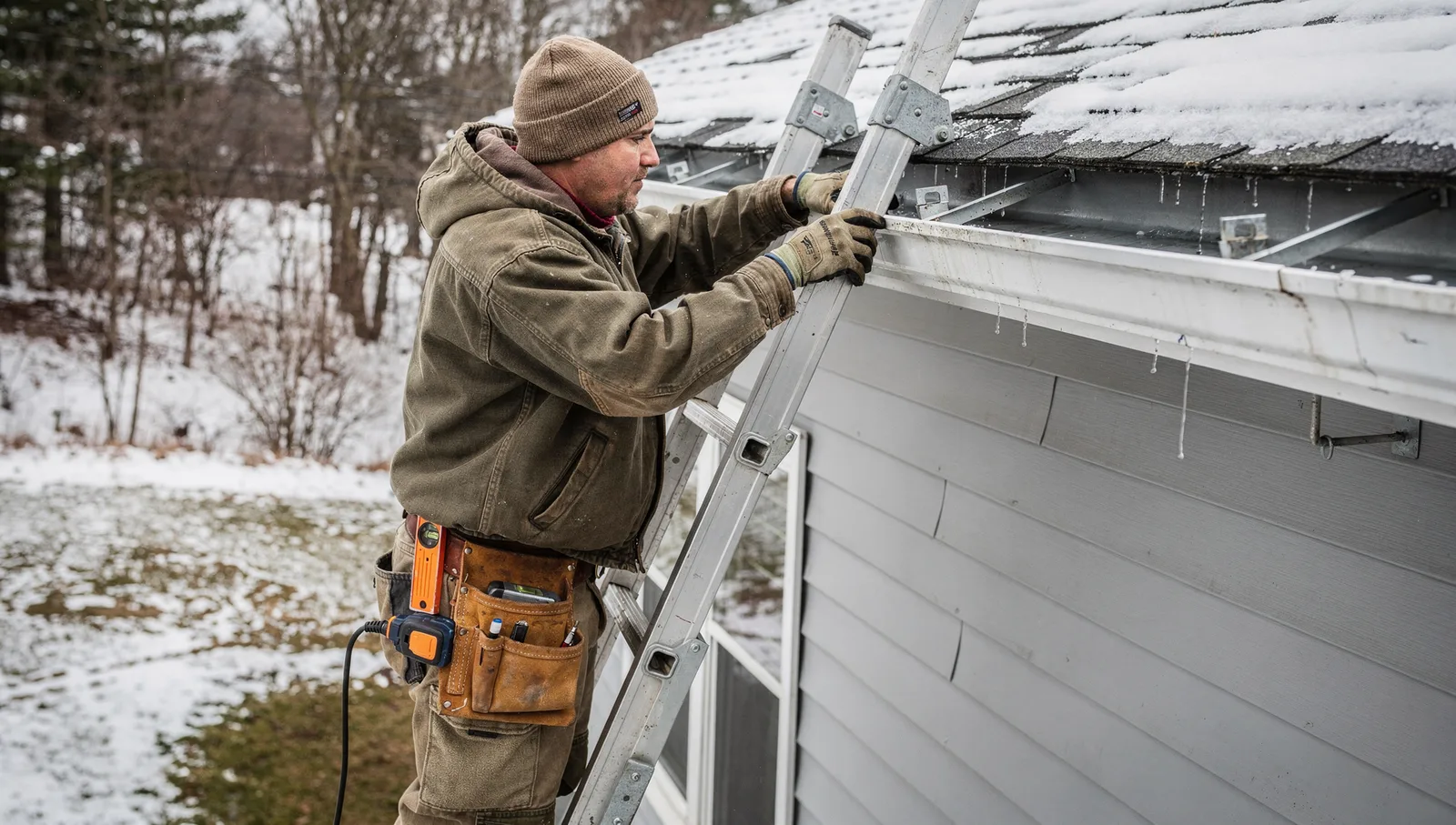
Winter weather puts incredible stress on your home's exterior boundary, turning minor drainage issues into costly structural damage. When roof runoff cannot escape, it backs up, refreezes at cold eaves, and works its way behind your exterior building envelope. Understanding how your roofline, drainage channels, and attic temperatures interact is the first step toward keeping your home dry and safe all winter long.
Role of Seamless Gutters and Drainage in Winter Runoff Management#
Seamless gutter channels help protect your home by eliminating the seam leaks and debris-catching joints found in traditional sectional setups, giving roof runoff an uninterrupted path to the ground. To cut down the chances of ice dam formation, gutters and downspouts should be thoroughly cleared of leaves, sticks, and other debris so melting roof snow can flow freely through the drainage system (weather.gov). When these pathways stay clear, meltwater leaves the roof slope immediately instead of pooling along the edge of the roofline.
According to the National Weather Service, keeping gutters and downspouts completely clear of snow and icicles all winter long is critical for winter performance (weather.gov). When snowmelt drains properly, it cannot linger at the eaves to form a secondary freeze point.
The National Weather Service also notes that properly functioning, clear gutters and downspouts provide an unobstructed path that allows melting roof snow to flow into gutters and through downspouts rather than backing up at the roofline (weather.gov). Without sectional joints that snag falling leaves or sag under cold conditions, seamless runs maintain consistent pitch, directing water away before it can saturate your fascia board, siding, or framing.
- Meltwater flows down roof slope
- Runoff enters unobstructed gutter
- Downspout discharges runoff away
- Roofline stays free of standing water
Related service: Seamless Gutter Installation
Temperature Dynamics and Snow Load Factors in Ice Dam Formation#
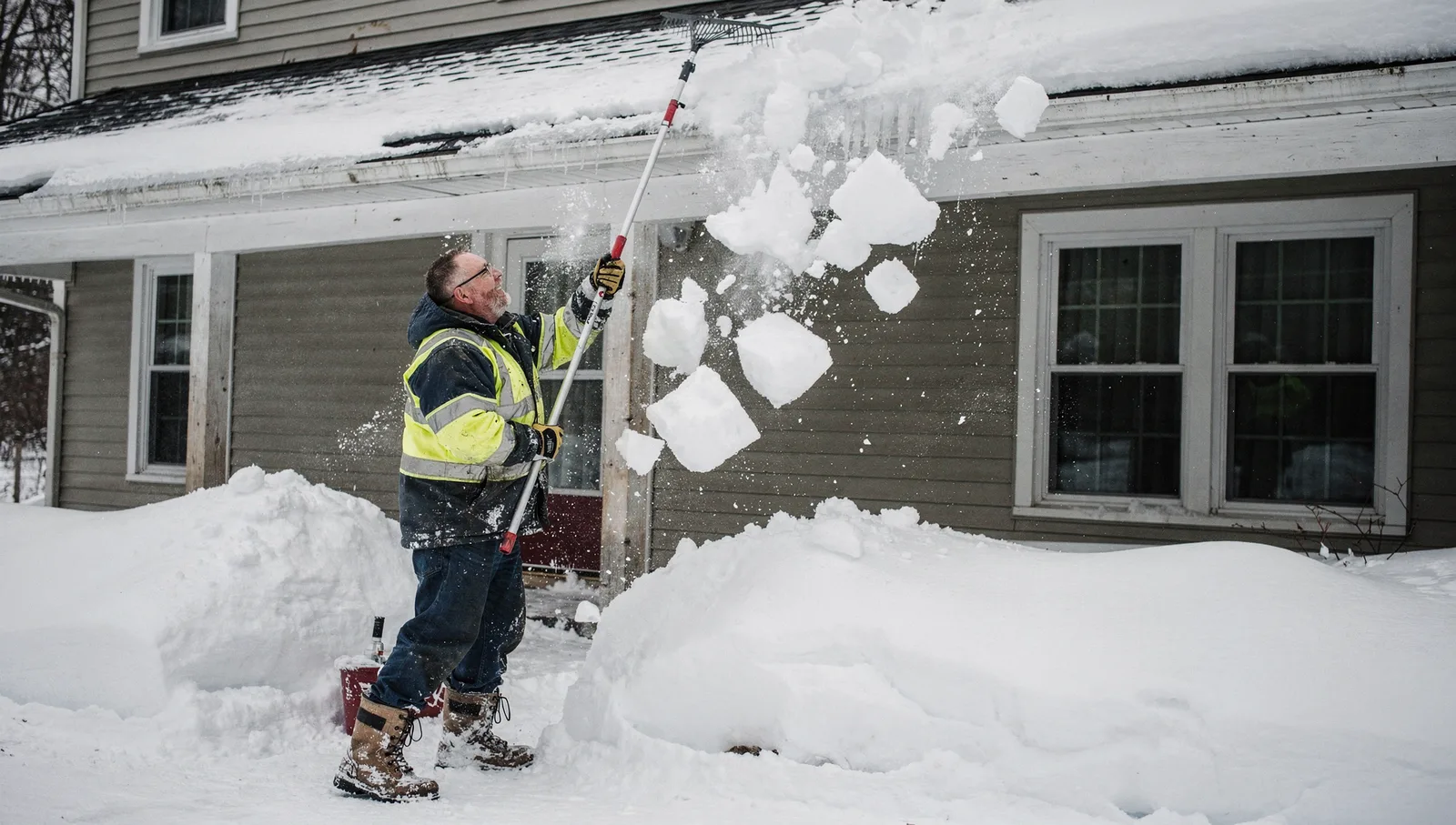
Ice dams do not begin in the gutters; they start because of temperature imbalances across your roof deck. For ice dams to form, higher portions of the roof's exterior surface must be above 32 degrees Fahrenheit while lower roof surfaces and the outside air remain below 32 degrees Fahrenheit (extension.umn.edu). This temperature split causes snow on the upper roof to thaw, run down the slope, and refreeze as soon as it hits the colder overhang.
Snow depth also plays a massive, direct role in accelerating this thawing cycle:
- Ground snow loads exceeding 30 lb/ft² make ice dams likely to form, according to building science research published by the Pacific Northwest National Laboratory (2015-07-01) (basc.pnnl.gov).
- Ground snow loads exceeding 60 lb/ft² make ice dams typically prevalent across residential roofs.
- Accumulated snow adds an insulating value of between R-1 and R-2 per inch, which progressively traps attic heat, warms the upper roof deck above freezing, and drives continuous snowmelt.
Impact of Meltwater Intrusion on Roof Structures and Attics#
When an ice dam solidifies at the roof edge, it creates an artificial reservoir for liquid runoff. As the Department of Energy documents, meltwater pooling behind an ice dam can back up between roof shingles and enter the attic, leading to moisture damage or even roof collapse under severe ponding (energy.gov). Because asphalt shingles are designed to shed cascading water rather than hold standing pools, trapped meltwater easily forces its way past overlaps via hydrostatic pressure.
Beyond interior water leaks, ice dams create physical structural hazards on your roof framing. Guidance from FEMA points out that ice dams prevent snow from sliding off the roof, and the resulting accumulation of snow and ice at the eave creates an undesirable unbalanced snow loading condition (fema.gov). This heavy, localized weight strains rafters, trusses, and fascia boards long before spring arrives.
Seamless gutters serve as an essential line of defense in exterior water management, bridging the gap between roof drainage and structural envelope protection.
Attic Insulation, Ventilation, and Protective Roof Underlayments#
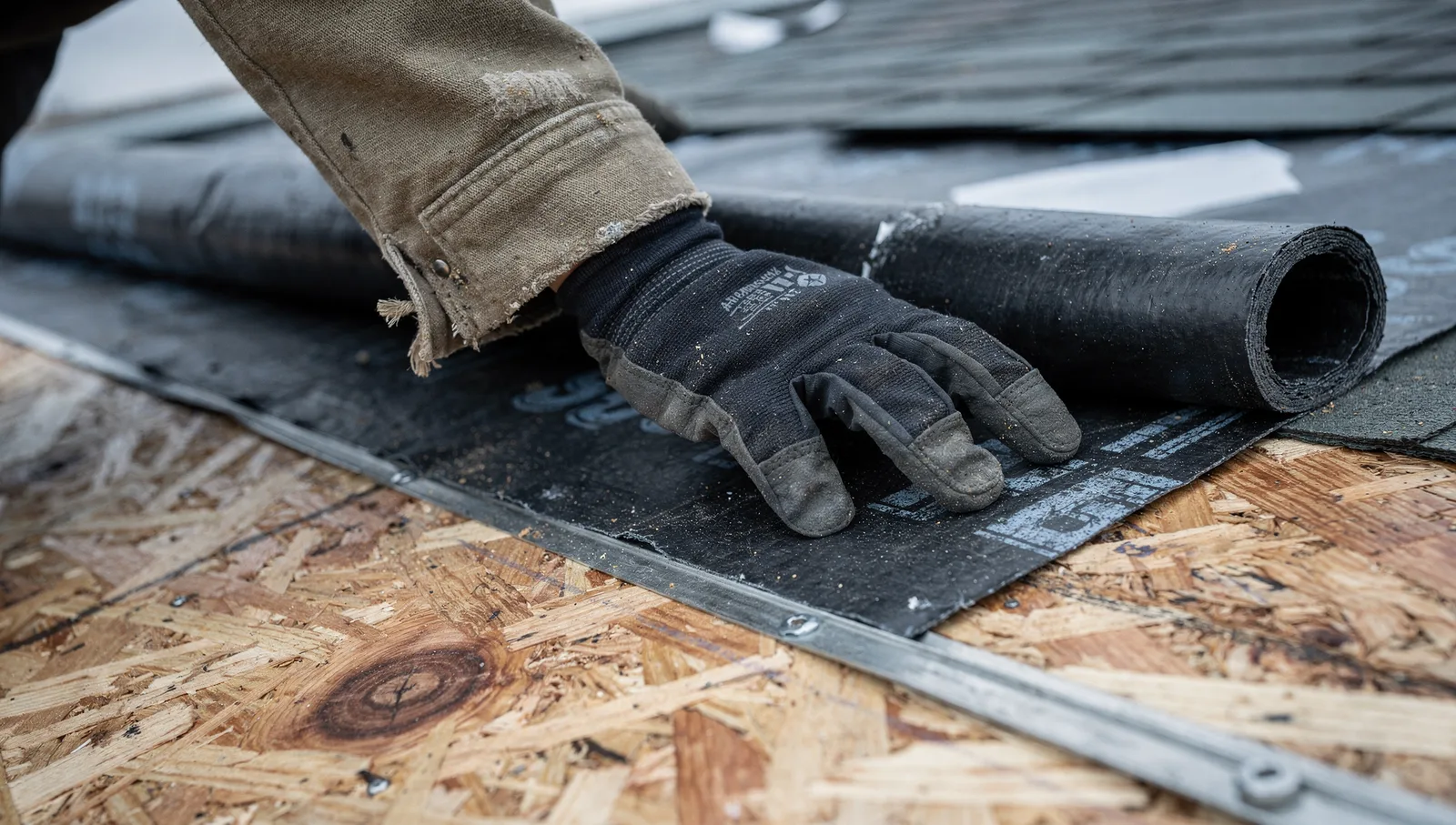
Managing exterior roof temperatures requires a balance between adequate thermal resistance and continuous airflow underneath your roof deck.
Along the roof edge itself, secondary defense barriers provide vital structural redundancy against water intrusion:
- Self-adhering roof protection membranes serve as robust waterproofing underlayments that seal tightly around fastener penetrations in ice-dam-prone regions, per the Pacific Northwest National Laboratory (2015-07-01) (basc.pnnl.gov).
- These flexible membranes offer long-term protection against water infiltration if trapped meltwater manages to work underneath the shingles.
- Paired with a proper roof drip edge and soffit ventilation, these underlayments prevent backing water from entering the attic cavity or rotting the eaves.
Winter Response Protocols for Active Meltwater Pooling#
If you wake up to find active water leaking into your living space during a winter storm, physical removal of the dam must be handled carefully to avoid damaging your roof shingles.
To apply this technique safely on an active freeze:
- Wait for a relatively warm winter day to maximize runoff efficiency.
- Direct a stream of warm or ambient tap water through a hose onto the lower edge of the ice barrier.
- Work your channel slowly upward from the bottom lip toward the trapped pool, letting the water carve a narrow relief slot.
- Allow trapped meltwater behind the dam to drain freely off the roof through the newly opened channel (extension.umn.edu).
Keep in mind that this tap water channel serves only as an emergency measure to alleviate pooling pressure, typically filling back in with ice within days if the underlying thermal conditions remain unresolved.
For homeowners in Manchester, Nashua, Concord, and Bedford, taking time this week to inspect your attic hatch for air leaks, clear your gutter outlets, and schedule a professional assessment of your roof drainage system will ensure your home stays protected against the harshest winter weather.
| Component | Primary Protective Function | Failure / Vulnerability Condition | Winter Impact |
|---|---|---|---|
| Gutters and Downspouts | Provide an unobstructed path to safely drain melting roof snow away from eaves | Clogged with leaves, debris, snow, or icicles | Causes meltwater to linger, backup at the roofline, and overflow onto fascia and framing |
| Attic Air Barrier & Insulation | Keep attic cold and stop indoor heat from warming upper roof deck above 32°F | Air bypasses, unsealed penetrations, or inadequate R-value | Induces non-uniform roof temperatures, melting snow over the living space |
| Attic Roof Ventilation | Maintains continuous cold airflow under the roof deck to expel interior heat | Blocked soffit or roof vents, or under-ventilated truss bays | Roof deck stays above freezing while eaves stay below freezing, fueling refreeze cycles |
| Self-Adhering Roof Membrane | Provides a robust waterproof underlayment sealing fastener penetrations | Absence along ice-dam-prone eaves, hips, or valleys | Trapped meltwater backs up past roof shingles and penetrates the attic ceiling |
| Condition Factor | Threshold / Measurement | Structural or Physical Effect |
|---|---|---|
| Upper Roof Outside Surface | Above 32°F (sustained) | Causes underlying snow cover to melt and flow downward toward eaves |
| Lower Roof Eaves & Ambient Air | Below 32°F (sustained) | Refreezes descending meltwater at the overhang, forming an ice dam |
| Snow Cover Thermal Resistance | R-1 to R-2 per inch of snow | Insulates roof deck, trapping attic heat and raising deck temperature above freezing |
| Ground Snow Load (Likely Formation) | Exceeds 30 lb/ft² | Elevates probability of ice dam formation across residential roofs |
| Ground Snow Load (Prevalent Formation) | Exceeds 60 lb/ft² | Ice dam occurrence becomes widespread and creates unbalanced eave snow loads |
Roof Snow Load & Meltwater Runoff Calculator
Estimate the snow weight on your roof and the total volume of meltwater your seamless gutter and downspout drainage system must handle as snow melts, helping prevent ice dam backups and structural overload.
Total Roof Area:
Total Roof Snow Load:
Total Potential Meltwater:
Recommended Downspouts for Safe Runoff:
Frequently Asked Questions
Do icicles mean poor insulation?
Icicles indicate ice dams are forming. While they can signal warm air leaking from living spaces or leaky attic ducts, they also occur when the sun warms the roof above freezing while outside air stays below freezing.
What to do about ice dams on roof?
In an active emergency with water entering the house, cut channels upward from the lower edge of the dam using tap water from a hose to temporarily release trapped meltwater. Long term, seal attic air leaks.
How to get ice off of your gutters?
Keep gutters and downspouts clear of snow, icicles, leaves, and debris all winter so melting snow drains. In emergency interior leaks, hose the ice dam with tap water from the bottom edge upward to carve a drainage channel.
Disclaimer
This content is general information about gutters and home-exterior work and is not a substitute for an on-site inspection. Contact Gutter Giant for advice specific to your home.
Sources
- [PDF] Volume 12. Energy Renovations-Insulation: A Guide for Contractors ... - energy.gov
- Preventing Roof Ice Dams - weather.gov
- Dealing with and preventing ice dams - extension.umn.edu
- Construct Roofs and Attics for Ice Dam Prevention | Building America Solution Center - basc.pnnl.gov (2015-07-01)
- FEMA P-957, Snow Load Safety Guide (2013) - fema.gov
- ~ 1 ~ INSPECTING THE ATTIC, INSULATION, VENTILATION & INTERIOR - nachi.org (2012-10-09)